
What if esports is no longer a niche hobby but a mainstream media market reshaping sponsorship dollars?
Viewership hit 575 million in 2024 and should clear 640 million by the end of 2025.
Platforms, regions, and audience habits are shifting fast. Twitch dips, YouTube rises, mobile viewing surges, and older fans keep coming back.
This post breaks down those trends and the sponsorship moves behind them.
Read on for clear, data-driven takeaways you can use to choose where to invest or pivot in 2024.
Global Esports Viewership Landscape 2024–2025

The global esports audience crossed 575 million viewers in 2024. By the end of 2025, that number’s expected to clear 640 million, growing somewhere between 11% and 13% year over year. You’re seeing two things at once: existing fans watching more, and fresh audiences coming in from Asia-Pacific, the Middle East, and Latin America. Traditional sports growth has pretty much flatlined in mature markets. Esports keeps pulling in first-timers through mobile ecosystems, creator content, and hybrid events that mix in-person attendance with digital streams.
Platform dynamics tell a different story than you might expect. Twitch has been the dominant player forever, but total hours watched actually dropped from 2023 to 2024. Fewer exclusivity deals, creators leaving, policy drama. YouTube Gaming went the other direction, up 22% in live esports watch time over the same stretch. Better discoverability, tournament content that plays nice with the algorithm, and monetization tools that make long-form coverage worth it for channels. Regional platforms like Bilibili and Huya still own China. Mobile platforms in Southeast Asia and India now pull over 30% of regional viewership combined.
The audience splits into two camps. Dedicated fans tune in for multiple events every month and watch the side content too: team vlogs, analysis shows, creator streams. They’re about 28% of the total audience but drive most of the engagement numbers, chat activity, clip shares, merch buys. Casual viewers come in through highlight reels or viral moments on social platforms. They’re the other 72%, and they care more about event timing, production quality, and crossover tie-ins with mainstream stuff.
Key viewership facts for 2024–2025:
- Peak concurrent viewership: League of Legends Worlds 2024 finals hit 6.4 million peak concurrent viewers across all platforms, beating the previous record by 18%.
- Fastest-growing title by viewership hours: Valorant went up 35% year over year, fueled by expanded regional leagues and Riot’s sustained investment in broadcast infrastructure.
- Platform market share (global): Twitch at 38%, YouTube Gaming 29%, regional platforms (Bilibili, Huya, Nimo) 23%, emerging platforms (Kick, TikTok Live) 10%.
- Demographic surge: Viewership among adults aged 30–44 grew 19% in 2024, fastest of any age group. Esports is aging up with its founding audience.
- Mobile viewership share: 41% of all esports viewing hours in 2024 happened on mobile devices, up from 34% in 2022. Mobile tournaments and app-first streaming made that jump possible.
Audience Demographics and Engagement Patterns

Esports viewership in 2024 still concentrates heavily in the 18–34 bracket, which accounts for 62% of all viewers. Within that, 18–24 is 34%, and 25–34 is 28%. But growth momentum’s shifted upward. Viewers aged 35–44 went from 16% in 2022 to 21% in 2024. That’s early esports adopters getting older, plus new interest from parents and casual gamers engaging through mobile titles and family-friendly events.
Female viewership keeps climbing. Hit an estimated 32% of the global audience in 2024, up from 28% in 2022 and 24% in 2020. Mobile esports expansion in Southeast Asia and Latin America correlates with this, where female participation rates run higher. You’re also seeing more women in competitive rosters, broadcast talent, and the creator ecosystem. Session length shows female viewers average 38 minutes per session versus 52 for male viewers. Different consumption patterns, favoring highlights, creator commentary, and social content over full match broadcasts.
Device usage patterns reveal a split model. Desktop and laptop viewers account for 46% of total hours watched. They engage mostly during peak evening hours and prefer multi-screen setups: chat, stat tracking, secondary content all running at once. Mobile viewers at 41% spread their viewing throughout the day. Spikes during commute windows and lunch breaks. Tablet and smart TV usage is the remaining 13%, concentrated in household viewing and co-viewing sessions that look more like traditional sports consumption.
| Demographic Segment | Key Behavior Metrics |
|---|---|
| Ages 18–24 | 52 min avg. session; 78% mobile usage; highest chat engagement (4.2 messages per hour) |
| Ages 25–34 | 61 min avg. session; 55% desktop usage; most likely to subscribe to creator channels (34% subscription rate) |
| Ages 35–44 | 44 min avg. session; 48% mobile usage; highest co-viewing rate (29% watch with family or friends) |
| Female viewers | 38 min avg. session; 67% mobile usage; highest engagement with creator-driven content (+41% vs. male viewers) |
Platform Performance and Distribution Shifts
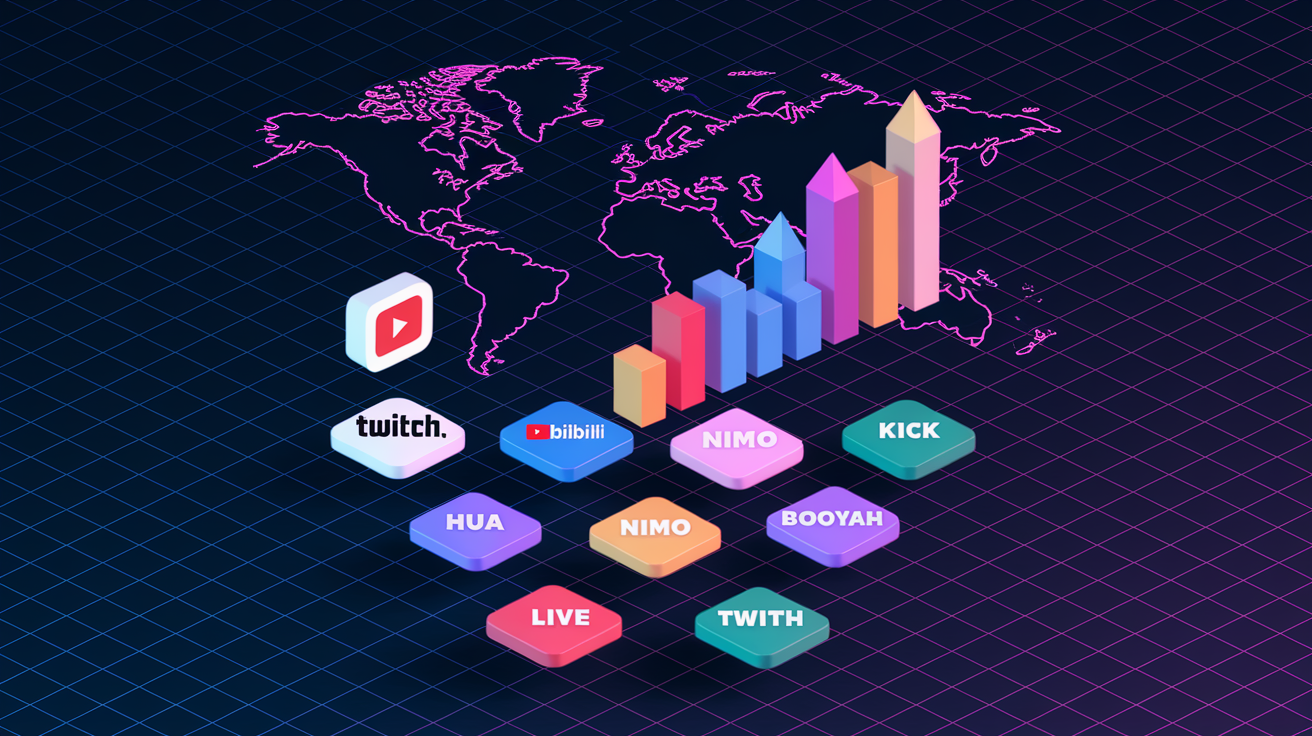
Twitch entered 2024 as the incumbent but ran into structural problems that ate away at dominance. Total hours watched on Twitch dropped about 7% year over year. First sustained annual decrease since the platform launched in 2011. Exclusive streamer contracts expired, policy changes pissed off parts of the creator community, and discoverability got worse for mid-tier channels after algorithm adjustments favoring established personalities. High-profile creators migrated to YouTube Gaming and emerging platforms, several top-10 streamers by follower count announcing multi-year deals elsewhere.
YouTube Gaming capitalized on Twitch’s mess by expanding esports live-streaming infrastructure and offering better revenue splits to creators. Integration with the broader YouTube ecosystem let tournaments benefit from organic search traffic, recommendation algorithms that surface live events to gaming-interested users, and seamless VOD archiving that extends content lifespan past the live window. Major esports organizations and tournament operators increasingly picked YouTube as their primary broadcast platform. Better monetization tools, integrated sponsorship features, and audience retention rates that beat Twitch by an average of 14 minutes per session.
Regional platforms keep dominating specific markets. Bilibili and Huya collectively hold over 85% market share in China, where regulatory requirements and localized features make international platforms less competitive. In Southeast Asia, mobile-first platforms like Nimo TV and Booyah have grabbed serious viewership among mobile esports titles. Low-latency streams optimized for mobile data networks, integrated social features that appeal to younger demographics. TikTok Live and Kick have popped up as disruptors in Western markets, attracting niche communities and viewers looking for alternative moderation policies or creator-centric revenue models.
Core platform advantages driving audience shifts:
- YouTube Gaming: Superior content discoverability through search and recommendation algorithms. Integrated monetization via memberships, Super Chat, and ad revenue. Seamless VOD archiving that extends content lifecycle.
- Regional platforms (Bilibili, Huya): Localized content curation, language-specific moderation, compliance with regional regulations, and integration with domestic social networks and payment systems.
- Mobile-native platforms (Nimo, Booyah): Optimized streaming for mobile data constraints. Lower latency in regions with limited broadband. Integrated social features like in-app messaging, gifting, and community hubs.
- Emerging challengers (Kick, TikTok Live): Creator-friendly revenue splits (Kick’s 95/5 model, for example). Relaxed content policies. Built-in social virality that amplifies live moments into short-form clips for broader distribution.
Regional Viewership Differences

Asia-Pacific remains the largest esports viewership region, pulling about 58% of global audiences in 2024. China alone represents nearly one-third of all esports viewers worldwide. Robust mobile esports ecosystems, state-supported infrastructure investments, deep integration of esports into youth culture and educational pathways. South Korea, historically the birthplace of competitive gaming, maintains a mature and highly engaged audience. Southeast Asian markets like the Philippines, Indonesia, Thailand, and Vietnam are seeing the fastest regional growth rates. Affordable mobile devices, competitive mobile titles, and localized tournament circuits driving that.
Europe’s viewership trends show stabilization, not explosive growth. Markets like Germany, France, Poland, and the UK have reached saturation among core gaming demographics. Viewership increases now depend on crossover appeal to casual audiences and improved accessibility through broadcast partnerships with traditional sports networks. The European esports audience skews slightly older than global averages, with a higher proportion of desktop viewers and stronger engagement with PC-based titles like Counter-Strike and Dota 2. Sponsorship density in Europe remains high, reflecting brand confidence in established audiences and measurable engagement metrics.
North America saw modest audience growth in 2024, driven less by raw viewership expansion and more by increased monetization through sponsorships, media rights deals, and hybrid event models. The region’s audience has high disposable income, strong brand loyalty, and willingness to attend live events, making it a priority market for non-endemic sponsors. Latin America, particularly Brazil and Mexico, recorded double-digit viewership growth, supported by improved internet infrastructure, growing creator economies, and rising investment from regional sponsors. The Middle East and North Africa posted the highest regional growth rate at over 40%. Government-backed esports initiatives, stadium construction, and hosting rights for major international tournaments catalyzed that jump.
| Region | 2024 Viewership Trend | Key Growth Driver |
|---|---|---|
| Asia-Pacific | +12% YoY | Mobile esports expansion in Southeast Asia; state investment in China and South Korea |
| Europe | +3% YoY | Stabilized core audience; focus on broadcast partnerships and casual crossover content |
| North America | +5% YoY | Sponsorship-driven engagement; live event attendance growth; media rights monetization |
| Latin America | +18% YoY | Infrastructure improvements; creator economy growth; regional sponsor activation |
| Middle East & North Africa | +42% YoY | Government-backed esports initiatives; tournament hosting; stadium and infrastructure investment |
Sponsorship Market Evolution and Spending Patterns
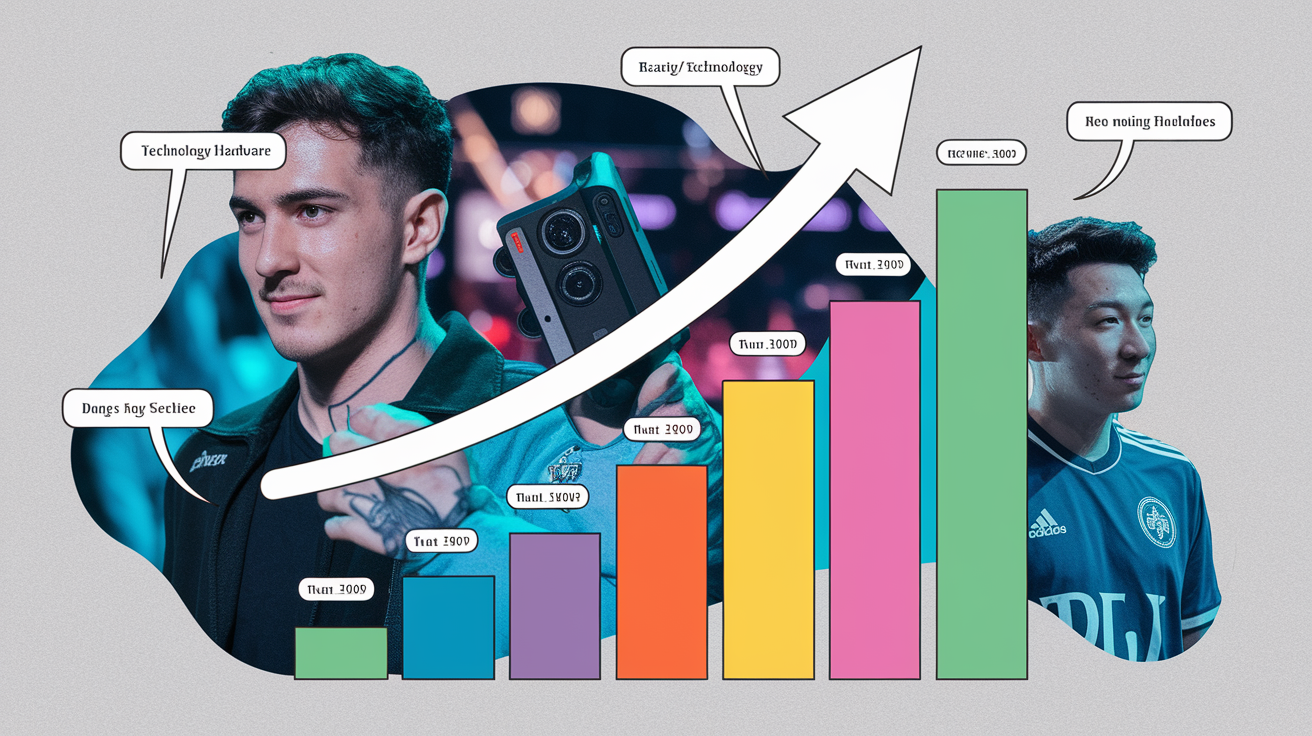
Global esports sponsorship spending reached $982.8 million in 2024. Projected to cross $1 billion in 2025, first time the industry hits ten-figure annual sponsorship revenue. From 2017 to 2024, sponsorship spending went from $339.3 million to $982.8 million. Nearly threefold rise that reflects sustained advertiser confidence despite economic headwinds in adjacent sectors. Growth trajectory’s expected to continue through 2029, annual spending projected to reach $1.26 billion, an 18% increase over the five-year forecast period.
The composition of sponsorship investment has shifted hard. Early esports sponsorships were dominated by endemic brands: hardware manufacturers, peripheral makers, energy drink companies. By 2024, non-endemic sponsors like telecommunications providers, automotive brands, financial services firms, retail chains, and health and wellness companies accounted for over 55% of total sponsorship dollars. This diversification signals broader brand recognition of esports as a real channel for reaching young, digitally native audiences who are tough to engage through traditional advertising.
Creator-driven partnerships have become a preferred activation model, especially for mid-tier sponsors looking for targeted reach without the cost of league or team-level deals. Brands partner directly with individual streamers and content creators to develop custom campaigns, product integrations, and co-branded content that feels authentic to creator audiences. These partnerships often deliver higher engagement rates and better ROI metrics than logo placements or arena branding. Creator audiences show strong parasocial bonds and purchase intent influenced by creator endorsements. The rise of creator partnerships has also fragmented sponsorship spending, making it harder to track total market investment through traditional rights-holder reporting.
Major sponsor categories and their motivations:
- Technology and hardware: Maintain market leadership in gaming peripherals, components, and devices by associating with competitive performance and professional player endorsements. Think ASUS ROG, Samsung, major chip manufacturers.
- Telecommunications and internet service providers: Reach younger demographics who prioritize low-latency connectivity for gaming. Position brand as essential infrastructure for competitive play. AT&T and regional telco activations fall here.
- Retail and consumer goods: Drive brand awareness and trial among Gen Z and millennial audiences through event activations, merch collaborations, and cause marketing. Pepsi, ALDI, consumer electronics chains.
- Financial services and fintech: Engage digitally native consumers who prioritize mobile banking, cryptocurrency, and digital wallets. Use esports partnerships to build trust and demonstrate cultural relevance in emerging finance categories.
- Health, wellness, and lifestyle: Connect with audiences through mental health initiatives, fitness programs, and lifestyle messaging that counters stereotypes of sedentary gaming. Movember partnerships, men’s skincare brands, sports nutrition companies.
ROI Metrics and Measurement Challenges

Measuring sponsorship ROI in esports is way more complex than in traditional sports. Platform fragmentation, audience overlap across multiple channels, and the absence of standardized reporting frameworks make it tough. Brands struggle to attribute conversions, brand lift, or sales uplift to specific esports activations when the same audience consumes content across Twitch, YouTube, TikTok, Twitter, and Discord at the same time. Cross-platform measurement tools exist but they usually rely on siloed data sets that don’t account for duplicate viewers or multi-device consumption. Inflated reach estimates and difficulty isolating incremental impact.
Fragmentation extends beyond platforms to the structure of esports itself. Unlike traditional sports leagues with centralized media rights and controlled broadcast environments, esports consists of hundreds of independent tournament organizers, regional leagues, team-owned content channels, and creator-driven broadcasts. Each has different measurement standards, reporting cadences, and data-sharing policies. A single sponsorship deal may touch multiple content types: live event broadcasts, VOD highlights, creator mentions, social media posts, in-game integrations. Each measured differently, often incompletely. This creates friction for sponsors used to unified reporting dashboards and clear attribution models.
Emerging measurement solutions use AI-driven attribution tools, cross-platform data aggregation, and machine learning models that predict sponsor impact based on historical engagement patterns. Companies like Brickroad AI offer sponsorship management platforms that consolidate metrics across activations. Tools like Spot analyze broadcast footage to quantify logo visibility and estimate brand impressions. Cakemix provides sponsorship valuation models that benchmark deals against industry norms, and Airclicker tracks real-time audience counts during live events. Despite these innovations, the industry still lacks the equivalent of Nielsen ratings or a universal currency for esports viewership. Many sponsors rely on engagement proxies like social sentiment, follower growth, and qualitative fan surveys rather than direct conversion data.
Case Studies: Sponsorship and Viewership Success Stories

The League of Legends World Championship has consistently set viewership records. 2024 finals reached 6.4 million peak concurrent viewers and generated over 200 million total hours watched across all platforms. Tournament’s success comes from a combination of factors: predictable annual scheduling that lets fans plan attendance and viewing, high production values that rival traditional sports broadcasts, compelling competitive storylines that sustain interest throughout the multi-week event, and strategic broadcast partnerships that distribute content across YouTube, Twitch, regional platforms, and traditional sports networks. Riot Games used the event to lock in multi-year sponsorships with blue-chip brands. Several sponsors reported measurable brand lift and purchase intent increases among exposed audiences.
Valorant Champions 2024 showed the commercial potential of newer esports titles when backed by sustained publisher investment. Event drew 1.8 million peak concurrent viewers in its first year of global competition, a record for a debut championship event. Riot Games pre-sold sponsorship inventory months in advance, bundling broadcast integrations, in-game weapon skins featuring sponsor branding, and creator activation packages. Post-event surveys showed 43% of viewers recalled at least three event sponsors without prompting, way higher than industry averages. Social sentiment analysis revealed sponsor activations tied to cause marketing and community initiatives generated over 700% more positive mentions than traditional logo placements.
The partnership between Puma and Cloud9 in 2019 gets cited as a breakthrough moment for non-endemic sponsorships. Produced social sentiment metrics more than 700% above the sports industry norm according to Nielsen data. Collaboration extended beyond apparel to include co-designed merchandise, athlete endorsements, and content series that showcased players in lifestyle contexts rather than purely competitive settings. Success of the partnership validated the idea that esports audiences respond positively to authentic brand integrations that respect the culture and aesthetics of gaming communities. Opened the door for subsequent fashion, lifestyle, and consumer goods partnerships across the industry.
Key takeaways from sponsorship and viewership success stories:
- Publisher investment and multi-year commitment: Sustained publisher support, consistent event scheduling, and predictable competitive formats reduce risk for sponsors and allow long-term partnership planning.
- Integrated activation beyond logos: Brands that create authentic content, engage with community causes, and integrate into the fan experience generate higher engagement and more favorable sentiment than passive logo placements.
- Cross-platform distribution and data transparency: Events that distribute content widely while providing sponsors with unified measurement and attribution tools enable better ROI tracking and justify increased investment in subsequent activations.
Future Forecast: 2025–2027 Esports Audience and Sponsorship Outlook

Global esports viewership’s projected to cross 700 million by the end of 2026 and approach 750 million by 2027. Continued expansion in emerging markets, increasing penetration of mobile esports, and the maturation of regional leagues that provide consistent year-round content driving that. Growth will be uneven. Asia-Pacific and the Middle East posting double-digit annual increases while Europe and North America experience single-digit growth as core audiences stabilize. Mobile-first ecosystems will account for an increasing share of total viewership, especially in markets where console and PC gaming infrastructure remains underdeveloped.
Platform consolidation’s expected to speed up as YouTube Gaming and regional platforms gain share at Twitch’s expense. Industry analysts think by 2027, Twitch’s global market share will fall below 30%. YouTube commanding 35–40%, regional platforms like Bilibili, Huya, and emerging challengers collectively holding the remainder. This shift will force tournament organizers and teams to adopt multi-platform distribution strategies, complicating sponsorship measurement but expanding total addressable audiences. The rise of short-form content on TikTok, Instagram Reels, and YouTube Shorts will also reshape how esports moments get consumed. Highlights and viral clips driving new viewer acquisition even as full-match viewing hours stabilize in mature markets.
Most likely industry shifts over the next 2–3 years:
- Sponsorship category diversification: Expect faster investment from automotive brands (especially electric vehicles targeting younger buyers), health and wellness companies (positioning esports as an active lifestyle), and B2B technology firms (using esports to demonstrate enterprise solutions to tech-savvy audiences).
- VR and immersive esports formats: Virtual reality esports titles and mixed-reality viewing experiences will shift from experimental to niche-commercial, attracting early-adopter audiences and premium sponsorship deals tied to hardware launches and platform exclusivity.
- Regulation and standardization: Industry bodies and major publishers will introduce standardized viewership measurement frameworks to address sponsor demands for transparent, comparable metrics. Reducing fragmentation and increasing advertiser confidence.
- Hybrid event models become standard: Expect most major tournaments to adopt hybrid formats that combine large-scale live attendance with robust digital streaming. Creating dual revenue streams from ticket sales, venue sponsorships, and broadcast rights while expanding total audience reach beyond physical venue capacity.
Final Words
We covered the 2024–2025 audience snapshot, highlighting big global numbers, faster growth in APAC, and platform shifts from Twitch to YouTube Gaming and mobile-first streams.
We broke down who watches, how long they stay, where engagement spikes, and why sponsorships are moving from endemic brands to broader partners. We also looked at ROI hurdles and winning case studies.
This esports viewership trends and sponsorship shifts analysis gives a practical playbook: better targeting, clearer measurement, and steady audience growth. The outlook is optimistic.
FAQ
Q: What is the size of the global esports audience in 2024–2025?
A: The 2024–2025 global esports audience is about 640M+ viewers, growing mid-single digits annually, roughly 5 to 8 percent, driven by major event spikes and expanding regional access.
Q: How do casual and dedicated viewers compare in esports?
A: Casual versus dedicated viewers split roughly 60 to 70 percent casual and 30 to 40 percent dedicated. Dedicated fans watch longer, engage in chat, and are likelier to buy or subscribe.
Q: What platform shifts happened in 2024–2025?
A: Platform shifts in 2024–2025 show Twitch hours watched declining, YouTube Gaming growing, regional leaders like Bilibili and Huya rising, and a clear move toward mobile-first streaming.
Q: Who watches esports and how do they engage?
A: Esports viewers skew 18–34, with a male majority and a rising female share. Most watch on mobile and desktop. Sessions vary by event, with major events pushing much longer view times.
Q: How does viewership differ by region?
A: Regional viewership differs: APAC is largest, Europe is stable, North America grows via sponsorships, LATAM surges on mobile, and MENA expands quickly after infrastructure investments.
Q: What are current sponsorship trends and which categories dominate?
A: Sponsorship trends show billions in spending, a shift from endemic to non-endemic brands, more creator-driven deals, and growth in fintech, energy drinks, apparel, and telecom categories.
Q: What makes measuring esports ROI difficult and how are brands adapting?
A: Measuring esports ROI is difficult because metrics are fragmented and reporting lacks standards. Brands are using AI attribution, cross-platform dashboards, and unified KPIs to improve tracking and reporting.
Q: What do case studies reveal about event-driven viewership and sponsorship success?
A: Case studies reveal big events like League of Legends Worlds and Valorant Champions drive peak viewership, and well-timed, audience-matched partnerships boost engagement and measurable sales lift.
Q: What is the 2025–2027 outlook for esports audiences and sponsorship?
A: The 2025–2027 outlook expects audiences to surpass 700M, platform consolidation, continued sponsor category growth, and rising interest in VR and mobile-only esports markets.
Q: How should brands pick platforms and regions for esports investment?
A: Brands should prioritize platforms and regions by matching target demographics, engagement, and cost, choose APAC for scale, YouTube for discovery, use mobile-first strategies in LATAM, and test with unified KPIs before scaling.