

Did free-to-play win by tricking players, or by turning games into services?
By 2025, the answer is clear.
Free-to-play isn’t just “free” anymore; it’s a business built around battle passes, cosmetics, subscriptions, targeted offers, and clearer consumer rules.
That mix gives studios steadier revenue and players more transparent choices, while regulators and platform rules shape designs.
This article breaks down the biggest trends, shows which strategies actually work, and points to what’s most likely next for developers and players.
From Paid Games to Free Access: The Last Decade of Change

The free-to-play model didn’t just show up one day. Back around 2015, most players were still buying games the old way: physical discs or digital downloads with an upfront price. By 2025, that’s flipped completely. High-speed internet became standard, smartphones turned into everyone’s default gaming device, and publishers responded by ditching the price tag at the door.
Early examples like FarmVille on Facebook and Candy Crush Saga on mobile proved something important: giving the game away for free, then selling small extras inside, could pull in more money than a single $30 purchase ever would. Players who would’ve never paid upfront were fine spending $0.99 here and there. That shift opened the gates to hundreds of millions of people and forced the entire industry to rethink how games earn.
The last ten years have been about fine-tuning that idea. Studios figured out which mechanics keep players logging back in, which purchases feel reasonable, and which tactics push too far. By 2025, free-to-play isn’t some experiment anymore. It’s the standard business model for mobile, a growing chunk of PC, and a real slice of console gaming.
Key Milestones: 2005 Through 2025
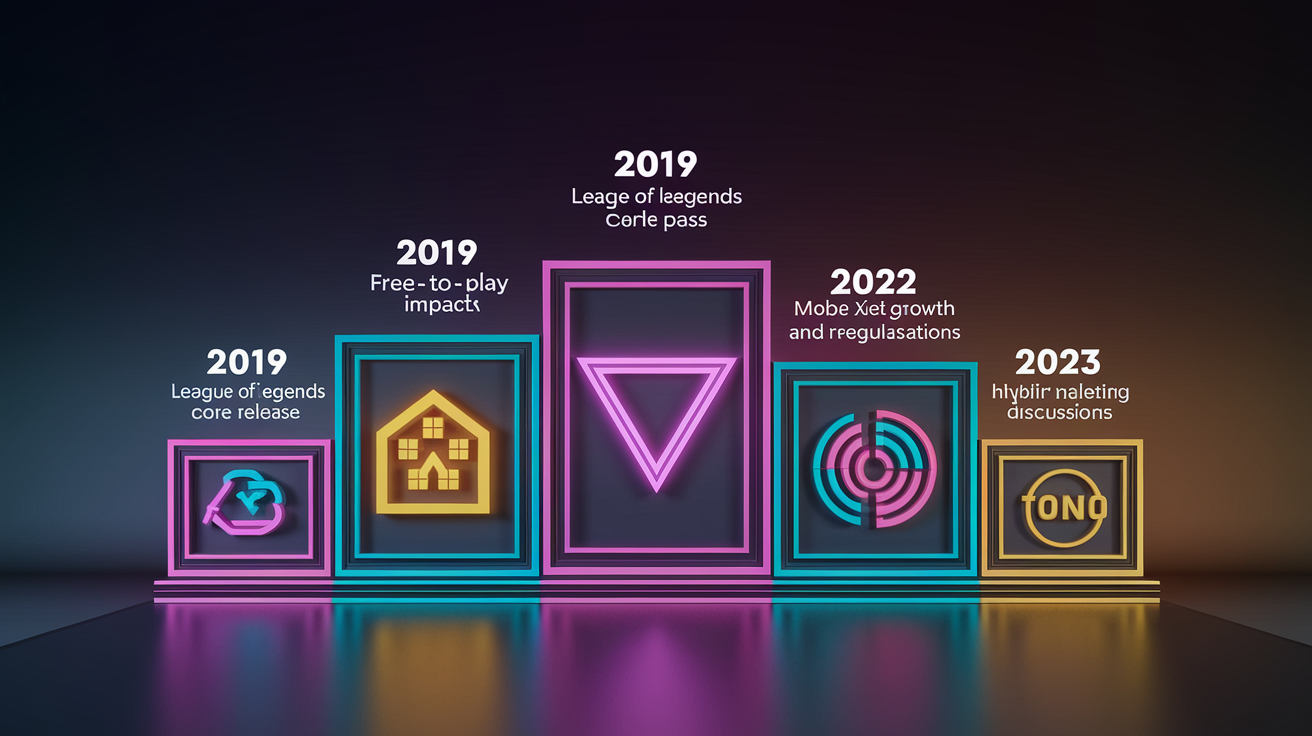
Modern free-to-play has deeper roots than most people think. Back in the 1990s and early 2000s, shareware let players test a game before buying the full version. MMOs like RuneScape and MapleStory tried item shops alongside subscriptions. These were early hints that access didn’t need to cost money if you monetized something else.
2009 was a big turning point. League of Legends launched on October 27, 2009, and built a competitive PC game entirely around free access. Players could buy champions and cosmetics, but the core game cost nothing. That model brought in millions and showed free-to-play could work outside casual mobile titles.
Between 2012 and 2014, mobile exploded. Casual hits like Candy Crush Saga and Clash of Clans made in-app purchases the dominant mobile monetization method. By mid-decade, most mobile games had ditched upfront pricing completely.
2013 brought Dota 2’s Compendium, an event-linked purchase that funded tournaments and gave players exclusive cosmetics and progression rewards. It was an early version of what would later become the battle pass: seasonal fundraising tied to real competition and limited-time rewards.
September 26, 2017 was the date Fortnite Battle Royale launched, and it standardized the battle pass across AAA games. Players paid around $10 for a season of cosmetic rewards and progression. No pay-to-win, no randomness. Just a clear deal: play the season, unlock the rewards. The model worked so well that competitors copied it within months.
September 28, 2020 saw Genshin Impact release globally. It proved gacha monetization (randomized character pulls common in Asian mobile games) could succeed worldwide on mobile and console. The game passed $1 billion in revenue within its first year, showing that Western players would engage with gacha if the core game was strong enough.
From 2018 through 2022, regulators started paying attention. Several countries debated whether loot boxes counted as gambling. Some jurisdictions required odds disclosure or restricted sales to minors. App stores tightened rules. The pressure pushed studios toward more transparent mechanics and clearer pricing.
By 2023 through 2025, hybrid models became standard. Studios mixed subscriptions, battle passes, and curated randomized offers to stabilize revenue. Odds disclosure spread, personalization engines refined pricing for individual players, and platforms enforced stricter policies. Pure loot-box reliance faded in Western markets, replaced by predictable seasonal content and optional cosmetic purchases.
How Free-to-Play Games Actually Make Money

Free-to-play monetization isn’t one thing. It’s a menu of options studios mix and match. Here’s how each piece works in practice.
Cosmetic Microtransactions
Cosmetic purchases let players customize their character, weapon, or environment without affecting gameplay power. A single skin might cost $0.99 to $19.99. Premium bundles with multiple items can run $9.99 to $49.99.
This model works because it respects competitive balance. Players who spend and players who don’t start on equal footing. The only difference is visual. That fairness reduces backlash and keeps non-paying players engaged, which matters when you need a large player pool for matchmaking or social features.
Cosmetics also scale with a game’s popularity. When a title has tens of millions of players, even a small percentage buying skins generates meaningful revenue. The model rewards studios that build strong visual identity and give players reasons to show off.
Battle Passes and Seasonal Progression
A battle pass is a time-limited progression track. Players pay $4.99 to $14.99 per season (usually lasting 8 to 12 weeks) and unlock rewards by playing. The more you play, the more you unlock. Most passes include cosmetics, in-game currency, and sometimes exclusive content.
The core appeal is predictability. You know what you’re buying and what it takes to earn it. There’s no randomness, just a checklist. That transparency builds trust and encourages repeat purchases season after season.
For studios, battle passes create recurring revenue and predictable content cadence. Players who buy a pass are more likely to log in daily to complete challenges, which increases retention and creates opportunities for additional purchases.
Gacha and Randomized Monetization
Gacha systems let players spend currency (earned or purchased) for a random chance at characters, weapons, or items. A single pull typically costs the equivalent of $0.50 to $5.00 depending on the game’s currency conversion.
The randomness is the hook. Variable-ratio reinforcement (the same psychological principle behind slot machines) keeps players pulling. When you don’t know when the next rare item will drop, it’s easy to keep trying.
Most modern gacha games include pity systems (a guaranteed rare item after a certain number of pulls) to reduce frustration and regulatory risk. Many also disclose odds, showing players the exact percentage chance for each rarity tier.
Gacha is polarizing. It generates massive revenue in markets where it’s culturally accepted, but it faces ethical and legal scrutiny in others. Some players appreciate the excitement and long-term progression. Others see it as exploitative, especially when rare items provide competitive advantage.
Loot Boxes and Regulated Mechanics
Loot boxes are similar to gacha but typically involve real-money purchases for randomized rewards. By 2025, they’ve declined in Western markets. Regulatory pressure, especially in Europe, forced many studios to remove or rework loot-box systems.
Where they remain, most now include odds disclosure and pity mechanics. Some jurisdictions restrict sales to minors or classify certain loot-box types as gambling, which triggers additional legal obligations.
The trend is clear: studios are moving away from opaque randomized purchases toward transparent, predictable offers. The revenue potential is still there, but the reputational and legal risk is higher than it used to be.
Subscriptions and Store Passes
Monthly subscriptions (typically $4.99 to $14.99) grant perks like ad-free play, exclusive cosmetics, in-game currency stipends, or early access to new content. Some games bundle season-pass access into the subscription, creating a single recurring charge that covers multiple benefits.
Subscriptions stabilize revenue. A player who subscribes is more predictable than one who makes occasional impulse purchases. For live-service games with continuous content updates, subscriptions align player and studio incentives: the studio ships updates, the player stays subscribed.
The challenge is justifying the cost every month. If content updates slow or players feel the perks aren’t worth it, churn increases. Successful subscription models pair the pass with meaningful quality-of-life improvements and a steady stream of new content.
Advertising and Rewarded Video
Rewarded video ads let players watch a short ad (usually 15 to 30 seconds) in exchange for in-game currency, extra lives, or temporary boosts. Studios earn $0.01 to $0.10 per view depending on region and ad network.
This model is common in hyper-casual and midcore mobile games. It monetizes players who never make purchases and reduces friction for those who want to progress without spending.
The downside is user experience. Too many ads hurt retention. Interstitial ads that interrupt gameplay are especially risky. The best implementations make ads optional and clearly beneficial, so players choose to watch rather than feeling forced.
Hybrid Approaches and Bundles
By 2025, most successful free-to-play games don’t rely on a single monetization method. They combine cosmetics, battle passes, subscriptions, and optional randomized offers to appeal to different player types.
A player who values convenience might buy a subscription. A player who loves cosmetics might buy individual skins. A player chasing rare items might engage with gacha. By offering multiple paths to spend, studios capture revenue from a wider audience without forcing any single mechanic on everyone.
Bundles (limited-time offers that package multiple items at a discount) also play a role. They create urgency and give players a reason to spend now rather than later. Pricing bundles slightly below the sum of individual items makes the deal feel fair while still driving higher transaction values.
Numbers That Matter: KPIs and Player Economics

Free-to-play studios track a set of metrics that reveal whether monetization is working. Here’s what those numbers mean and what typical ranges look like in 2025.
Conversion rate measures the percentage of players who make any purchase. Across most free-to-play games, overall payer conversion sits between 1.5% and 5%. Midcore titles with strong retention sometimes push 5% to 8%. That means 92% to 98.5% of players never spend a cent, yet the model still works.
ARPDAU (average revenue per daily active user) divides total daily revenue by the number of players who logged in that day. For mobile free-to-play games, ARPDAU commonly ranges from $0.01 to $0.20. Hyper-casual games targeting massive audiences might see $0.05. Midcore titles with deeper engagement and monetization can reach $0.12 or higher. Premium free-to-play games with dedicated audiences sometimes exceed $0.20.
ARPPU (average revenue per paying user) looks only at players who spent money. Monthly ARPPU ranges from around $20 to over $200 depending on the game, region, and how aggressively the studio monetizes. A game with light cosmetic monetization might see $20 to $50 per month. A gacha-heavy title with competitive mechanics can push $100 to $200 or more from paying players.
Whale economics refers to the outsized contribution from the top spenders. The top 0.1% to 1% of players often contribute 30% to 70% of total revenue. In some gacha games, a few hundred players might account for millions of dollars annually. This concentration makes retention of high-value players critical. Losing a single whale can hurt monthly revenue more than losing hundreds of free players.
LTV (lifetime value) estimates how much revenue a player will generate over their entire time with the game. LTV varies widely by genre and retention strength. Efficient user acquisition aims for an LTV-to-CAC ratio of 1.5x to 3x or higher, meaning the revenue from an acquired player should be at least one and a half to three times the cost to acquire them.
Battle pass pricing typically falls between $4.99 and $14.99 per season. Seasons last 8 to 12 weeks. If a studio runs four to six seasons per year and retains a stable subscriber base, battle passes alone can generate consistent six or seven-figure monthly revenue for a mid-sized title.
Gacha pull pricing ranges from $0.50 to $5.00 per pull in effective cost after currency conversion. A player chasing a rare character might spend $50 to $300 or more depending on pity systems and luck. Studios balance pull pricing, pity thresholds, and free currency grants to keep engagement high without triggering too much frustration or regulatory attention.
Subscription tiers commonly cost $4.99 to $14.99 per month. Premium bundles that include season access, currency, and cosmetics tend toward the higher end. A game with 100,000 monthly subscribers at $9.99 generates nearly $1 million per month in subscription revenue alone, before any other monetization.
Six Games That Shaped the Model
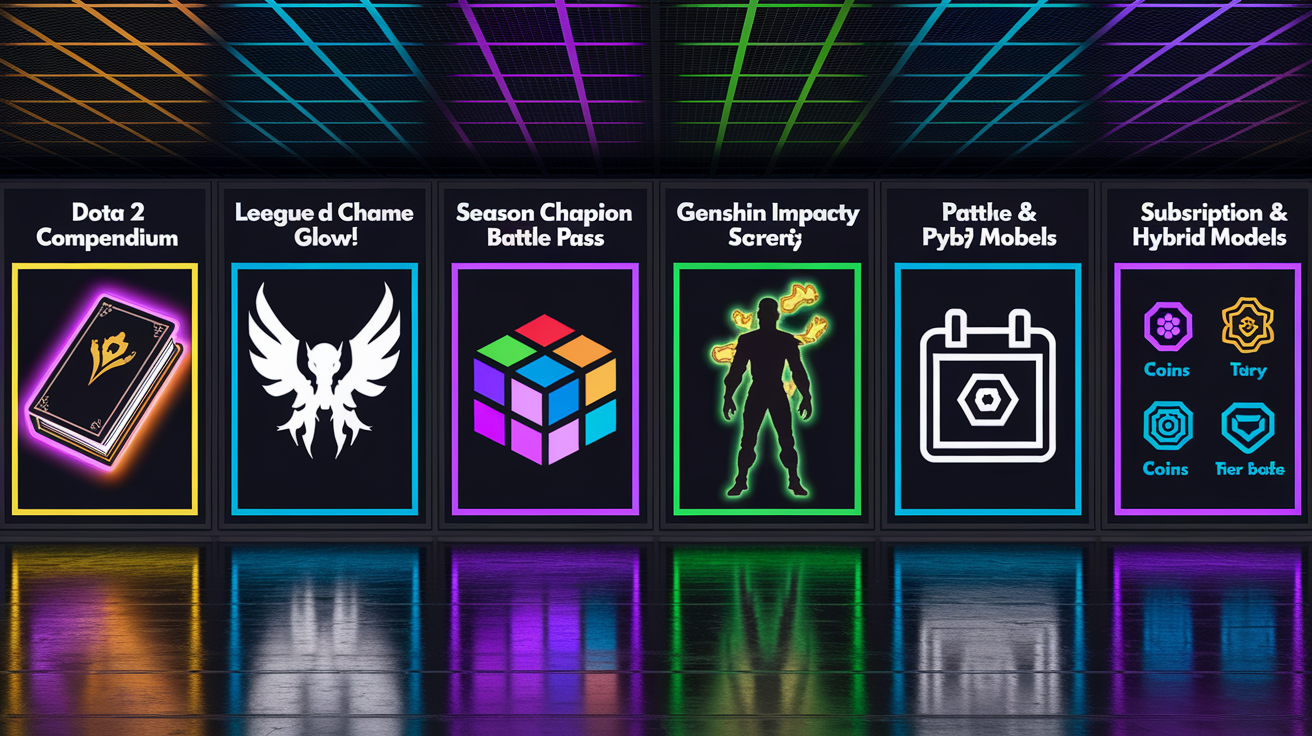
Real examples show how these mechanics play out at scale. Here are six cases that illustrate different approaches and outcomes.
Dota 2 Compendium (2013)
Dota 2’s Compendium (launched in 2013) tied monetization to a major esports event. Players bought the Compendium to support The International prize pool and unlock exclusive cosmetics, in-game effects, and progression rewards tied to tournament milestones.
The model worked because it connected spending to something players cared about beyond their own account. Part of the purchase funded the tournament, which made buying feel like supporting the community. The rewards were time-limited and exclusive, driving urgency.
This event-linked approach foreshadowed modern battle passes. It proved players would pay for seasonal, exclusive content tied to a clear deadline and community event.
League of Legends (Launched October 27, 2009)
League of Legends showed that a competitive PC game could thrive on free access. Players could unlock champions through gameplay or purchase them with real money. Cosmetic skins had no gameplay impact but generated massive revenue.
By 2025, League remains one of the highest-grossing free-to-play PC games. Its success proved that giving away the core game and monetizing cosmetics and optional convenience could sustain a AAA live-service title for over a decade.
The model relies on a massive player base. With tens of millions of monthly players, even a small percentage buying skins adds up. Retention matters as much as monetization, which pushed Riot to invest heavily in live-ops, seasonal events, and competitive balance.
Fortnite Battle Pass (Battle Royale Launched September 26, 2017)
Fortnite Battle Royale launched on September 26, 2017, and standardized the battle pass across AAA gaming. Players paid around $10 per season for a 100-tier progression track filled with cosmetics, emotes, and in-game currency.
The pass was cosmetics-only. No power advantage. That kept the game fair and reduced backlash. The seasonal structure created a content cadence that kept players engaged and gave them a reason to return every few months.
Fortnite’s battle pass became the template. Competitors across genres (Call of Duty, Apex Legends, Valorant) adopted similar seasonal monetization within months. By 2025, battle passes are standard in live-service games because Fortnite proved they work at scale.
Genshin Impact (Released September 28, 2020)
Genshin Impact released on September 28, 2020, and demonstrated that gacha monetization could succeed globally. The game launched on mobile, PC, and console simultaneously, targeting a cross-platform audience.
Players spent currency to pull for randomized characters and weapons. The gacha system included a pity mechanic (a guaranteed five-star character after 90 pulls) to reduce frustration. Odds were disclosed, and free players could earn enough currency to pull occasionally without spending.
Genshin passed $1 billion in revenue within its first year and remained a multi-hundred-million-dollar annual earner afterward. That success showed Western players would engage with gacha if the core game was polished, generous with free content, and transparent about odds.
The trade-off was controversy. Critics argued the gacha model exploited psychological triggers and encouraged overspending. Supporters pointed to the game’s free core experience and the ability to complete all content without paying. The debate continues, but the revenue numbers are undeniable.
PUBG Mobile (Global Mobile Launch March 2018)
PUBG Mobile launched globally in March 2018 and became one of the top-grossing mobile games worldwide. The game combined cosmetic microtransactions, battle passes, and a gacha-style “crate” system for skins.
The scale was massive. PUBG Mobile reached hundreds of millions of downloads and generated hundreds of millions to over a billion dollars annually in peak years. It proved that a console-style shooter could translate to mobile free-to-play and generate revenue at global scale.
The monetization was purely cosmetic. No pay-to-win. That kept competitive integrity intact and allowed the game to maintain a large, engaged player base. The combination of battle passes and randomized cosmetic crates gave players multiple ways to spend depending on preference.
Subscription and Hybrid Examples (2021 to 2024)
Across 2021 to 2024, several games adopted hybrid models that combined subscriptions, battle passes, and optional purchases. Titles like Fallout 76 introduced subscription tiers that bundled quality-of-life perks, exclusive cosmetics, and currency stipends. Other games offered premium passes that included both the season’s battle pass and a monthly subscription in a single package.
These hybrids stabilized revenue by converting impulse spenders into recurring subscribers. Players who might have spent $10 sporadically now spent $10 or $15 every month, increasing predictability and LTV.
The success of hybrid models by 2025 shows that players accept multiple monetization paths as long as each feels optional and fairly priced. The risk is complexity: too many options can confuse players or make the economy feel exploitative if not balanced carefully.
Regulation, Odds Disclosure, and Platform Policy

Legal and regulatory pressure reshaped free-to-play monetization between 2018 and 2025. What started as niche debates about loot boxes became mainstream policy questions that forced studios to change how they design and disclose monetization.
2018 onward saw several countries classify certain randomized mechanics as gambling or introduce rules that treated them similarly. Some European jurisdictions required studios to remove loot boxes or restrict access to minors. Others mandated odds disclosure, forcing games to show the exact percentage chance of each item rarity.
2019 through 2024 brought app-store and rating-board action. Apple and Google updated policies to require clearer labeling of in-app purchases and randomized mechanics. Rating boards in some regions added warnings for games with loot boxes or gacha. The goal was transparency: players should know what they’re buying and the odds they face.
By 2021 through 2025, odds disclosure became standard in most major markets. Games with gacha or randomized monetization now display drop rates prominently. Pity systems (guarantees that prevent endless bad luck) became common as a way to reduce regulatory risk and player frustration.
Platform policing intensified. Major app stores removed or suspended games that violated disclosure rules or targeted minors aggressively. Publishers that ignored policy faced revenue loss and reputational damage, which pushed the industry toward self-regulation and clearer practices.
Consumer protection emerged as a central theme. Regulators and advocacy groups focused on protecting minors and vulnerable players from predatory mechanics. Some jurisdictions debated or implemented spending limits, parental controls, or age verification for randomized purchases.
By 2025, the regulatory landscape is fragmented. Different countries have different rules, which complicates global releases. Studios that operate internationally now design monetization with compliance in mind from the start, building in odds disclosure, pity systems, and age gates to meet the strictest likely requirements.
The shift reduced pure loot-box reliance in Western markets. Studios moved toward predictable battle passes, subscriptions, and transparent cosmetic stores. Randomized mechanics still exist, especially in markets where gacha is culturally accepted, but they’re more regulated and disclosed than they were five years ago.
What Drives Players to Spend

Free-to-play monetization works because it taps into specific psychological drivers. Understanding these mechanisms helps explain why players spend on virtual items and why some tactics raise ethical concerns.
Variable-ratio reinforcement is the engine behind gacha and loot boxes. Players don’t know when the next reward will come, so they keep trying. This unpredictability (the same principle behind slot machines) creates a powerful engagement loop. When a rare item finally drops, the dopamine hit reinforces the behavior and makes the next pull tempting.
FOMO (fear of missing out) drives urgency. Time-limited cosmetics, seasonal events, and exclusive battle-pass rewards create pressure to buy now or lose the opportunity forever. That urgency converts hesitant players into buyers, even if they weren’t planning to spend.
Social signaling and status matter in multiplayer games. Cosmetics let players show off, signal skill or dedication, or stand out in a crowd. A rare skin or exclusive emote becomes a form of social currency. When other players notice and react, it reinforces the purchase and makes future cosmetic spending more appealing.
Loss aversion plays a role in battle passes. Once a player buys a pass, they’ve made an investment. Failing to complete it feels like wasting money, so players log in daily to finish challenges and unlock rewards. That sunk-cost effect increases engagement and creates opportunities for additional purchases.
Investment escalation happens when players spend time and money building their account. The more invested they are, the harder it is to walk away. That investment makes future purchases feel justified: “I’ve already spent this much, might as well keep going.”
Pay-to-win mechanics exploit competitive imbalance. When spending money grants gameplay power, players feel pressure to keep up. That pressure can drive short-term revenue but damages long-term retention and fairness. By 2025, most successful free-to-play games avoid direct pay-to-win, though subtle power advantages through time-saving purchases still exist.
Ethical concerns arise when these mechanisms target vulnerable players. Minors, people prone to addictive spending, and players in financial distress are most at risk. Predatory mechanics (aggressive pricing, hidden odds, and manipulative psychological tactics) can cause real harm.
By 2024 and 2025, player communities and regulators pushed back. Successful studios respond by separating cosmetics from power, implementing spending limits, adding parental controls, and being transparent about odds and costs. Games that ignore ethical concerns face backlash, regulatory action, and long-term revenue loss as trust erodes.
What Changed in 2024 and 2025

The past two years brought noticeable shifts in how studios approach free-to-play monetization. Some of these changes were driven by regulation, some by player expectations, and some by market competition.
Subscription growth accelerated. More games introduced monthly tiers that bundled perks, currency, and season access. Studios favored subscriptions because they stabilize revenue and increase LTV. Players favored them when the perks felt fair and the cost was predictable.
Dynamic personalization and AI-driven pricing became common. Studios now use machine learning to segment players and test personalized offers. A player who hasn’t spent in weeks might see a discount offer. A high-value player might see premium bundles. This personalization increases conversion but raises fairness and privacy questions. Players expect transparency, and studios that personalize pricing without clear communication risk backlash.
Odds transparency spread beyond legal requirements. Even in markets without mandatory disclosure, studios published drop rates to build trust. Pity systems became standard in gacha games, reducing the risk of catastrophic bad luck and making spending feel less like pure gambling.
Platform enforcement tightened. App stores removed or penalized games that violated disclosure rules, targeted minors aggressively, or used deceptive pricing. The cost of non-compliance increased, pushing studios toward clearer, fairer practices.
Reduction in pure loot-box reliance continued in Western markets. Studios replaced opaque randomized purchases with predictable cosmetic stores, battle passes, and curated bundles. Randomized mechanics still exist but are more likely to include pity, disclosure, and optional engagement rather than mandatory spending.
Hybrid models consolidated. By 2025, combining subscriptions, battle passes, and optional cosmetic purchases became the default for live-service games. Studios learned that diversifying revenue streams reduced risk and appealed to more player types.
Consumer trust mattered more. Players in 2025 have options. If a game feels exploitative, they leave and play something else. Studios that prioritize fair monetization, transparent pricing, and respectful design see better retention and higher LTV. Those that push too hard face churn and reputational damage that hurts long-term revenue.
What Comes Next: 2026 Through 2030

Predicting the future is uncertain, but current trends point toward a few likely developments and some possibilities worth watching.
High probability by 2026: Mandatory odds disclosure will spread to more markets. App stores and regulators will continue tightening enforcement. Studios will adopt hybrid monetization (subscriptions plus battle passes plus cosmetics) as the baseline for live-service games. Personalization and AI-driven pricing will become standard, with the caveat that transparency and fairness must keep pace or backlash will force corrections.
Medium probability: Regional spending limits for minors will become more common. Some jurisdictions may require age verification or parental approval for randomized purchases. Industry standardization around pity mechanics and guarantee systems will reduce the wildest swings of gacha monetization. Studios that ignore these trends will face higher compliance costs and market access restrictions.
Lower probability but possible: A major market could formally classify certain randomized mechanics as gambling, triggering taxation, licensing, and significant rework of monetization systems. That would force studios to rethink gacha entirely in those regions. While not certain, the regulatory momentum makes it a real risk, especially in Europe.
Consolidation around durable monetization products will continue. Battle passes, subscriptions, and predictable cosmetic stores will dominate because they balance revenue and retention better than aggressive loot boxes. Studios will experiment with new formats, but the core principles (fairness, transparency, recurring revenue) will stay the same.
AI-driven personalization will deepen. Studios will use player behavior (session length, purchase history, spending patterns) to tailor offers, difficulty, and progression. Done well, this increases engagement and revenue. Done poorly, it feels manipulative and erodes trust. Expect ongoing debate about where the line is and whether studios cross it.
Blockchain and NFT experiments will continue in niche markets, but mainstream adoption by 2030 remains uncertain. Some studios will test blockchain-based ownership and economies, but player skepticism, regulatory uncertainty, and technical friction make widespread success unlikely in the near term. Treat this as a watch item, not a sure thing.
Ethical transparency will become a competitive differentiator. Studios that clearly communicate costs, odds, and monetization mechanics will build stronger communities. Those that hide or obfuscate will face player and regulator pushback. Trust is the new moat.
What Developers, Marketers, and Investors Should Track

If you’re building, marketing, or funding free-to-play games, a few metrics and practices matter more than others in 2025.
Track DAU and MAU to understand your active player base. Daily and monthly active users are the foundation of free-to-play revenue. Without a large, engaged audience, monetization doesn’t scale.
Monitor retention curves: D1, D7, D30. Retention day 1, day 7, and day 30 shows whether your game holds players. Poor retention kills LTV and makes user acquisition unprofitable. Strong retention justifies higher CAC and supports aggressive growth.
Measure conversion percentage and ARPDAU. Conversion tells you what fraction of players spend. ARPDAU tells you how much revenue you generate per active player per day. Together, they reveal whether your monetization is working and where to optimize.
Segment your ARPPU and identify your whales. Know who your top 1% and top 10% spenders are. Understand what they buy and why they stay. Losing a handful of high-value players can hurt revenue more than losing hundreds of free players.
Calculate LTV by cohort. Break down lifetime value by acquisition source, region, and time period. Compare LTV to CAC to ensure your user acquisition is profitable. Aim for LTV/CAC ratios of 1.5x to 3x or higher depending on growth stage and capital availability.
Test pricing and bundles. Run A/B tests on battle-pass pricing in the $4.99 to $14.99 range. Experiment with cosmetic bundles at $4.99 to $29.99. Try loyalty or subscription tiers at $4.99 to $14.99 per month. Small pricing changes can have outsized revenue impact when multiplied across thousands of players.
Maintain compliance and transparency. Disclose odds for randomized mechanics. Implement pity systems. Age-gate purchases where required. Offer clear refund and claim policies. Staying ahead of regulation reduces legal risk and builds player trust.
Diversify revenue streams. Don’t rely on a single monetization method. Combine cosmetics, battle passes, subscriptions, and optional randomized offers to capture revenue from different player types. Diversification stabilizes income and reduces risk if one mechanic underperforms or faces regulatory pressure.
Prioritize fair core loops. Games that feel pay-to-win or exploitative churn players and damage long-term revenue. Separate cosmetics from power. Make progression achievable without spending. Design monetization that enhances the experience rather than gating it.
Invest in live-ops and seasonal content. Battle passes and subscriptions require continuous content updates to justify recurring costs. Plan content calendars 6 to 12 months in advance. Ship updates on a predictable schedule. Players stay subscribed when they see consistent value.
Watch for regulatory changes. Free-to-play policy is evolving. Monitor app-store updates, regional laws, and industry standards. Build compliance into your design from the start rather than retrofitting it later. The cost of non-compliance (removal from stores, fines, reputational damage) is rising.
Value long-term retention over short-term revenue spikes. A player who spends $5 per month for two years is worth more than a player who spends $50 once and quits. Optimize for LTV, not single-transaction size. Design monetization that keeps players happy, engaged, and willing to return.
Final Words
See how monetization models, player trust, regulation, and analytics are reshaping free-to-play games right now. The post broke down common tactics, risks, and practical tests you can run.
Use the short framework here to weigh revenue against player experience, pick small experiments, and track results. If that sounds like a lot, start with one change and measure.
For a quick recap: evolution of free-to-play monetization 2025 explained. It’s about transparency, smarter value, and player-first design. Try one idea this week and watch the positive change.
FAQ
Q: What does option A mean?
A: Option A means there are no hyperlinks available, so I will mark every section with “[Hyperlinks]= na” and continue building the outline and article without embedded links.
Q: What does option B mean?
A: Option B means you will provide the hyperlink list, and I will integrate up to two internal and two external links into the outline and article where they clearly help readers.
Q: How will you choose which links to include?
A: I will choose links based on relevance, reader benefit, and authority—prioritizing pages that answer user questions or help the reader take the next step.
Q: What happens if I don’t reply—will you assume A or stop?
A: If you don’t reply, I will assume A (no links) and proceed with the outline; if you want B, tell me now and I will pause to include your list.
Q: Can I add or change links later?
A: You can add or change links later; I will update the outline and article to swap or add links, keeping the agreed maximum of two internal and two external links.
Q: How many links will be placed, and where will they go?
A: I will place up to two internal and two external links in relevant spots—usually the intro, resources, or examples—where they directly help readers follow up or learn more.
Q: Do you need a specific link format or anchor text from me?
A: I need the URLs and any preferred anchor text or formatting; if you don’t provide anchor text, I will use clear, descriptive text that matches each link’s destination.
Q: Will adding external links affect page performance or privacy?
A: Adding a few external links does not affect page load or privacy; they are simple URLs, but tell me if you need no-follow, no-tracking, or special handling.