

What if a game’s progression system matters more than its graphics?
Progression systems and retention mechanics are the parts that turn one play session into weeks or months of habit, not just a fun hour.
This guide cuts through theory and shows practical systems like linear, branching, seasonal, and meta progression, plus easy ways to tune rewards, pacing, and loops so players feel growth, want to return, and stick with your game.
Core Purpose and Function of Progression and Retention Systems

Progression systems are the frameworks that move players through a game’s challenges. Experience points, skill unlocks, tiered content, rewards that stack up over time. They’re what turn vague gameplay into measurable goals and give you that sense of actually getting somewhere. Retention mechanics sit right next to progression, doing the work of bringing players back tomorrow and next week through daily bonuses, seasonal events, predictable long-term goals, and scheduled rewards. Put these two together and you’ve got the backbone of player engagement. What could’ve been a single session turns into weeks or months of involvement.
Modern games tie progression to basic psychological drivers: competence (you’re getting better), autonomy (your choices matter), and mastery (you’re developing real skill). When you level up or unlock a new ability or clear a tough milestone, the game confirms that your time just produced something real. That feedback loop turns playtime into progress. And progress into habit.
Players show up with expectations. Successful systems meet them:
- You can see you’re advancing. Progress bars, level numbers, content that unlocks.
- Rewards feel meaningful. Not just cosmetic fluff.
- You’re growing in power or capability.
- Challenges scale up as you improve.
- There’s a reason to come back tomorrow, next week, next month.
Meet those expectations and players feel productive and motivated. Ignore them and even a gorgeous game feels hollow. People drift off within days. Progression gives players a reason to stay. Retention mechanics give them a schedule to follow.
Types of Progression Systems Used in Modern Games

Linear progression takes you down a fixed path. Levels, stages, tiers, all in a set order. Each step unlocks the next. Everyone gets the same journey. This works well for narrative-driven games, tutorial-heavy experiences, anything that wants tight pacing control. You know exactly what’s next, which cuts down confusion but can also kill replay value.
Branching progression gives you choices. Skill trees, class systems, multiple upgrade paths. You decide how to specialize, which creates variety and makes experimentation interesting. This supports replayability since different choices produce different experiences. The downside? Overwhelming new players with too many options right out of the gate. Successful branching systems introduce choices slowly.
Seasonal progression refreshes content on a fixed schedule. Every few weeks, every few months. Battle passes, seasonal ladders, limited-time events. Seasonal models create urgency (you’ve got until the season ends) and give veteran players fresh goals even after they’ve maxed out permanent progression. Works especially well in live-service games that need to keep engagement up between major updates.
Meta-progression sticks around across sessions, runs, or character resets. In a roguelike, you unlock permanent upgrades that make future runs easier. In competitive multiplayer, your account level and unlocked cosmetics carry forward even as individual matches reset. Meta-progression rewards long-term commitment and softens the sting of failure. Even a losing session contributes to overall advancement.
| Progression Type | Core Benefit | Example Use Case |
|---|---|---|
| Linear | Clear pacing and controlled difficulty curve | Story-driven RPGs, tutorial-heavy mobile games |
| Branching | Player choice and replayability | Skill-tree RPGs, class-based multiplayer games |
| Seasonal | Fresh goals and time-limited urgency | Battle passes, ranked ladders, live-service events |
| Meta-progression | Long-term persistence and failure mitigation | Roguelikes, account-level unlocks in F2P titles |
Psychological Principles Behind Engagement

Player motivation gets shaped by three core needs from self-determination theory: competence, autonomy, and relatedness. Competence means you need to feel capable and see yourself improving. Autonomy means you want choices that reflect your preferences. Relatedness means you want connection to other players, through cooperation, competition, or shared goals.
Extrinsic rewards like currency, gear, and cosmetics provide immediate satisfaction and reinforce short-term play. They work best paired with intrinsic motivators. Things like mastery, curiosity, the joy of solving problems. A well-designed progression system uses extrinsic rewards to create habit formation early, then shifts focus toward intrinsic satisfaction as players get invested.
Four psychological drivers that translate directly into design:
- Feedback loops. You need to see results fast. Experience bars fill, damage numbers pop, unlock notifications appear.
- Variable rewards. Unpredictable rewards create anticipation and excitement. Predictable rewards create reliability and routine.
- Goal gradients. Players accelerate effort as they approach a milestone. Visible progress bars motivate completion.
- Social proof. Leaderboards, friend activity feeds, shared achievements. Taps into the desire for status and belonging.
These principles inform every decision. How fast early levels go by. How rare a high-tier unlock should feel. A system that satisfies competence (you’re getting stronger), autonomy (you chose this path), and relatedness (your friends see your progress) keeps players engaged far longer than one relying solely on flashy rewards.
Retention Loops and Engagement Models

Effective retention loops pair short-term actions with long-term rewards. A core loop might be: complete a mission, earn experience, level up, unlock a new ability. That takes minutes to hours. A meta loop extends further: complete a season track, unlock prestige rewards, start a new season with fresh goals. Layering these loops creates rhythmic player behavior where every session feels productive and every week offers a new milestone.
Short loops (minutes to hours) keep players in the game right now. Mid-term loops (days to weeks) give reasons to return tomorrow and maintain streaks. Long-term loops (weeks to months) sustain veterans and justify ongoing investment. Games that excel at retention design all three loop types. Players always have an immediate task, a weekly goal, and a long-term aspiration.
Players form habits by repeating a simple cycle: cue, routine, reward. Here’s how loops build habit formation:
- Cue. A notification, daily reset timer, or friend invite signals it’s time to play.
- Routine. You log in, complete the daily challenge, claim the reward.
- Reward. You receive currency, progress toward a milestone, or a small dopamine hit from a completed task.
Over time, the cue becomes automatic. You check the game at the same time each day, not because you planned to, but because the loop trained you. This is why daily login bonuses and 24-hour cooldowns are so common. They hijack habit formation by creating a predictable rhythm.
Reward Schedules and Progression Pacing
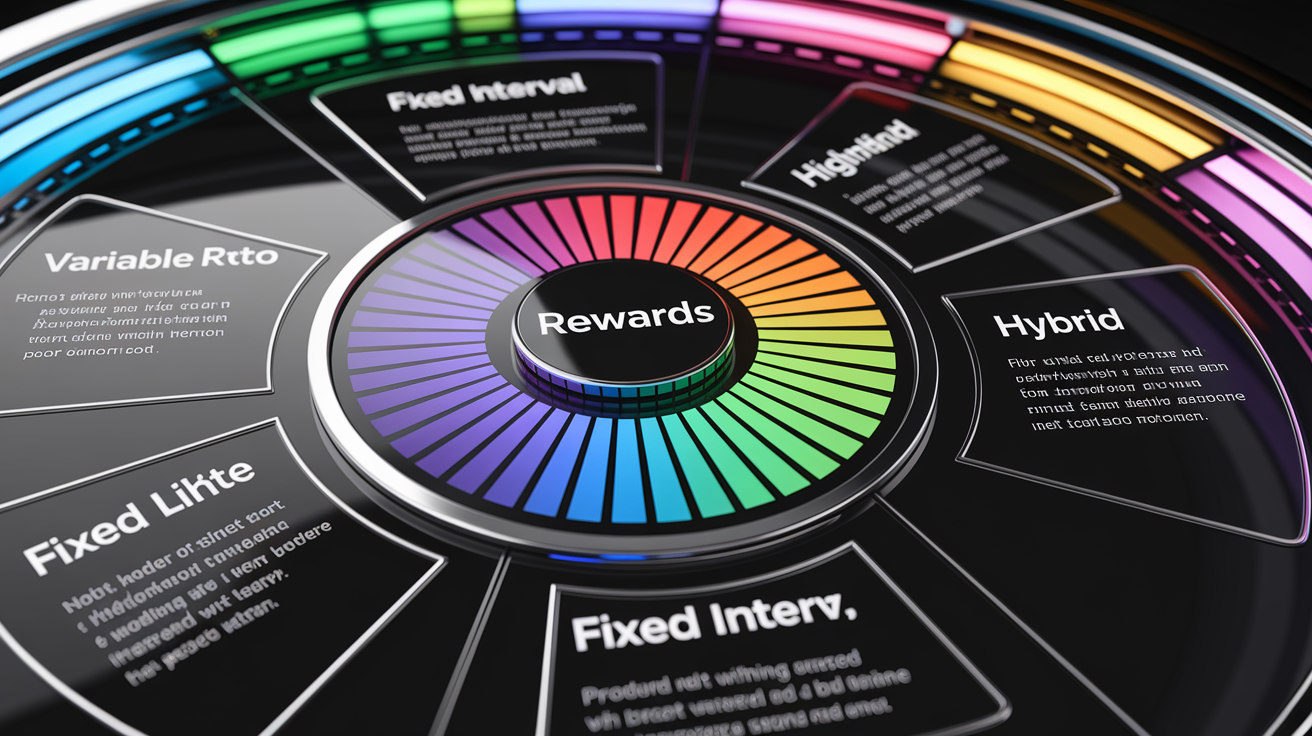
Variable ratio rewards create anticipation because you never know exactly when the next big reward will arrive. A loot box, a critical hit, a rare drop. All use variable schedules. This schedule type generates excitement but can feel frustrating if the variance is too wide or the average reward rate is too low.
Fixed schedules provide certainty. A daily login bonus that arrives every 24 hours or a level-up reward every 1,000 experience points reassures you that progress is guaranteed. Fixed schedules are less exciting moment to moment, but they build trust and reduce the sense of wasted time. You know that if you put in the work, the reward will show up.
Balanced pacing prevents burnout and boredom by mixing both schedule types. Early progression should feel fast to build confidence and demonstrate that effort leads to results. Mid-game pacing can slow slightly to create challenge and depth. Late-game pacing often introduces long-term goals and prestige systems that reward dedication without making progress feel impossibly slow. Rewards that come too fast lose meaning. Rewards that come too slow make players quit before they reach them.
| Reward Schedule | Strength | Risk |
|---|---|---|
| Variable Ratio | High excitement and anticipation | Can feel unfair or frustrating if variance is too high |
| Fixed Interval | Predictable and reliable; builds trust | Lower moment-to-moment excitement |
| Hybrid (Variable + Fixed) | Balances excitement with reliability | Requires careful tuning to avoid overwhelming players |
Onboarding and Early-Game Progress Curves
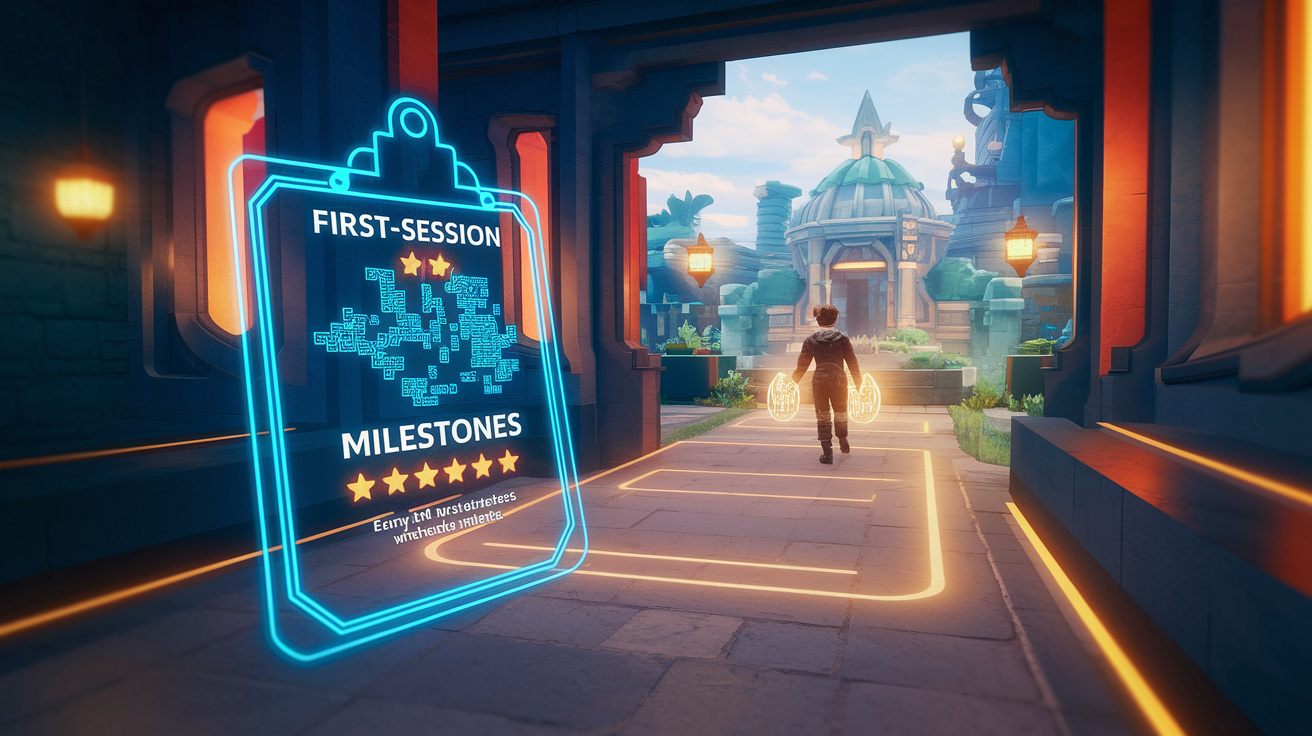
The first session is the most critical window for retention. If a new player doesn’t feel successful within the first 5 to 10 minutes, they’re unlikely to return. Early-game progress must feel fast, with frequent small wins that build confidence and teach core mechanics. Clear tutorials reduce friction by showing you exactly what to do next, but they’ve got to balance instruction with player agency. A tutorial that feels like a 15-minute cutscene will drive people away.
Players disengage quickly if early rewards feel slow or meaningless. The solution is to front-load tangible progress. Let players level up twice in their first session. Unlock a new ability by minute three. Show a visible result from their first meaningful choice. These early wins create momentum that carries players through the steeper learning curve that follows.
Onboarding should also introduce long-term goals early. Not as requirements, but as possibilities. Show a high-level player’s gear or a late-game ability in the tutorial to create aspiration. Let the new player know that if they keep playing, they’ll get access to all of this. That glimpse of the future turns a confusing early experience into the start of a journey worth continuing.
Examples of Progression and Retention Systems in Popular Games

Fortnite
Fortnite’s battle pass combines linear progression (tier-based unlocks) with seasonal resets and daily/weekly challenges. You earn experience through matches and challenges, unlocking cosmetics and currency as you progress through 100 tiers over roughly 10 weeks. The free track offers enough value to demonstrate the system. The paid track ($9.99 per season) provides exclusive skins and enough premium currency to fund the next season. The system works because it layers short-term goals (complete today’s challenge), mid-term goals (reach tier 50 this week), and long-term goals (unlock the tier-100 skin before the season ends).
Genshin Impact
Genshin Impact uses a gacha-based character and weapon progression system combined with an adventure rank that gates story content and world difficulty. You earn adventure experience by completing quests, exploring, and spending resin (an energy system that refills over 24 hours). The game balances free-to-play accessibility with monetization by providing a steady stream of free pulls and guaranteed pity systems that prevent extreme bad luck. Retention gets driven by daily commissions, resin cooldowns, limited-time events every few weeks, and a long-term character-building grind that can span months.
Destiny 2
Destiny 2 combines vertical power-level progression with seasonal content drops and endgame activities that require coordination. You chase higher gear scores, unlock seasonal mods and weapons, complete weekly challenges for pinnacle rewards. The game sustains engagement through a weekly reset cadence (new raid rotations, nightfall strikes, vendor inventory), seasonal story beats every three months, and long-term triumphs and seals that reward mastery. Social systems (clans, fireteams, raids) amplify retention by creating scheduled play sessions with friends.
Slay the Spire
Slay the Spire uses meta-progression to soften the difficulty of a roguelike deck-builder. Each run is self-contained, but you unlock new cards, relics, and characters by completing specific challenges or reaching certain milestones. This creates a sense of progress even when a run ends in failure. The game also offers daily climbs (fixed seed challenges with leaderboards) and custom modes that let you tweak difficulty and rules, extending replayability for veterans who’ve mastered the base game.
Implementing Progression Systems Step-by-Step

Designing effective progression and retention systems requires a structured approach:
- Define player goals. What should players be working toward in the first hour, the first week, and the first month?
- Map the player journey. Sketch out the path from onboarding through mid-game mastery to endgame content.
- Select reward types. Choose a mix of functional upgrades, cosmetic unlocks, and status markers that appeal to different motivations.
- Choose progression model(s). Decide whether you need linear, branching, seasonal, meta, or a hybrid system.
- Set milestone pacing. Determine how long each major progression step should take (aim for early wins in minutes, mid-game wins in hours, late-game wins in days).
- Balance difficulty curves. Ensure challenges scale alongside player power so the game stays engaging without becoming trivial or frustrating.
- Prototype and test. Build a minimal version, playtest with real users, and measure where players drop off or lose interest.
Iterative balancing and live feedback are essential. No progression system lands perfectly on the first try. Use telemetry to identify where players stall, where they churn, and which rewards feel meaningless. A/B test pacing changes (faster early levels vs. slower), reward structures (more frequent small rewards vs. rare big rewards), and difficulty scaling. Small adjustments, like reducing the experience required for levels 3 through 7, can produce measurable lifts in day-1 and day-7 retention.
Live feedback loops (surveys, community forums, support tickets) reveal friction points that numbers alone can’t explain. If players consistently complain that level 15 feels like a wall, dig into the data and the design. Maybe the difficulty spike is too steep, or maybe the reward at level 16 isn’t compelling enough to justify the grind.
Common Pitfalls and How to Avoid Them
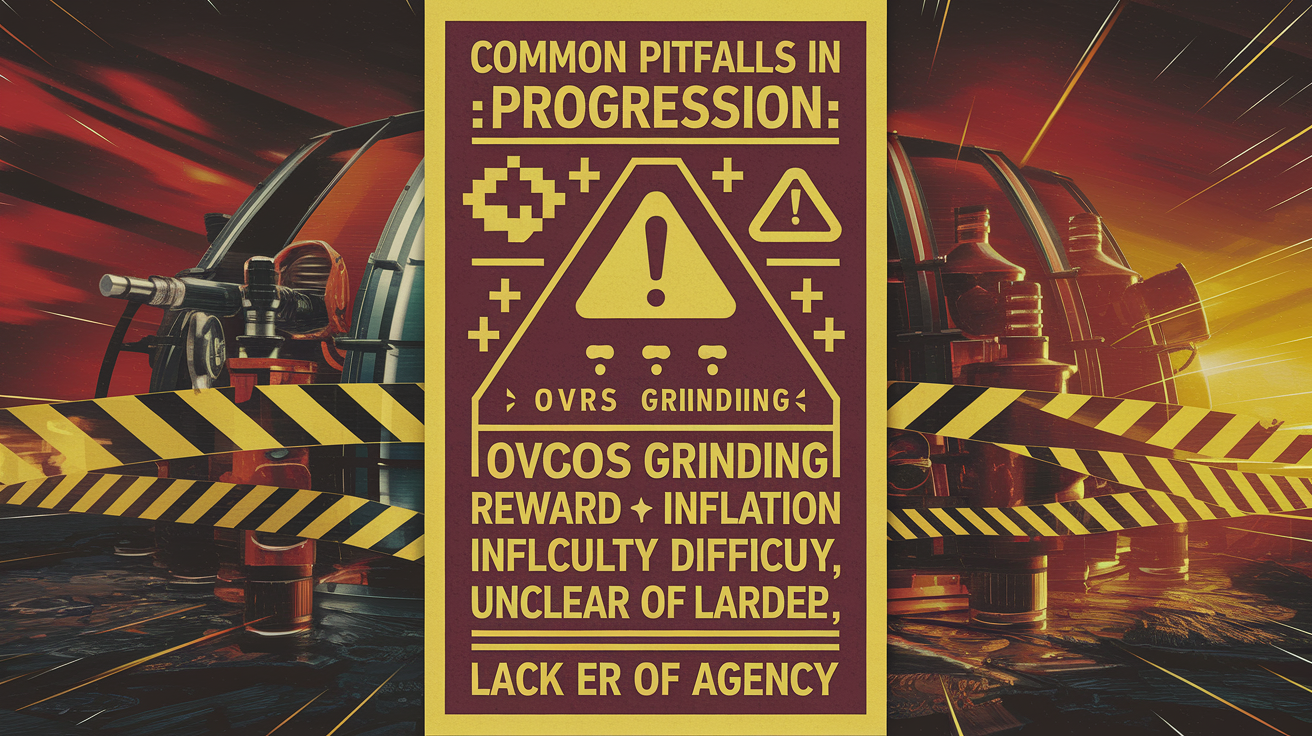
Five mistakes that frequently harm retention:
- Overly grindy progression. When you feel like you’re running in place or progress slows to a crawl, you quit. Early progression should feel brisk. Late-game grind is acceptable only if players are already invested.
- Reward inflation. Handing out too many high-value rewards too early devalues future rewards and leaves you nowhere to go. Pace rare rewards carefully.
- Poorly tuned difficulty curves. Difficulty spikes that aren’t matched by new tools or abilities feel unfair. Difficulty that plateaus or drops removes challenge and makes progression feel meaningless.
- Unclear goals. If you don’t know what you’re working toward or can’t see your progress, motivation collapses. Always show the next milestone and how close the player is to reaching it.
- Ignoring player agency. Progression systems that feel like they’re on rails, with no meaningful choices or customization, reduce engagement. Even linear systems should offer some sense of player ownership.
These pitfalls often stem from designing in a vacuum without playtesting or from copying another game’s systems without understanding the context. A grind that works in a social MMO (where friends and guilds provide external motivation) will kill a single-player game. A difficulty curve tuned for hardcore players will alienate a casual audience.
Mitigation comes from early and continuous testing. Run small-scale playtests during prototyping to catch pacing issues before they’re baked in. Use telemetry to monitor real player behavior and adjust systems live. If you see a sudden drop-off at a specific level or challenge, investigate immediately. And always provide multiple paths to the same goal so players who hit a wall can try a different approach instead of quitting.
Measuring the Success of Progression and Retention Mechanics

Tracking the right metrics reveals whether your progression and retention systems are working. Daily Active Users (DAU) and Monthly Active Users (MAU) measure overall engagement, but the DAU/MAU ratio is more informative. It shows what percentage of your monthly players are coming back each day. A ratio of 0.20 to 0.30 indicates healthy habitual engagement.
Day-1, day-7, and day-30 retention rates track how many players return after their first session, after one week, and after one month. These cohort-based metrics highlight onboarding effectiveness (day-1), early-game engagement (day-7), and long-term hooks (day-30). Churn analysis identifies when and why players stop playing, often pointing to specific progression bottlenecks or content gaps.
Progression milestones reveal friction points. If 60% of players reach level 5 but only 30% reach level 6, something’s wrong with the level-5 to level-6 experience. Maybe the next goal is unclear, the difficulty spikes unexpectedly, or the reward at level 6 isn’t compelling. Drill into the data at every major milestone to find and fix these drop-offs.
| Metric | Purpose | Typical Benchmark |
|---|---|---|
| Day-1 Retention | Measures onboarding effectiveness and first-session hooks | 30% to 60% (below 25% indicates major onboarding issues) |
| Day-7 Retention | Tracks early-game engagement and mid-term loop strength | 10% to 25% (a +5 percentage point lift is substantial) |
| Day-30 Retention | Indicates long-term hooks and meta-progression success | 3% to 10% for free-to-play; higher for premium titles |
| DAU/MAU Ratio | Shows habitual engagement and stickiness | 0.20 to 0.30 is healthy; above 0.40 is exceptional |
Final Words
In the action, we defined what progression systems and player retention mechanics do, why they matter, and the basic player expectations that support long-term engagement.
We then mapped types (linear, branching, seasonal, meta), the psychology behind motivation, retention loops, reward schedules, onboarding tips, real-game examples, implementation steps, common pitfalls, and the metrics to watch.
This guide to progression systems and player retention mechanics gives a practical checklist you can use today. Iterate, measure, and tune. It’ll help you build systems players stick with.
FAQ
Q: What are progression and retention systems, and why do they matter?
A: Progression and retention systems are structures that guide players with rewards, experience, and unlocks to keep them playing. They matter because they create goals, steady satisfaction, and long-term engagement.
Q: What types of progression systems exist and when should I use each?
A: The main types are linear, branching, seasonal, and meta-progression. Choose linear for clear paths, branching for player choice, seasonal for regular refreshes, and meta for persistent long-term growth.
Q: What psychological principles drive player engagement in these systems?
A: The key drivers are competence (feeling skilled), autonomy (choice), relatedness (social ties), and intrinsic enjoyment. Extrinsic rewards help early engagement but intrinsic motives sustain long-term play.
Q: What are retention loops and how do they form player habits?
A: Retention loops are repeated short actions tied to long rewards; they create rhythm and expectation. Layering core, mid, and meta loops builds habit through frequent wins and clear long-term payoff.
Q: How should reward schedules and pacing be balanced?
A: Reward schedules should mix variable and fixed rewards to spark anticipation while offering predictable progress. Balance pacing so players feel steady advancement without burnout or boredom.
Q: How does onboarding and early-game progress affect retention?
A: Onboarding and early progress shape retention by building quick wins and reducing friction. Fast, clear tutorials and early rewards build confidence and lower early churn.
Q: What common design mistakes hurt progression and retention, and how do I avoid them?
A: Common mistakes are excessive grind, reward inflation, unclear goals, poor difficulty tuning, and inconsistent pacing. Avoid them by testing balance, shortening early wins, and iterating with player data.
Q: How do I implement a progression system step-by-step?
A: Implement by defining player goals, mapping journeys, choosing reward types, designing loops, balancing pacing, prototyping, and iterating with live feedback and metrics.
Q: How do popular games use progression and retention systems?
A: Popular games layer systems: Fortnite uses seasonal updates, Genshin mixes meta-progression and daily incentives, Destiny blends mastery paths, and Slay the Spire uses roguelike progression for replayability.
Q: How do I choose the right progression system for my game?
A: Choose based on player time commitment, genre, desired agency, and live-ops capacity. Opt for simple linear systems for short sessions, branching for player choice, seasonal for regular content.
Q: How should I measure the success of progression and retention mechanics?
A: Measure with DAU/MAU, day-1/7/30 retention, churn rates, milestone completion drop-offs, and engagement depth. Use these KPIs to spot friction and guide iterative fixes.