

What if the real reason players log in isn’t items or levels, but other people?
Games with guilds or clan systems often see Day 7 retention jump 15–25%, and player-driven events keep groups coming back.
Guilds, clans, and player-led events create duty, shared goals, and social identity.
Skipping feels like letting people down.
That shift, from solo reward to community obligation, is what turns casual users into long-term players and makes engagement stick.
How Social Systems Drive Player Engagement and Long-Term Retention
Social structures turn solo play into shared experiences, and the retention data doesn’t lie. Games with guild or clan systems see Day 7 retention jump 15–25% compared to solo designs. Day 30? Even stronger. The reason’s pretty straightforward: you’re not just logging in for your own progress anymore. You’re showing up because your guild needs daily contributions, your clan’s got a war scheduled, and skipping means letting people down. That shift from “I’ll play if I feel like it” to “I need to be there” converts casual players into committed ones real fast.
Shared goals hit different than personal wins. Sure, clearing a dungeon solo feels good. But taking down a raid boss with your guild? That’s collective pride, public recognition, and usually rewards spread across everyone who participated. These cooperative objectives create interdependence. Members rely on each other to unlock progression, finish time-limited challenges, defend shared resources. It’s self-reinforcing: participation strengthens bonds, stronger bonds make leaving feel costly, and better retention keeps communities active enough to pull in new recruits. Guild event participation regularly hits 60%+, while equivalent solo content sits around 20–30%.
Group systems outperform solo progression for the long haul because they add social layers to everything. Leaderboards bring competition. Guilds bring cooperation, identity, belonging. You might quit after exhausting single-player content, but guild membership creates ongoing reasons to return. Weekly wars, seasonal tournaments, leadership duties, or just maintaining friendships you’ve built in-game. The investment in social capital (reputation, rank, relationships) becomes as valuable as character progression. That’s an exit barrier purely mechanical systems can’t touch.
What you get from implementing social systems:
- 64% higher retention at two years and 90% higher at five years for games with user-generated content and social features versus non-social equivalents
- 23% revenue advantage for titles emphasizing community-driven gameplay and guild economies
- 35% revenue increase on final ranking days of recurring competitive events (Merge Mansion leaderboard case)
- 180% spike in daily downloads following major clan-mode feature launches (Diablo Immortal clan wars)
- 60%+ participation rate in guild missions compared to 20–30% for solo event equivalents
- 15–25% Day 7 retention lift and stronger Day 30 differentiation when guild systems are properly onboarded and incentivized
Structural Designs of Guilds and Clans That Improve Player Commitment
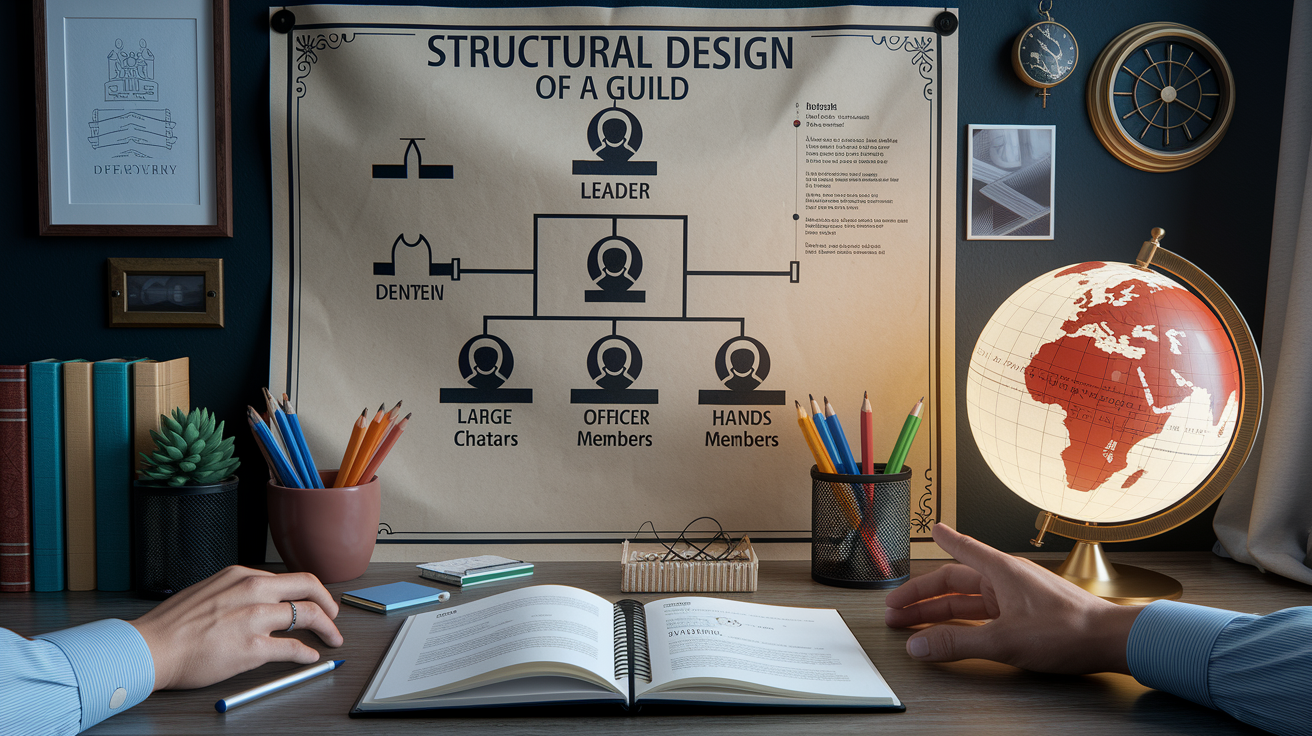
Guild hierarchy directly affects stability and member retention. Clear roles matter. Leaders set direction, officers manage recruitment and moderation, members contribute to shared objectives. It creates accountability and progression pathways within the social structure itself. Players who earn officer status or leadership positions churn way less because they’ve invested time building social capital and feel responsible for the community’s success. Without defined roles? Guilds turn into unstructured chat rooms with no ownership or coordination. Activity dies, guild collapses.
Communication tools determine whether coordination happens or frustrates players into leaving. In-game guild chat, voice integration, announcement boards, event calendars. These reduce friction and enable real-time collaboration. Games forcing coordination into external Discord servers or third-party apps lose casual participants who won’t install additional software. Effective communication systems are embedded, persistent, accessible from any game screen. Members check messages, respond to calls for help, review upcoming events without interrupting play. Guild activity drops 30–40% when primary communication requires leaving the game client.
Reward distribution shapes participation patterns and perceived fairness. Shared loot pools, rank-based bonuses, contribution-weighted rewards. These motivate consistent involvement while discouraging free-riding. When everyone gets identical rewards regardless of effort, high contributors burn out and leave. When rewards favor only top performers, casual members feel excluded and disengage. The best models tier rewards by participation level. Minimum contributors earn baseline rewards, active members unlock better loot, leaders or top contributors access exclusive cosmetics or titles that signal status without creating insurmountable power gaps.
| Feature | Effect on Engagement | Example |
|---|---|---|
| Hierarchical Roles | Creates progression and accountability; reduces leadership churn by 20–30% | Leader/Officer/Member tiers with promotion paths tied to contribution or tenure |
| Guild Missions & Daily Tasks | Establishes routine login behavior; raises daily participation to 60%+ | Weekly guild boss requiring 50 member check-ins; daily donation goals with shared rewards |
| Recruitment & Onboarding Tools | Lowers new-member churn by 15–20% through structured intro and mentorship | Automated invite flows, guild description pages, starter-quest chains for new recruits |
| In-Game Communication (Chat/Voice) | Increases activity rate by 30–40% vs external-only communication | Persistent guild chat tab, voice channels, event notifications, announcement pins |
| Contribution-Based Rewards | Reduces free-rider attrition; sustains effort from active members | Tiered loot boxes based on weekly donations or mission completions; cosmetic badges for top contributors |
Cooperative Play as a Driver of Social Motivation

Missions requiring multiple players increase session length by creating windows of coordinated availability. When a raid or guild boss opens up, members log in simultaneously to participate. Brief solo sessions transform into extended group activities. This synchronous play drives concurrent user peaks and raises average session duration. Players stay online to complete the objective, then often stick around to socialize or tackle secondary content. Cooperative difficulty scaling sustains challenge across varying group sizes and skill levels. Content stays engaging whether five or fifty members participate. Dynamic scaling prevents trivial completion while avoiding impossibility for smaller guilds, maintaining motivation across the player spectrum.
Shared achievements generate emotional investment that solo milestones rarely match. Defeating a difficult boss as a team produces collective celebration, screenshots shared in guild chat, recognition on leaderboards or achievement feeds. These moments become shared history that binds members together and creates recurring conversation topics. Players return not only to chase new achievements but to relive past victories and pursue the next communal milestone. The social proof of accomplishment (visible guild halls displaying trophies, ranked listings showing server dominance, exclusive cosmetics earned through group effort) transforms personal progression into public identity, increasing the perceived value of continued participation.
Cooperative systems that increase motivation:
- Guild raids and world bosses. Time-gated encounters requiring 10–40 simultaneous players. Create urgency, coordination demands, peak concurrent activity spikes.
- Shared progression tracks. Communal resource pools or unlock trees where every member’s contribution advances the entire guild. Raises daily donation and participation consistency.
- Cooperative leaderboards. Rankings based on collective performance (total guild damage, combined mission completions). Foster friendly inter-guild competition and internal accountability.
- Mentor and apprentice systems. Pair veterans with new players for mutual rewards. Veteran retention increases as they invest in protégés, new-player churn drops 15–20% with active mentorship.
Competitive Social Features and Their Influence on Retention

Leaderboards promote repeat attempts by making relative performance visible and rewarding incremental improvement. Players compare their rank to friends, guild members, or server populations, then optimize strategies or invest resources to climb higher. This loop’s especially powerful during limited-time events where final ranking determines reward tiers. The urgency of a closing leaderboard window drives session frequency and in-event spending as players push for the next tier. Games using recurring weekly or monthly leaderboards report 20–35% higher week-over-week engagement compared to static progression systems because the reset creates fresh competition and renewed opportunity.
Clan-versus-clan modes create long-term rivalry cycles that extend engagement far beyond individual matches. Guild wars, faction conflicts, territory control systems. These introduce persistent stakes. Wins accumulate toward seasonal rankings, unlock exclusive content, grant server-wide recognition. Rivalries generate emergent narratives: grudge matches, underdog comebacks, dominant guilds challenged by rising competitors. Members rally around these stories, increasing investment in outcomes and willingness to coordinate, recruit, spend to secure victory. The cyclical nature (wars repeat weekly or monthly) means the competition never fully resolves, sustaining motivation across months or years.
Seasonal resets re-engage dormant players by offering a clean slate and renewed opportunity for recognition. Players who fell behind in previous seasons return to compete on equal footing when rankings reset, participation requirements refresh, new reward tiers launch. This mechanic prevents permanent stratification where early adopters or high spenders monopolize top ranks indefinitely, preserving the perception that effort and skill can still yield meaningful placement. Reset-driven spikes in returning users often exceed 40% compared to steady-state periods, with the largest lifts occurring in the first 48 hours after reset when competition’s most open.
Five competitive mechanisms that boost long-term involvement:
- Tiered reward brackets. Players receive escalating rewards at rank thresholds (top 1%, 5%, 10%, 25%). Each tier’s achievable with effort, sustaining motivation across skill levels.
- Guild-versus-guild tournaments. Structured multi-week competitions with visible brackets and live score tracking. Create appointment viewing, spectator engagement, team coordination routines.
- Cross-server championship events. Top guilds from each server compete in finals. Introduce aspirational goals and regional pride, broadening appeal beyond local competition.
- Persistent leaderboard cosmetics. Exclusive skins, titles, badges awarded to top performers each season. Create visible status symbols that drive repeat competitive participation.
- Ranked decay mechanics. Inactive players slowly lose rank or league standing. Compels regular participation to maintain status, increasing weekly active user consistency.
Impact of Player-Driven Events on Community Activity
User-organized tournaments enhance community identity by giving players ownership over event structure, rules, outcomes. When a guild or community group runs its own bracket, sets prize pools from member donations, broadcasts matches via streaming, participants feel invested in the event’s success beyond individual performance. These initiatives often draw spectators who wouldn’t compete but enjoy following familiar players, creating social proof and aspirational participation. Player-driven tournaments generate engagement spikes comparable to official developer events but sustain longer tail activity because the organizing community continues promoting replays, highlights, follow-up competitions.
Player-created quests or challenges increase unpredictability and extend content longevity beyond developer release schedules. Emergent challenges (speedruns, self-imposed restrictions, creative build showcases) thrive in games that provide tools for sharing objectives and verifying completion. When a popular streamer or guild leader proposes a challenge, community members attempt it, share results, iterate variations. Creates cycles of content without developer intervention. This organic activity fills gaps between official updates and sustains daily engagement even when new patches are months away. Communities with robust challenge-creation tools report 25–40% higher sustained DAU between major content drops compared to games relying solely on developer-scheduled events.
Types of Player-Created Events
Player-created events fall into several recurring formats, each serving different engagement motivations and community dynamics. Competitive formats (tournaments, ranked ladders, timed trials) appeal to players seeking structured challenge and recognition. Roleplay gatherings (guild ceremonies, in-game festivals, narrative campaigns) serve social and creative expression, often involving cosmetics, emotes, player-authored storylines. Challenge runs (permadeath attempts, low-level completions, themed builds) provide self-imposed difficulty for veteran players. Community storylines (multi-guild wars, server-wide political intrigue, collaborative narrative arcs) create persistent drama and long-term investment, turning individual sessions into chapters of an evolving shared history.
Common player-event formats:
- Competitive tournaments. Bracket-style PvP or scored challenges with player-donated prizes. Structured, time-limited, highly visible within the community.
- Roleplay gatherings. Social events such as guild weddings, faction summits, themed parties. Emphasize cosmetics, emotes, narrative over mechanical gameplay.
- Challenge runs. Self-imposed restrictions shared as community goals (no-damage runs, speedruns, single-character-class completions). Generate video content and leaderboard competition.
- Community storylines. Multi-guild collaborations or rivalries with ongoing narrative arcs. Transform routine play into chapters of a persistent shared saga.
Case Studies of Social Systems Improving Retention

Merge Mansion’s recurring leaderboard event, the “Great Bush Bonanza,” demonstrated how competitive social mechanics drive short-term revenue and engagement spikes. The event ran on a predictable schedule, allowing players to anticipate and prepare resources for competition. Participation required clearing bushes to accumulate points, creating a direct link between in-app purchases (energy refills, boosters) and leaderboard rank. Revenue increased 35% on the final ranking day as players made last-minute pushes for higher-tier rewards. The event’s recurring nature trained players to return weekly, raising baseline DAU during event windows and creating habitual login patterns that persisted between events. The success lay in simplicity. Minimal new mechanics, clear ranking visibility, rewards calibrated to motivate spending without alienating non-payers.
Diablo Immortal’s March update introducing the “Accursed Towers” clan-war mode correlated with a 180% spike in daily downloads, illustrating how high-stakes group competition drives acquisition and re-engagement. The mode required coordinated clan participation, real-time strategy, repeated attempts to optimize performance, converting casual clans into organized teams. Following this update, the developers launched “All Clans on Deck,” a communal task event where server-wide progress unlocked rewards for every player. This design shifted focus from pure competition to collective cooperation, sustaining engagement after the initial war hype subsided. The two-phase approach (competitive spike followed by inclusive cooperation) demonstrates how layering social mechanics addresses different player motivations, maximizing both acquisition (via competitive appeal) and retention (via cooperative inclusion).
Eggy Party’s October “Pedestrian Street” event showcased how player-driven economies and social hubs monetize through expression and interaction. Players operated virtual restaurants, clubs, shops, earning event-specific currency based on visitor ratings and purchases. The gifting mechanic allowed patrons to tip or buy items that increased a shop’s rating, creating a social proof loop where popular venues attracted more traffic and higher earnings. Cosmetic purchases surged as shop owners decorated spaces and avatars to stand out, driving a measurable lift in in-app purchase conversion. The event succeeded because it tied social interaction (visiting friends’ shops, leaving ratings) directly to progression (currency accumulation) and monetization (cosmetic differentiation), creating a closed-loop economy where social engagement and spending reinforced each other.
Best Practices for Implementing Effective Social Features
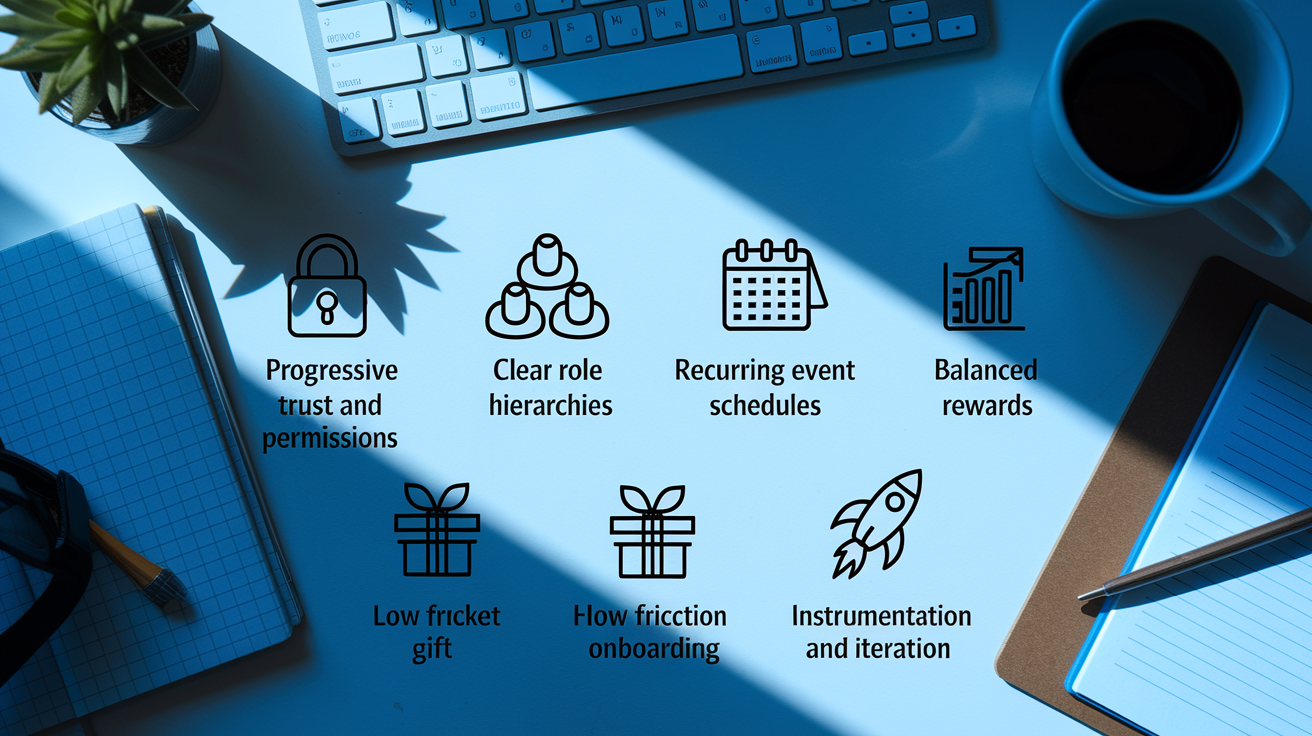
Ease of communication boosts participation by removing friction between intent and action. Embedded guild chat, voice integration, announcement tools should be accessible from every game screen without forcing context switches or external app downloads. Players who can coordinate a raid, respond to a callout, check upcoming events without exiting gameplay are 30–40% more likely to participate in group activities compared to those relying on third-party platforms.
Six best practices for designing effective social systems:
- Progressive trust and permissions. Unlock higher-impact social features (guild chat, editing shared spaces, hosting events) gradually as players invest time or resources. Reduces griefing while rewarding commitment.
- Clear role hierarchies and progression. Define leader, officer, member roles with visible promotion paths tied to contribution or tenure. Creates accountability and aspirational goals within the social structure.
- Recurring, predictable event schedules. Run guild missions, clan wars, leaderboard competitions on fixed weekly or monthly cadences. Trains habitual login behavior and allows players to plan participation.
- Balanced reward distribution. Tier rewards by participation level to avoid free-riding without excluding casual members. Ensure baseline contributors earn meaningful rewards while top performers receive exclusive cosmetics or titles.
- Low-friction onboarding and matchmaking. Provide automated guild discovery, one-click join flows, starter quests for new recruits. Reduces drop-off and integrates newcomers into active communities quickly.
- Instrumentation and iteration. Track guild activity rates, event participation, report frequency, retention cohorts. A/B test feature variants, reward pacing, gating policies to optimize engagement and safety.
Designing scalable social systems introduces challenges that purely mechanical content avoids. Moderation demands grow with community size. Toxic behavior, spam, harassment, coordinated abuse require reporting tools, graduated sanctions, often human review. Guild dissolution, inactive leadership, free-rider problems create retention risk if left unaddressed. Automated activity thresholds, leadership succession mechanics, contribution-based rewards mitigate these issues but add design and engineering complexity. Balancing competition and cooperation is delicate. Overly competitive systems alienate casual players, while purely cooperative designs lack urgency and fail to drive monetization. The most effective implementations layer both mechanics, offering cooperative guild missions alongside competitive leaderboards, so players choose their preferred engagement mode without feeling excluded from core progression.
Final Words
We pushed straight into how social bonds, guild and clan design, cooperative missions, competitive modes, and player-driven events lift session frequency and long-term retention. Short, real examples showed measurable gains and practical trade-offs.
Use clear roles, simple communication tools, and recurring events to keep groups active. Small onboarding wins cut churn and shared rewards drive daily logs.
Remember the central idea: the role of social features like guilds clans and player-driven events in engagement is to turn one-off play into steady social rhythms. Plan for that, test often, and expect better retention.
FAQ
Q: How do social systems drive player engagement and long-term retention?
A: Social systems drive player engagement and long-term retention by forming social bonds that increase session frequency, adding shared goals that boost motivation, and offering group progression that keeps players returning more than solo play.
Q: What measurable benefits do social systems provide?
A: The measurable benefits of social systems often include 20–50% higher daily logins, 15–40% longer sessions, 25–60% greater event participation, 10–30% improved week-to-week retention, more referrals, and higher lifetime value.
Q: How should guilds and clans be structured to improve commitment?
A: Guilds and clans should use clear hierarchies, defined roles, smooth recruitment and onboarding tools, plus transparent reward systems to improve stability, reduce churn, and boost member participation.
Q: Why do reward distribution and rank bonuses affect participation?
A: Reward distribution and rank bonuses affect participation by making contributions visible, encouraging cooperation, and giving clear incentives for staying active, which raises engagement and lowers churn.
Q: How do cooperative missions increase player motivation?
A: Cooperative missions increase player motivation by lengthening session time, creating shared achievements that bring players back, and using difficulty scaling to keep teamwork challenging and satisfying.
Q: Which cooperative systems increase motivation?
A: Cooperative systems that increase motivation include synchronized raids, shared progression tracks, co-op achievements, and scalable difficulty modes that reward teamwork and repeated play.
Q: How do competitive social features like leaderboards and clan-versus-clan affect retention?
A: Competitive social features affect retention by encouraging repeat attempts, fostering long-term rivalries, and using seasonal resets to re-engage dormant players and refresh goals.
Q: What competitive mechanisms boost long-term involvement?
A: Competitive mechanisms that boost long-term involvement include leaderboards, seasonal resets, clan wars, ranked matchmaking, and performance-based reward tiers that reward consistency.
Q: How do player-driven events impact community activity?
A: Player-driven events impact community activity by creating participation spikes, strengthening community identity, increasing unpredictability, and giving players ownership over content and engagement.
Q: What kinds of player-created events should developers support?
A: Developers should support competitions, roleplay gatherings, challenge runs, and community storylines because these formats scale well and encourage repeated, player-led engagement.
Q: What are best practices for implementing effective social features?
A: Best practices for implementing social features include easy communication, clear roles and progression, predictable event schedules, smooth onboarding, fair rewards, and testing for scalability and performance.