

Think game tester jobs are just playing games for free?
The truth: studios need precise skills and list thousands of openings across general job boards, studio pages, niche sites, and playtest platforms.
This guide shows where to apply now, from major publishers to crowdsourced playtest portals, and exactly what companies want: clear bug reports, platform familiarity, language skills, and patience for repetitive testing.
Read on for the fastest paths to land remote, contract, or in-studio QA roles and what to highlight on your application.
Where to Find Real Game Tester Jobs Right Now

Major job boards list over 1,000 active game tester positions right now. One platform that’s been around since 1995 spreads openings across 40 pages, 25 results at a time. You’ll see QA testers, functional testers, compliance specialists, localization roles, and language-specific positions covering more than 15 languages. Studios post full-time salaried spots and temporary contract gigs, and lots of listings now say “many remote positions” next to hybrid and in-studio requirements. Easy to scan, simple to filter by employment type or platform.
Remote game tester jobs have grown. Epic Games, Electronic Arts, and Riot Games advertise positions you can do from home. Hybrid roles want you on-site a few days per week. Fully in-studio positions stick around for console certification testing and hardware QA work. Some platforms give early access to job postings. Members see listings 48 hours before everyone else. Free trials (often 3 days) let you test premium features like job mapping and saved searches before you pay anything.
Language-specific openings pop up frequently for Turkish, Swedish, Dutch, Brazilian Portuguese, Finnish, Danish, Hungarian, French, Czech, Russian, Simplified Chinese, Polish, Spanish, Italian, and German testers. This global hiring pattern shows studios need localized QA when they ship titles worldwide. You’ll also find sport-specific roles (NHL QA Tester at EA) and specialized positions like Game Security Programmer at Ubisoft or Video Production roles tied to live sports broadcasts. The variety means you can match a listing to your platform preferences, language skills, and schedule.
Six major platforms where game tester jobs appear:
- General tech job boards (Indeed, LinkedIn, Glassdoor)
- Specialized gaming job sites (one platform alone shows 1,000 postings)
- Studio career pages (Sony, Activision Blizzard, NetherRealm Studios, Ubisoft)
- QA outsourcing firm portals (dedicated testing agencies hiring for multiple clients)
- Freelancer and contract platforms (Upwork, Fiverr, short-term playtester portals)
- Networking communities and Discord groups where studios announce openings early
Essential Qualifications for Game Testing Roles
Employers expect testers to find bugs, document them clearly, and reproduce issues consistently so developers can fix them. You’ll run test plans, check compliance with platform requirements (PlayStation, Xbox, Nintendo certification standards), verify fixes after patches, and communicate findings in bug trackers like JIRA or TestRail. Some roles focus on functional QA. Does the game crash? Others handle compliance. Does it meet the platform holder’s submission checklist? Specialized positions cover localization (are translations correct?) or user research (is the tutorial confusing?). Many entry-level game tester job listings ask for 0–2 years of experience, meaning studios hire candidates who can show skill even without a formal degree.
Technical skills center on platform familiarity (PC, Mac, VR, Android, iOS) and the ability to write reproduction steps another person can follow. Soft skills matter just as much. Attention to detail separates a useful bug report from a vague complaint. Clear communication helps QA collaborate with designers, engineers, and producers under tight deadlines. Studios want testers who stay patient through repetitive test cycles, adapt when builds change overnight, and take pride in thorough documentation. The game tester job description typically lists “passion for games” alongside “analytical mindset” because the role blends play with disciplined observation.
Five core skills employers look for:
- Ability to write clear, reproducible bug reports with steps, expected vs. actual results, and severity
- Attention to detail and patience for repetitive testing cycles
- Platform and hardware familiarity (consoles, mobile devices, VR headsets, PC configurations)
- Communication skills for working with cross-functional teams (developers, designers, producers)
- Adaptability and problem-solving when builds change or new issues emerge mid-cycle
Salaries and Pay Structures in Game Tester Jobs

Entry-level QA roles and contract game tester positions typically pay $30,000–$50,000 per year for full-time salaried staff, or $12–$25 per hour for temporary and contractor assignments. Junior testers often start at the lower end, especially when hired through outsourcing studios or short-term contracts. In-house roles at major publishers offer steadier pay and benefits. Contractors get flexibility and can stack multiple clients, but they miss out on health insurance, paid time off, and the career perks that come with staff positions. Some part-time or seasonal roles (like a Dodger Vision Game Day Broadcast Video Engineer listing) show hourly rates around $50 for specialized event work, though that sits outside pure QA testing.
Mid-level QA specialists and senior testers earn $45,000–$75,000 annually. QA leads, managers, and automation engineers command $70,000–$120,000 or more. Game tester salary climbs when you add automation skills (Python scripting, CI/CD pipeline work) or specialize in compliance and certification, because fewer candidates qualify and studios need those roles filled quickly. Experienced contractors working automation or technical QA can bill $25–$60+ per hour, especially if they bring scripting, database query skills, or console SDK knowledge. Geography also shifts pay. Testers in Los Angeles, Montreal, or London earn premiums compared to remote roles based in lower-cost regions, and some studios adjust salary bands when hiring internationally.
Remote vs. in-office compensation sometimes differs, though the gap has narrowed. Fully remote roles may pay slightly less if they’re available to a global candidate pool. Hybrid and in-studio positions in expensive metro areas often include cost-of-living adjustments. Studios that require on-site work for console certification or hardware testing may sweeten the offer with relocation packages or signing bonuses, especially for senior or lead positions. Contract and freelance testers negotiate pay project by project. Rates vary widely depending on test duration, NDA restrictions, and whether the platform provides the work or the tester sources it independently.
| Role Level | Typical Salary | Notes |
|---|---|---|
| Entry-Level QA / Game Tester | $30,000–$50,000/year or $12–$25/hour (contract) | In-house or outsourcing studio; 0–2 years experience; benefits vary by employer |
| Mid-Level QA Specialist | $45,000–$75,000/year | 2–5 years experience; may own specific test areas or mentor juniors |
| Senior QA / Lead / Manager | $70,000–$120,000+/year | 5+ years; team leadership, test planning, or automation engineering; higher in major hubs |
| Contractor / Automation QA | $25–$60+/hour | Project-based; scripting and technical skills command premium rates; no benefits |
Remote and Freelance Game Tester Opportunities

Many studios now advertise “many remote positions” for QA roles, especially functional testing that doesn’t need hands-on console hardware or in-studio dev kits. Remote game tester jobs let you work from anywhere with a stable internet connection, a capable PC or console setup, and a quiet workspace that meets NDA and confidentiality requirements. Studios may ship test hardware (dev kits, pre-release consoles, VR headsets) or ask you to use your own equipment for PC and mobile testing. Time-zone coordination matters. Some teams expect overlap with studio hours for daily standups or live bug triage. Others allow asynchronous reporting as long as you hit deadlines and communicate clearly in the bug tracker.
Freelance and platform-based playtesting works differently from staff QA roles. Crowdsourced game testing platforms and playtest portals recruit testers for short-term projects, often paying per completed test, per hour, or in platform currency that converts to cash or rewards. These gigs appear and disappear quickly. Invite frequency depends on your profile completeness, tester rank, and feedback quality. Freelancers source their own clients or join agencies that place testers with studios on a project basis, requiring you to manage contracts, invoicing, and tax paperwork independently. Pay can be higher per hour than entry-level staff roles, but work is inconsistent and you lose the stability and benefits of a salaried position.
Remote Tester Requirements
You’ll need a reliable high-speed internet connection (studios often specify minimum upload/download speeds), a dedicated workspace free from interruptions, and hardware that meets the game’s system requirements. NDA and confidentiality agreements are standard. Remote testers must secure their workspace, avoid screenshots or recordings unless authorized, and never discuss unannounced projects publicly. Some roles require specific operating systems (Windows 10/11, macOS versions), VR headset models (Meta Quest, Valve Index), or mobile devices (recent iPhone or Android flagships). Studios may audit your setup during onboarding or require you to install monitoring software that tracks test sessions and prevents leaks.
Freelance/Platform-Based Testing
Playtest platforms recruit testers, match them to projects based on demographics and gaming preferences, and distribute invites when studies or test cycles open. You complete your profile (age, location, gaming habits, owned platforms), accept invites as they arrive, download the test build or join a remote session, play for the requested duration, and submit feedback or bug reports. Pay varies. Some platforms offer hourly rates ($10–$25/hour), others pay per completed test ($5–$50 depending on length), and a few use points or platform currency that converts to cash, gift cards, or gaming gear. Test availability fluctuates, so freelancers often register with multiple platforms to maintain steady income. Detailed, constructive feedback increases your rank and unlocks higher-paying or early-access opportunities. Missed tests or incomplete reports can lower your standing or reduce future invites.
How to Become a Game Tester (Step-by-Step)

Candidates prepare by getting familiar with bug-tracking tools (JIRA is nearly universal), learning basic QA terminology (regression testing, repro steps, severity vs. priority), and practicing test documentation on personal or community projects. You don’t need a computer science degree, but understanding how games are built and what developers need to fix issues sets you apart from applicants who only list “I love games” as a qualification. Many testers start by volunteering for beta tests, participating in early-access programs, or contributing to mod communities where they document bugs and suggest improvements. These activities build a track record that proves you can spot issues, communicate clearly, and follow through.
Bug-report samples carry more weight than a résumé alone. A polished sample shows you know how to isolate a problem, write reproduction steps a stranger can follow, and classify severity appropriately (crash vs. cosmetic glitch). Studios hiring entry-level testers often ask for writing samples or assign a live bug-finding exercise during interviews, so having two or three ready-to-share reports speeds up your application and shows real skill. Keep samples concise. One page per bug, formatted like a professional JIRA ticket, with platform/build info, clear steps, and screenshots if helpful.
Small projects and community test cycles build credibility when you lack formal experience. Join game jams and offer to test other developers’ prototypes, contributing detailed feedback in exchange for a portfolio credit. Participate in open betas for indie games and submit thoughtful bug reports through official channels. Some developers will vouch for strong testers or offer paid contract work if you prove valuable. Document every test you complete: the game title, platform, what you found, and how the developer responded. This log becomes your portfolio and shows hiring managers you’ve already practiced the job.
Six steps from learning to hired:
- Learn one bug tracker (JIRA) and one version-control system (Git or Perforce basics) through free tutorials or trial accounts.
- Write 2–3 sample bug reports using real or hypothetical issues, formatted with title, environment, repro steps, expected vs. actual results, and severity.
- Complete your testing profile on playtest platforms or freelancer sites, listing owned hardware, preferred genres, and languages you can test.
- Volunteer for beta tests, game jams, or indie early-access programs to build a portfolio and gain references.
- Apply to entry-level QA roles, contract positions, and outsourcing studios, attaching your résumé, bug samples, and a short cover note explaining your interest and platform access.
- Prepare for interviews by practicing live bug-finding exercises and reviewing common QA workflows (smoke tests, regression cycles, compliance checklists).
Tools Game Testers Must Know
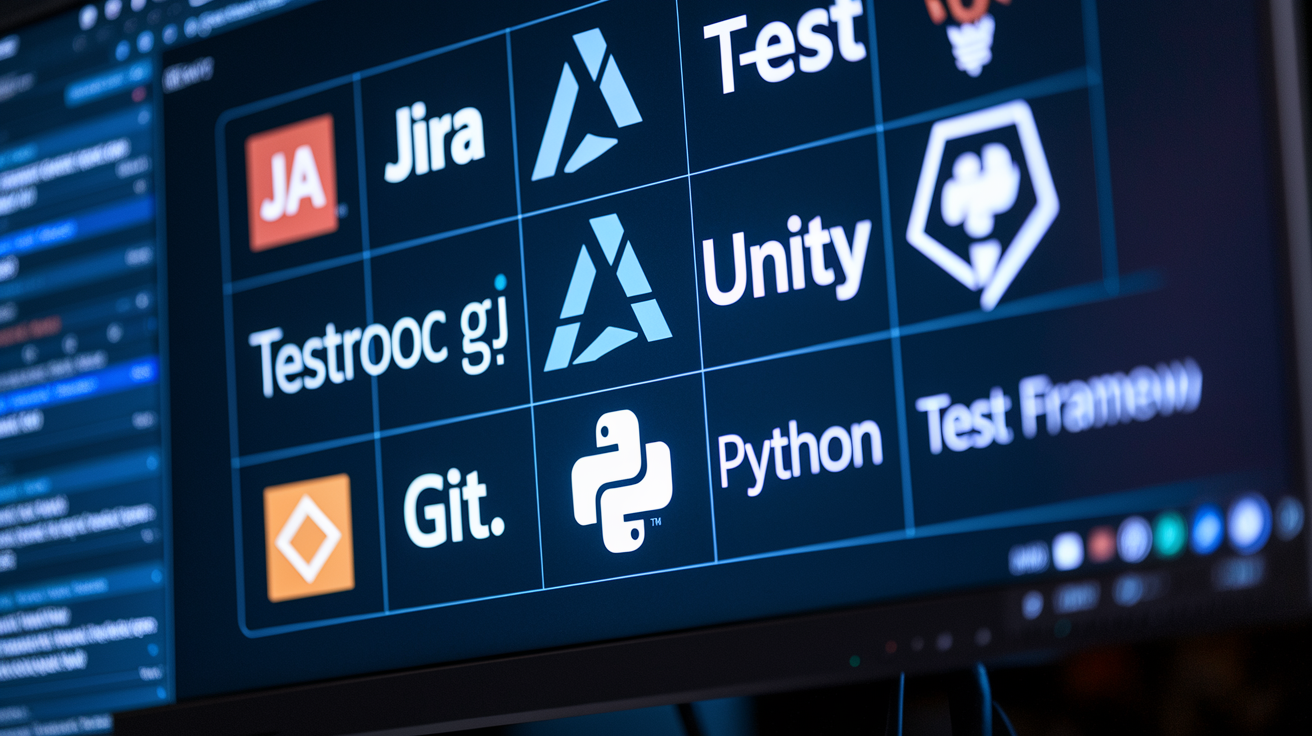
Bug trackers top the list. JIRA appears in nearly every job posting, with TestRail and Azure DevOps close behind. Knowing how to log a ticket, assign severity and priority, attach logs or screenshots, and update status as issues move through triage makes you immediately useful on day one. Version control comes next: Perforce dominates large studios (especially for console and AAA titles), while Git is common in indie and mobile shops. You don’t need to write code, but understanding how to sync builds, check out branches, and identify build numbers helps you test the right version and communicate clearly with engineers.
Scripting skills separate junior testers from candidates who can grow into automation roles. Python is the most versatile starting point. Short scripts can parse logs, generate test data, or automate repetitive input sequences. Bash (or PowerShell on Windows) handles command-line tasks like launching builds with specific flags, clearing cache, or collecting system diagnostics. SQL basics let you query databases to verify in-game economy transactions, player progression, or localization string coverage. Even minimal scripting knowledge signals you’re ready to learn automation frameworks like Unity Test Framework, Selenium (for web-based games or launchers), or Appium (for mobile testing).
Seven industry-standard tools that increase job prospects:
- JIRA – bug tracking and project management; expected knowledge for most QA roles
- TestRail – test case management and execution tracking; common in structured QA teams
- Azure DevOps – Microsoft’s platform for bug tracking, build pipelines, and CI/CD; growing in popularity
- Perforce (Helix Core) – version control for large binary assets; standard at AAA studios
- Git – distributed version control; used by indie and mobile teams, plus open-source projects
- Python – scripting for automation, log parsing, and test-data generation
- Unity Test Framework / Selenium / Appium – automation frameworks for in-engine, web, and mobile testing
Game Tester Application Materials That Get Interviews

Employers want a one-page résumé that lists platforms you own (PC specs, consoles, VR headsets, mobile devices), tools you know (JIRA, Git, scripting languages), and any testing experience, even if it’s volunteer beta work or game-jam feedback. Skip the generic “passionate gamer” line. Instead, write “Tested 12 indie prototypes during 2024 Game Jam season, logging 40+ bugs in JIRA and collaborating with developers to verify fixes.” Quantify when possible: number of bugs found, projects completed, or tests executed. Tailor each résumé to the studio and role. If the listing mentions “NHL QA Tester,” call out sports-game experience or familiarity with physics engines and player animation.
Portfolios for game tester jobs typically include two to three polished bug reports and one short test case. Bug reports prove you can document issues professionals can act on; test cases show you understand how to design and execute structured checks. Keep both concise and easy to scan. Hiring managers review dozens of applications and appreciate clarity over bulk. If you’ve contributed to open-source QA, beta programs, or community mods, link to public bug trackers or forum threads where your work is visible. A short cover note (three to four sentences) explaining why you’re interested in that studio and what platforms you bring adds a personal touch without needing a full cover letter.
Test cases require clear steps, expected results, and pass/fail criteria. A good sample might verify a game’s save-load cycle: “1) Start new game, complete tutorial. 2) Save progress and quit. 3) Relaunch game and load save. Expected: Player spawns at last checkpoint with inventory intact. Actual: [Pass/Fail]. Notes: Tested on PS5 build 1.03.2, no issues found.” This format shows you think like a QA professional and understand what developers need to validate functionality. Include edge cases or stress conditions when relevant (loading a save after 10 hours of play, testing on minimum-spec hardware), because that extra detail separates strong candidates from those who only test the happy path.
What to Include in a Sample Bug Report
A professional bug report opens with a clear, specific title. “Game crashes when opening inventory during boss fight (PS5, build 1.04)” beats “Crash bug” every time. List the environment next: platform (PC, Xbox, mobile), operating system or console firmware version, game build number, and any relevant settings (graphics quality, online vs. offline mode). Then write reproduction steps as a numbered list, each step simple enough that someone unfamiliar with the game can follow: “1) Start Chapter 3 boss encounter. 2) Wait until boss health drops below 50%. 3) Press Triangle to open inventory. 4) Observe crash to dashboard.”
State the expected result (what should happen) and the actual result (what you saw instead). “Expected: Inventory menu opens, gameplay pauses. Actual: Screen freezes for 2 seconds, then game crashes to PS5 home screen with error code CE-108255-1.” This comparison makes the problem obvious and actionable. Assign severity based on impact: critical (blocks progress, crashes, data loss), high (major feature broken), medium (annoying but workaroundable), low (cosmetic or rare). Add any logs, screenshots, or video clips that help, and note if the issue reproduces consistently (100% of the time) or intermittently (1 in 5 attempts). Close with additional context if useful. “Also occurred on Xbox Series X build 1.04 but not on PC” tells developers the scope.
Interview Expectations for Game Tester Jobs

Most game tester interviews start with a phone or video screen covering your background, interest in the role, and availability. Expect behavioral questions: “Tell me about a time you found a tricky bug,” or “How do you prioritize when you have ten issues to verify and only two hours?” These assess communication, problem-solving, and how you handle pressure. Studios want to know you’ll stay calm during crunch, collaborate with developers who might push back on bug severity, and keep testing when the work gets repetitive. Honest, specific answers beat generic responses. Describe a real example, the steps you took, and the outcome.
Live or timed bug-finding exercises come next. The interviewer hands you a build (or a public demo) and asks you to explore for 15–30 minutes, then report what you found. They’re checking your observation skills, how you document issues on the fly, and whether you can talk about problems clearly under time pressure. Some studios add technical tests: write a sample test case for a feature, explain how you’d regression-test a patch, or debug a simple script. Take-home assignments appear for automation-focused roles. Expect a small Python task or a request to write test cases for a hypothetical system. Treat every exercise like real work: be thorough, format professionally, and submit on time.
Five common interview tasks:
- Live bug-finding exercise with a demo build or public game (15–30 minutes, report findings verbally or in writing)
- Behavioral questions about past testing experience, teamwork, and handling feedback or disagreements
- Technical scenario: “How would you test this login screen?” or “Describe your regression-testing approach for a day-one patch.”
- Writing sample or take-home assignment: draft test cases, document a hypothetical bug, or complete a short scripting task
- Tool-familiarity check: “Walk me through how you’d log this issue in JIRA” or “Show me a Git command you use regularly.”
Career Paths Beyond Entry-Level Testing

The internal QA ladder typically moves from Tester to Senior Tester (2–4 years), then QA Lead (4–6 years), and finally QA Manager or Director (6+ years). Senior testers own specific features or platforms. One person might specialize in multiplayer networking, another in mobile compliance, and they mentor junior staff. QA leads manage small teams, write test plans, coordinate with production, and make calls on severity and ship-readiness. Managers oversee multiple projects, hire and train staff, set department standards, and interface with studio leadership. Each step up requires deeper technical knowledge, stronger communication, and the ability to balance thoroughness with schedule pressure.
Training and certifications speed things up. ISTQB Foundation is the most recognized QA cert, covering test design, lifecycle management, and terminology. It’s not required, but some studios prefer or reward it. Automation courses (Python for testers, CI/CD fundamentals, Selenium bootcamps) open doors to higher-paying roles. If you add Unity or Unreal scripting, you become valuable for in-engine test automation, a niche that commands senior-level pay even at mid-career experience. Many testers also take short courses in Agile or Scrum methodologies, since studios increasingly run QA in sprints alongside development, and understanding the framework makes you a better collaborator.
Lateral moves let you pivot from pure QA into production, design, or engineering. Associate Producer roles suit testers who enjoy coordination and scheduling; you already know the QA pipeline, so transitioning to broader project management feels natural. Some testers shift into game design, especially systems or balance design, because years of testing taught them what breaks and what players exploit. Automation QA engineers who learn continuous integration and build pipelines can move into DevOps or release engineering, where they manage test infrastructure instead of running tests themselves. Each path requires upskilling. Take on side projects, volunteer for cross-functional tasks, or ask your lead for stretch assignments that build the next skill set you need.
Final Words
In the action, this guide showed where to find active listings, the types of roles, and the major studios that hire.
You also saw the skills, common tools, pay ranges, and a step-by-step path with sample bug reports and interview tips.
Use the job sites and sample materials we outlined to apply faster. Start with remote or crowdsourced gigs, build a short portfolio, and keep learning. There’s a lot of opportunity, game tester jobs are available now, and you can get started today.
FAQ
Q: How do I become a games tester or get hired as a game tester?
A: Becoming a game tester and getting hired requires a concise one-page resume, 1–2 polished bug reports, platform familiarity, applying to entry-level roles or internships on job boards, and practicing clear bug reporting.
Q: Is game tester a legit job?
A: A game tester is a legitimate, professional job at studios and vendors, with full-time, temporary, remote, and freelance roles available across major companies and crowdsourced platforms.
Q: How much money can a game tester make?
A: A game tester can make about $30,000–$50,000 entry-level, $45,000–$75,000 mid, $70,000–$120,000+ senior; contractors often earn $12–$25/hour, while automation testers earn $25–$60+/hour.