
Why pay full price for a single game when you can pick up five for less than the cost of one?
Game bundles across Fanatical, Humble, Epic, Steam, and GOG often cut prices 50–95%, but the best deals hide behind tiers, limited-time freebies, and platform locks.
This post rounds up the top current bundles, explains how tiers and DRM versus storefront keys work, and gives quick checks to spot real savings fast, so you get the games you want without buyer’s remorse.
Best Current Game Bundle Deals and Discounts
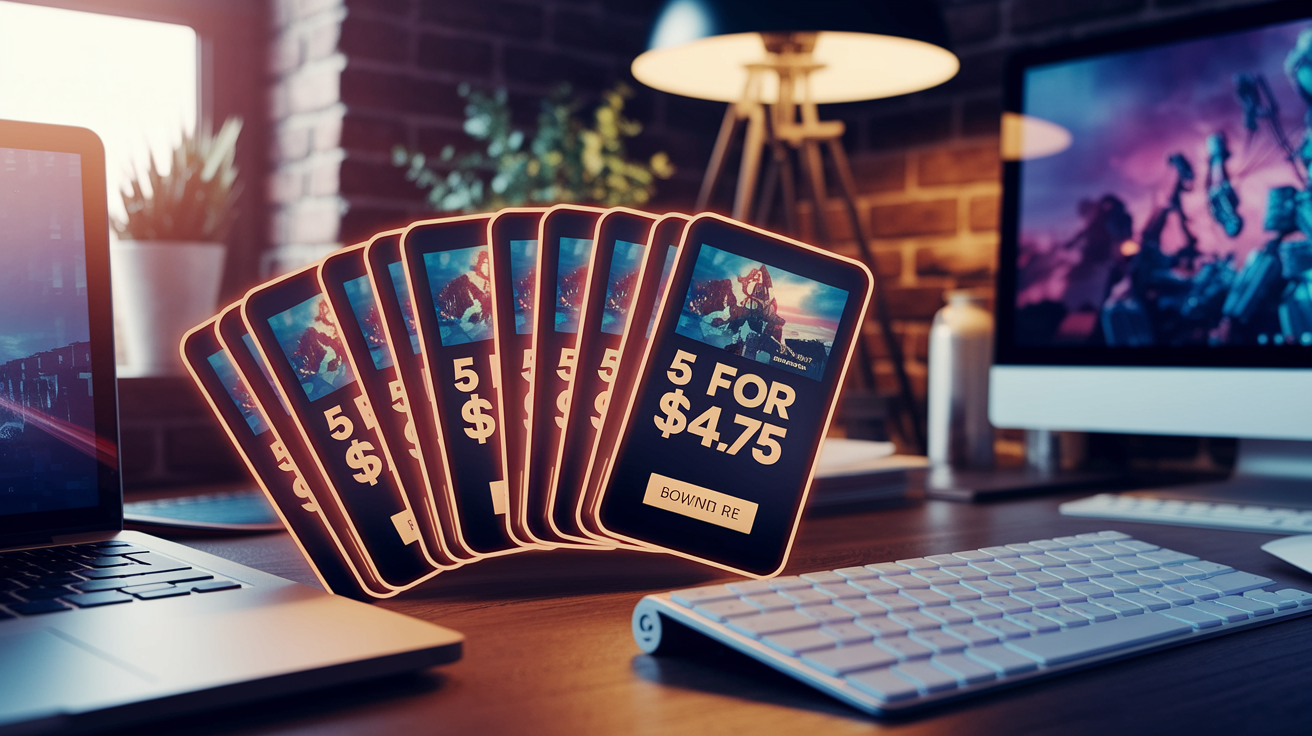
Fanatical’s Build Your Own Adrenaline Bundle gives you 3 action games for $3, which works out to about a dollar per game. Or grab 5 for $4.75 and you’re down to $0.95 each. Pure build your own, so you pick everything and skip what you already own or don’t want.
Humble’s got themed bundles across different genres and platforms. The Turn Based Games bundle packs 8 titles, including Crown Trick, For The King II, and Deep Sleep: Labyrinth of the Forsaken. If golf sims are your thing, the Fore! A Golf Games Bundle starts at $8. The Mecha Mania bundle kicks off at $9 for battle robot fans. And the VRKiwi Complete Collection Bundle includes 12 VR experiences, solid for headset owners.
Several games are free right now, though most windows close fast. Nocturnal, an indie platformer on Steam, is free to claim until April 26th. DOOMBLADE, a 2D action Metroidvania, is free on the Epic Games Store. Carlos the Taco is available as a DRM free giveaway through IndieGala. The Whispering Valley is free at GOG, Shipped is free via a Fanatical promo, and 8AM, a creepy horror game, is free on Steam. All the freebies are temporary except where explicitly stated. Check each store page to confirm the claim deadline before you miss out.
Notable examples to compare:
- Fanatical BYO Adrenaline Bundle – 3 games for $3 or 5 for $4.75
- Humble Turn Based Games Bundle – 8 games (exact price not listed, but tiered)
- Humble Mecha Mania Bundle – starts at $9
- Humble VRKiwi Complete Collection Bundle – 12 VR titles
- Humble Fore! A Golf Games Bundle – starts at $8
- Nocturnal – free on Steam until April 26
If you grab the 5 game Fanatical bundle at $4.75 and each of those games normally sells for $15, you’re looking at $75 of retail value for less than five bucks. That’s a 94% discount. Even at individual sale prices around $5 each, you’d pay $25 without the bundle, which still makes the $4.75 bundle an 81% saving. The math shifts with every retailer and every tier, so always compare the bundle price to the current lowest price for each included game, not the “original” sticker price.
Understanding How Game Bundles Work and What They Include
Most digital game bundles package 3 to 12 titles together, though curated “mega” bundles can exceed 20 games. Retailers split them into tiers. Each tier unlocks more games or adds premium titles as the price climbs. Standard durations run 7 to 14 days for most bundles, while flash sales close after 24 to 72 hours. If the listing says “last day” or “final hours,” that window’s real.
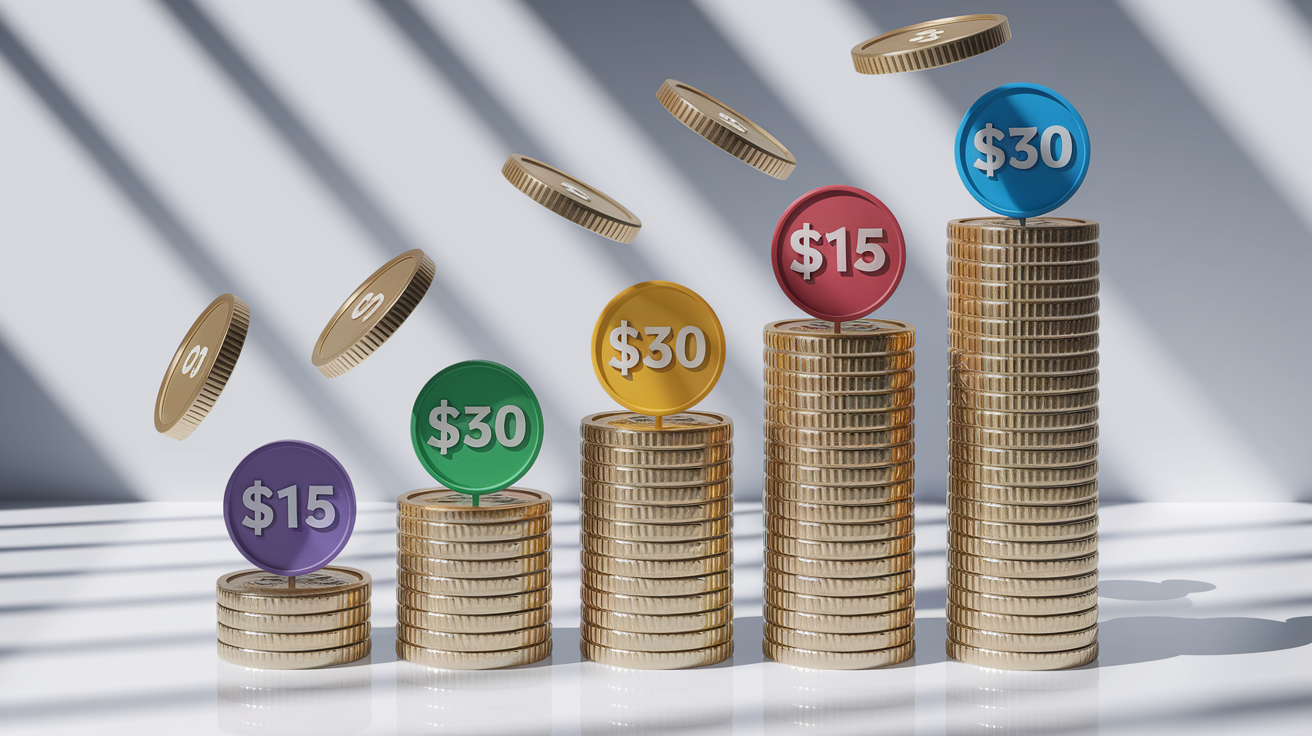
Typical pricing follows a three step ladder. Entry tiers start at $1 to $3 and usually include a handful of smaller indie titles or older releases. Mid tiers run $5 to $15 and add several notable games, often including one or two recognizable names. Premium tiers sit in the $15 to $30 range and unlock the full collection, sometimes with bonus DLC, soundtracks, or discount coupons for future purchases. Advertised savings often range from 50% to 95% versus individual retail prices, though those percentages depend on whether the retailer uses current sale prices or original launch prices as the baseline.
Common tier structures look like this:
- Pay $1 – Unlock 2 to 3 smaller indie games or older catalog titles
- Beat the average (or pay a fixed $8 to $10) – Add 3 to 5 mid tier games, including at least one well reviewed title
- Pay $15 plus – Get the complete collection plus any bonus DLC, soundtracks, or store coupons
- Build your own tiers – Pick 3 for $X, 5 for $Y, or 10 for $Z, with per game cost dropping as you add more
- Charity sliders – Adjust how much goes to the publisher, the platform, and a featured charity (common on Humble)
Bundles refresh regularly. Some retailers rotate new themed packs every week, while others run month long campaigns tied to genres, developers, or charity events. Flash bundles appear without warning and vanish just as fast, so checking back every few days helps you catch time sensitive deals before they expire.
Platform Compatibility and Redemption for Digital Game Bundles

PC bundles typically deliver activation keys for Steam, Epic Games Store, GOG, or another storefront. Some offer DRM free installers you can download and keep forever. Console bundles are less common in the bundle space. Most appear as direct discounts or DLC packs inside the PlayStation Store, Xbox Store, or Nintendo eShop rather than as third party multi game packages. Before you buy, confirm which platform each key activates on, because a Steam key won’t work on Epic and vice versa.
Redemption is usually straightforward. For Steam keys, open the Steam client, click “Add a Game” in the bottom left, select “Activate a Product on Steam,” and paste the key. For Epic, log in to your account on the Epic Games Store website or launcher, click your profile, select “Redeem Code,” and enter the key. GOG purchases often appear directly in your GOG library if you buy through the GOG store, or you’ll receive a code to enter on the GOG website under “Redeem GOG code.” DRM free bundles skip the key step entirely. Just download the installer file and run it on any compatible machine.
Steam, Epic Games Store, and GOG
Steam bundles dominate the market because most PC indie and mid tier releases launch there first. When you redeem a Steam key, the game stays in your library permanently, even if the bundle deal ends or the game gets delisted. Epic bundles are rarer but often include high profile freebies or exclusives, like the DOOMBLADE Metroidvania currently free to claim. GOG focuses on DRM free releases and classic games. Once you download a GOG installer, you own that file outright and can reinstall it anywhere, anytime, without needing an active account or internet connection. Check each bundle listing for the exact storefront, because mixing them up means wasting a key or discovering you can’t activate it at all.
Console Stores
Console bundles usually live inside the native storefronts. PlayStation Store “game collections,” Xbox “bundles and add on packs,” and Nintendo eShop “franchise bundles.” These aren’t third party key sellers. You’re buying directly from Sony, Microsoft, or Nintendo, often during seasonal sales. Redeeming is automatic: purchase the bundle, and every included game downloads to your console library. A few third party retailers sell console download codes, but those are less common and often region locked, so verify the region code matches your account before checkout. Unlike PC keys, console codes usually expire or restrict activation by territory, making careful verification critical.
Indie Game Bundles and DRM Free Deals Worth Watching

Indie bundles let you sample dozens of smaller studios for the price of one full price release. Carlos the Taco is currently available as a DRM free download through IndieGala’s limited time giveaway, meaning you get the installer file with no storefront login required. Nocturnal, an indie platformer, is free on Steam until April 26. Claim it before that date and it stays in your library permanently. 8AM, an indie horror game, is also free on Steam right now, though no end date was listed, so grab it while it’s live.
DRM free bundles appeal to players who want offline access, no account requirements, and full control over their game files. GOG specializes in DRM free releases, and The Whispering Valley is currently free there for a limited time. Once you download the installer, you can back it up, reinstall it on any PC, and play without an internet connection or launcher. Humble’s VRKiwi Complete Collection Bundle packs 12 VR experiences, and Humble’s Gamersky All Stars lets you pick 2 games for $5.99, 3 for $7.49, or 5 for $12, pulling from 11 indie titles. The Mecha Mania bundle also leans heavily on indie mech games, starting at $9 for the entry tier.
| Title | Price | Platform |
|---|---|---|
| Carlos the Taco | Free (DRM free) | IndieGala |
| Nocturnal | Free (until April 26) | Steam |
| 8AM | Free | Steam |
| Gamersky All Stars (2 picks) | $5.99 | Humble (Steam keys) |
Indie bundles also introduce you to genres and mechanics you might skip at full price. A $12 bundle with ten unknowns costs the same as lunch. Even if only two games click, you’ve found something new for a fraction of what you’d pay individually. DRM free options add insurance. If a storefront shuts down or a publisher pulls a game, your local installer still works.
Charity Game Bundles and How Their Pricing Works

Charity bundles split your payment between the game developers, the bundle platform, and one or more nonprofit organizations. Humble Bundle pioneered this model and still offers adjustable sliders at checkout, letting you decide how much goes to charity, how much supports Humble, and how much goes to the publishers. Charity shares typically range from 10% to 80% depending on the bundle and your manual adjustments. Some bundles lock a minimum charity percentage, while others let you allocate the full amount however you like.
The original pay what you want structure let buyers name their price as long as they met a $1 minimum, with bonus tiers unlocking if you beat the current average contribution. That model proved popular enough that competing platforms adopted similar mechanics, though most now use fixed tier pricing instead of pure pay what you want. Modern charity bundles still echo that spirit: you get heavily discounted games, and a portion of your purchase supports causes like children’s hospitals, disaster relief, or environmental groups.
Typical charity allocation structures:
- Default split – Often 15% charity, 15% platform fee, 70% publisher (adjustable in most cases)
- Charity focused campaigns – Lock 50% or more to charity. Publisher and platform share the rest
- Custom sliders – You control every percentage point. Set charity to 100% if you want
- Tiered charity bonuses – Higher payment tiers unlock larger charity contributions or bonus games donated by publishers
Not every bundle includes a charity component. Build your own packs and flash sales often skip the nonprofit split entirely, directing proceeds to the retailer and publishers. If supporting a cause matters to you, check the bundle page for charity details and verify the allocation before you complete checkout.
Build Your Own Game Bundles: Customization and Savings
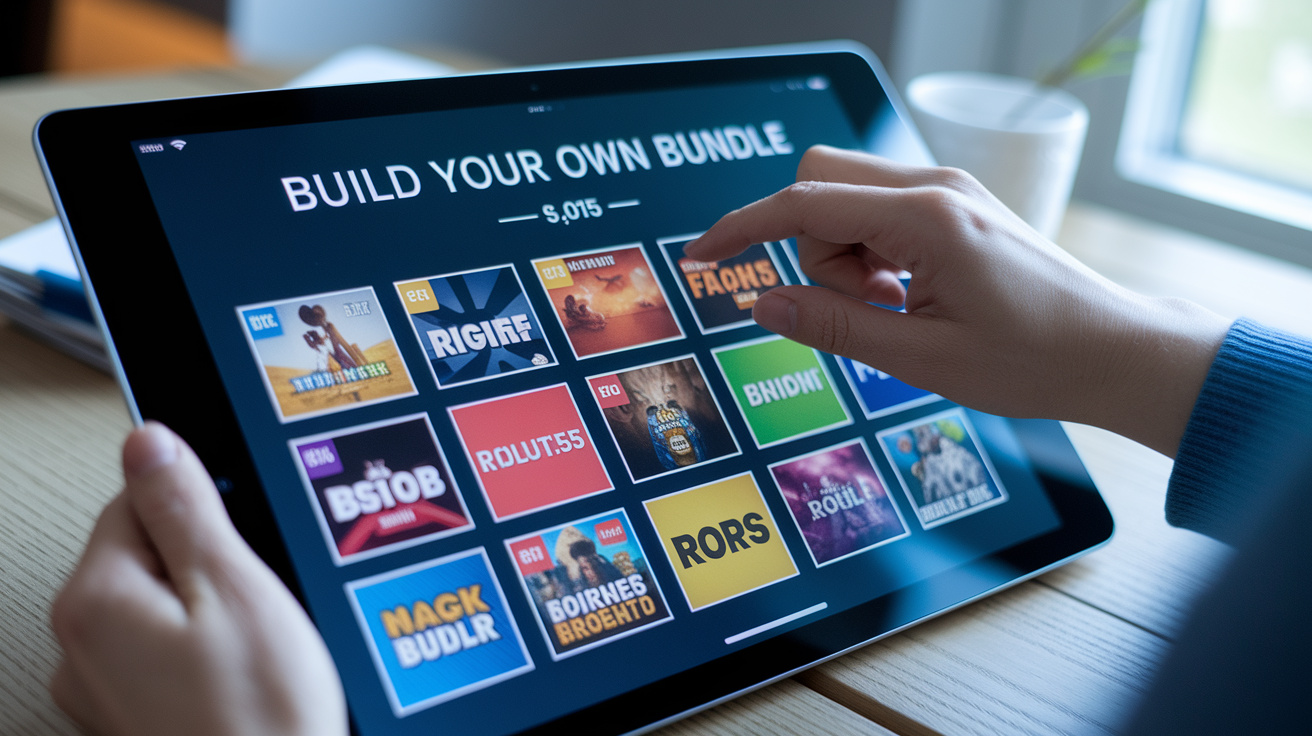
Build your own bundles let you handpick exactly which games you want, skipping filler titles and duplicates you already own. Fanatical’s BYO Adrenaline Bundle offers 3 games for $3 or 5 for $4.75, bringing the per game cost down to $0.95 when you grab five. The Gamersky All Stars bundle uses a similar ladder: 2 games for $5.99, 3 for $7.49, or 5 for $12. The BYO Tactical Triple Pack starts at $3 for three strategy games, while the BYO Survival Horror Bundle gives you a pool of 20 selectable titles so you can curate your own horror collection.
Customization solves the biggest complaint about fixed bundles: wasting money on games you’ll never play. If a curated 10 game pack includes three you already own and four you’re not interested in, you’re effectively paying for three new games at a markup. Build your own pricing rewards larger picks, so even if you only want four titles, grabbing five often costs just a dollar or two more and drops the per game price enough to justify the extra pick.
The per game cost math is simple: divide the bundle price by the number of games. At $4.75 for 5 games, you’re paying $0.95 each. If those games normally sell for $10 to $20 individually, even on sale, you’re looking at 90% or better savings. Compare that to buying them one by one during a Steam sale at $5 each: five games would cost $25, versus $4.75 in the bundle. The difference covers an entire second bundle.
Common savings patterns:
- 3 pick tier – Often priced to break even with a typical single game sale price ($3 for three $5 games)
- 5 pick tier – Adds a steeper discount (around $1 per game or less)
- 10 pick tier – Unlocks the lowest per game cost, sometimes under $0.50 each
- Mix and match freedom – Skip sequels, duplicates, or genres you don’t enjoy. Only pay for what you want
The catch is selection limits. Build your own pools rarely exceed 20 titles, and the biggest discounts appear only when you hit the top tier. If you want just one or two games from the list, buying them individually during a sale might match or beat the small pick bundle price.
How to Compare Game Bundles Across Retailers

Retailers like Fanatical, Humble, IndieGala, GOG, and Steam all run bundle promotions, but pricing, game selection, expiration windows, and refund policies vary. Fanatical specializes in build your own packs and flash sales. Humble focuses on charity driven themed bundles. IndieGala mixes giveaways with budget bundles. GOG highlights DRM free classics. Steam occasionally offers publisher specific or franchise bundles during seasonal sales. Start by checking the expiration date. Only a few listings include specific deadlines like Nocturnal’s April 26 cutoff, so assume “limited time” means days, not weeks.
Many bundle sites disclose affiliate relationships, meaning if you click a link and buy, the site earns a small commission. That’s fine as long as prices stay accurate and the retailer is trustworthy. Always verify the final price and game list on the official store page before checkout, because automated price feeds can lag or display incorrect regional pricing. Some platforms offer region locked keys that won’t activate in your country, and others sell DRM free installers that work anywhere but require manual downloading instead of automatic library integration.
Key Comparison Factors
- Expiration and claim deadlines – Flash sales close in 24 to 72 hours. Standard bundles run 7 to 14 days. Freebies may vanish overnight
- Platform compatibility – Confirm whether you’re getting Steam keys, Epic codes, GOG installers, or DRM free downloads
- Refund and activation policies – Most bundle keys are final sale. Once revealed, you can’t return them
- Charity allocation – Check if any proceeds support nonprofits and whether you can adjust the split
- Game overlap and duplicates – Compare the bundle list to your existing library before buying
- User reviews and ratings – Look for bundled games with “Very Positive” or better Steam ratings to avoid shovelware
| Retailer | Typical Pricing | Key Features | Risks |
|---|---|---|---|
| Fanatical | $3 to $12 (BYO tiers) | Build your own options, Steam Deck tags, high rated pools | Region locks on some keys. No refunds after key reveal |
| Humble | $8 to $30 (tiered) | Charity sliders, DRM free options, monthly subscription bundles | Automatic renewals on subscriptions. Charity % not always clear upfront |
| IndieGala | $1 to $10 | Frequent giveaways, DRM free titles, low entry prices | Quality varies widely. Some bundles heavy on filler or asset flips |
| GOG | Varies (often DRM free) | No DRM, offline installers, classic game focus | Smaller bundle selection. Fewer new releases |
Cross reference prices using a tracking tool or historical low database before you commit. If a $12 bundle claims $200 in value but every game hit $1 during the last sale, the “savings” number is inflated. Real savings come from comparing the bundle price to what you’d actually pay today for those same games individually at their current best prices.
Genre Based and Platform Specific Game Bundle Recommendations

Genre bundles let you dive deep into a playstyle without hunting across storefronts. Humble’s Turn Based bundle packs 8 strategy and idle titles, perfect if you want thoughtful, slower paced gameplay. The VRKiwi Complete Collection Bundle includes 12 VR experiences, making it a solid pick for headset owners who want a variety pack without researching individual VR games. The Mecha Mania bundle starts at $9 and focuses on battle robot games, while the Fore! A Golf Games bundle kicks off at $8 for simulation fans.
Fanatical’s Legendary Bundle includes Frostpunk 2, The Alters, and about 15 more titles. Roughly 17 games total, covering city building, survival, and strategy. The BYO Survival Horror Bundle offers a pool of 20 games so you can handpick which scares you want. If you prefer tactical or turn based combat, the BYO Tactical Triple Pack starts at $3 for three games. Visual novel readers can check Humble’s Sekai Project Bundle 2026, which offers up to 20 adult visual novels in a tiered structure.
Platform specific recommendations:
- VR headset owners – VRKiwi Complete Collection (12 VR games)
- Steam Deck players – Fanatical’s verified bundles tag Steam Deck compatibility. Look for “Play on the Go” or “Deck friendly” labels
- Turn based strategy fans – Humble Your Move: Turn Based Games (8 titles including Crown Trick and For The King II)
- Horror enthusiasts – BYO Survival Horror Bundle (20 game pool to choose from)
- Mech and robot combat – Humble Mecha Mania Bundle (starts at $9)
Genre bundles also help you discover subgenres. A golf bundle might include arcade mini golf, realistic PGA sims, and wacky physics experiments, all in one package. If one style clicks, you’ve found a new niche for less than the cost of a single full price game. If nothing sticks, you’re only out a few dollars and you learned what you don’t enjoy.
Pricing Psychology and Value Assessment in Game Bundles

Bundles feel like a bargain because the per game math looks incredible compared to individual prices. A 10 game bundle at $12 works out to $1.20 per game. Even if half the games are duds, you’re still paying $2.40 for each keeper, a fraction of the $15 to $30 those games cost at launch. Retailers lean into that perception by listing total “value” in big bold numbers: “$200 worth of games for only $12!” That $200 figure uses original launch prices, not current sale prices, so the real savings are usually smaller but still significant.
Tiered pricing creates an anchoring effect. When you see a $1 entry tier, a $10 mid tier, and a $25 top tier, the $10 option feels like the sweet spot. Not too cheap, not too expensive, even if you only wanted one or two games from the mid tier. The structure nudges you toward spending more than you planned because the per game cost drops with each tier, making the upgrade feel logical. Fanatical’s per game examples, $1.00 for 3 picks, $0.95 for 5 picks, illustrate how that discount ladder works in practice.
Original bundle models used pay what you want mechanics with “beat the average” bonuses, creating a social proof loop: the average price climbed as more people paid above it, and each new buyer saw a higher benchmark to beat. That model rewarded early adopters and made late buyers feel like they were joining a community effort. Modern fixed tiers simplify the decision but lose some of that participatory energy.
Four psychological triggers that make bundles feel valuable:
- Anchoring – High “original value” numbers make the bundle price look tiny by comparison, even when original prices are outdated
- Loss aversion – Limited time windows and “last chance” labels create urgency. Missing a deal feels worse than overspending
- Volume discount – Per game cost drops as you add more, making larger picks feel smarter even if you won’t play everything
- Sunk cost framing – Once you’ve claimed a bundle, you’re more likely to try games you wouldn’t have bought alone, justifying the purchase retroactively
The trick is knowing your actual savings. Compare the bundle price to what you’d pay today for the games you genuinely want, not the inflated “total value” based on launch prices. If three games in a 10 game bundle interest you and those three are $5 each on sale right now, you’d pay $15 individually versus $12 for the bundle. That’s real savings. If you’re paying $12 for ten games you’ll never install, the per game math doesn’t matter.
Historical Evolution of Game Bundle Models
The modern game bundle model launched in 2010 with a pay what you want experiment that let buyers name their price and unlocked bonus games for those who beat the running average. Early adopters paid pennies. The average climbed as word spread. That first bundle proved digital distribution could move volume through radical discounts and flexible pricing, and it inspired dozens of imitators within months.
As the model matured, abuse and low ball offers forced platforms to set minimum prices, typically $1, to prevent mass zero dollar claims and key reselling. Distributors like Indie Royale, Groupees, Bundle In A Box, Flying Bundle, Bink Bundle, Games Rage, and One More Bundle all launched bundle storefronts between 2011 and 2015. Each tweaked the formula with different themes, charity splits, or bonus content. Several disappeared as the market saturated and competition intensified, leaving Humble and Fanatical as the dominant survivors alongside niche players like IndieGala.
Today’s bundles extend beyond simple game packs. VR bundles like VRKiwi’s 12 experience collection cater to hardware owners. DLC focused bundles, like the Train Sim World 6: First Class Ticket pack, combine expansions and discount coupons rather than standalone games. Some bundles mix soundtracks, art books, and bonus cosmetics with the core titles, appealing to collectors and superfans. The shift from pay what you want to fixed tiers streamlined checkout and reduced friction, but it also removed the communal, experimental vibe that made early bundles feel like participating in something new. The core appeal remains: more games for less money, with charity and discovery as optional bonuses.
Final Words
Jump in: the post lists live bundle deals with clear prices, platforms, expiry notes, and per-game savings so you can buy fast.
We also explained how bundles are built, tier pricing and timing, platform redemption (Steam, Epic, GOG, DRM-free), indie and charity picks, BYO bundles, and simple ways to compare retailers safely.
Use the quick per-game math and pick DRM-free or platform keys to match your needs. Game bundles can still save you a lot—happy hunting.
FAQ
Q: What are the best current game bundle deals and where can I get them?
A: The best current game bundle deals include Fanatical BYO Adrenaline (3 for $3, 5 for $4.75), Humble themed bundles (Turn-Based, Mecha Mania, VRKiwi) and limited-time free titles on Steam, Epic, GOG, IndieGala.
Q: How do game bundles work and what are the usual tiers?
A: Game bundles work by grouping 3–12 games (mega packs exceed 20) into tiers: $1–$3 entry, $5–$15 mid, $15–$30 premium, with typical savings of 50–95% and short sale windows.
Q: How do I redeem bundle games across platforms like Steam, Epic, and GOG?
A: To redeem bundle games check whether you get a Steam/Epic/GOG key or DRM-free download, then follow the platform code flow. Watch free-game deadlines and note region locks or platform limits.
Q: Which indie and DRM-free bundle deals should I watch right now?
A: Indie DRM-free bundle deals to watch include Carlos the Taco on IndieGala, Nocturnal and 8AM free on Steam (limited runs), plus Humble indie packs like VRKiwi and Mecha Mania.
Q: How do charity game bundles split payments and how much goes to charity?
A: Charity game bundles split payments between developer, charity, and retailer, often sending 10–80% to charity. Humble commonly lets you adjust allocations, a model from early pay-what-you-want bundles.
Q: How do build-your-own bundles save money and what examples exist?
A: Build-your-own bundles save money by dropping per-game cost as you add titles. Examples: Fanatical BYO Adrenaline 3 for $3 (≈$1 each), 5 for $4.75, and Gamersky All-Stars scaling to 5 for $12.
Q: How do I compare bundles across retailers and avoid bad deals?
A: To compare bundles across retailers check price per game, key type, region locks, refund policy, and sale expiry. Stick to known stores like Fanatical, Humble, GOG, Steam, or IndieGala to reduce risk.
Q: Which bundles do you recommend by genre or player type?
A: For genres pick Humble Turn-Based (strategy fans), VRKiwi for VR players, Mecha Mania for mech lovers, Golf bundles for casual play, Fanatical Legendary for big single-player collections, BYO Survival Horror for choice.
Q: How do I calculate per-game savings from a bundle?
A: To calculate per-game savings divide the bundle price by included games. For example, $12 for 10 games equals $1.20 each. Large bundles often drop to about $1 or less per title.
Q: When should I buy a bundle and when should I wait?
A: You should buy a bundle if per-game price beats your usual spend or includes titles you want. Sales run 7–14 days; flash deals last 24–72 hours, so act quickly on short promotions.