
Ever picked a game that looked fun but felt wrong after ten minutes?
Genres tell you what you’ll be doing minute to minute, not just the story or setting.
With tens of thousands of titles on Steam and most players checking genre labels first, knowing core genres saves time and frustration.
This guide breaks down the major genre types, shows what each plays like, and helps you pick games that match what you enjoy.
Core Overview of Major Game Genres
Game genres sort titles by what you’re actually doing, not just setting or story. They bundle mechanics, goals, and challenges into patterns you can recognize before you hit download. With over 50,000 games on Steam and hundreds of thousands more scattered across mobile stores, genres are your first real filter.
The big ones:
Role‑Playing Games (RPG) – leveling up, stats, story choices
First‑Person Shooter (FPS) – aiming and shooting from inside your character’s head
Strategy – managing resources, thinking ahead, making plans stick
Puzzle – solving logic problems and spotting patterns
Simulation – recreating real systems or activities with detail
Sports – competition on fields, courts, or tracks
Action – reflexes and physical challenges
Adventure – exploring worlds and following stories
Fighting – close combat with combos and timing
Platformer – jumping across gaps and navigating levels
Each genre tells you what you’ll be doing minute to minute. RPGs ask you to level up and pick dialogue options. Platformers want you timing jumps. Puzzle games hand you a spatial or logic problem. When tags work right, they help you avoid stuff that won’t click and surface the things that will. Around 74% of players check genre labels when picking new games, so clear definitions matter.
Action and Adventure Genres
Action games test your reflexes. They go back to arcade classics like Breakout (1976) and Asteroids (1979), where instant feedback and skill scoring built the whole loop. Modern action titles still care about quick reactions. You’re dodging shots, landing combos, navigating timed sequences. The category’s wide. It covers platformers like Super Mario Bros. (1985) and beat‑’em‑ups like Double Dragon, but every one shares that focus on physical challenge.
Adventure games lean on exploration and story instead of speed. You interact with environments, solve inventory puzzles, uncover beats at your own pace. Classic examples include text adventures and point‑and‑click games where reading and logic beat timing. Modern ones like Gone Home (2013) or the Ace Attorney series use branching dialogue and environmental storytelling. Combat’s rare or missing. The reward comes from connecting clues or experiencing a solid story.
Action‑adventure mixes both. You’re still fighting and dodging, but you’re also roaming connected maps, grabbing key items, unlocking new zones through progression. Games here balance combat with puzzle solving and discovery. The label’s common because it fits so many popular titles, but it can feel vague when slapped on too broadly. If you’re fighting enemies and then solving an environmental puzzle to move forward, you’re probably in action‑adventure territory.
Role‑Playing Games (RPG)
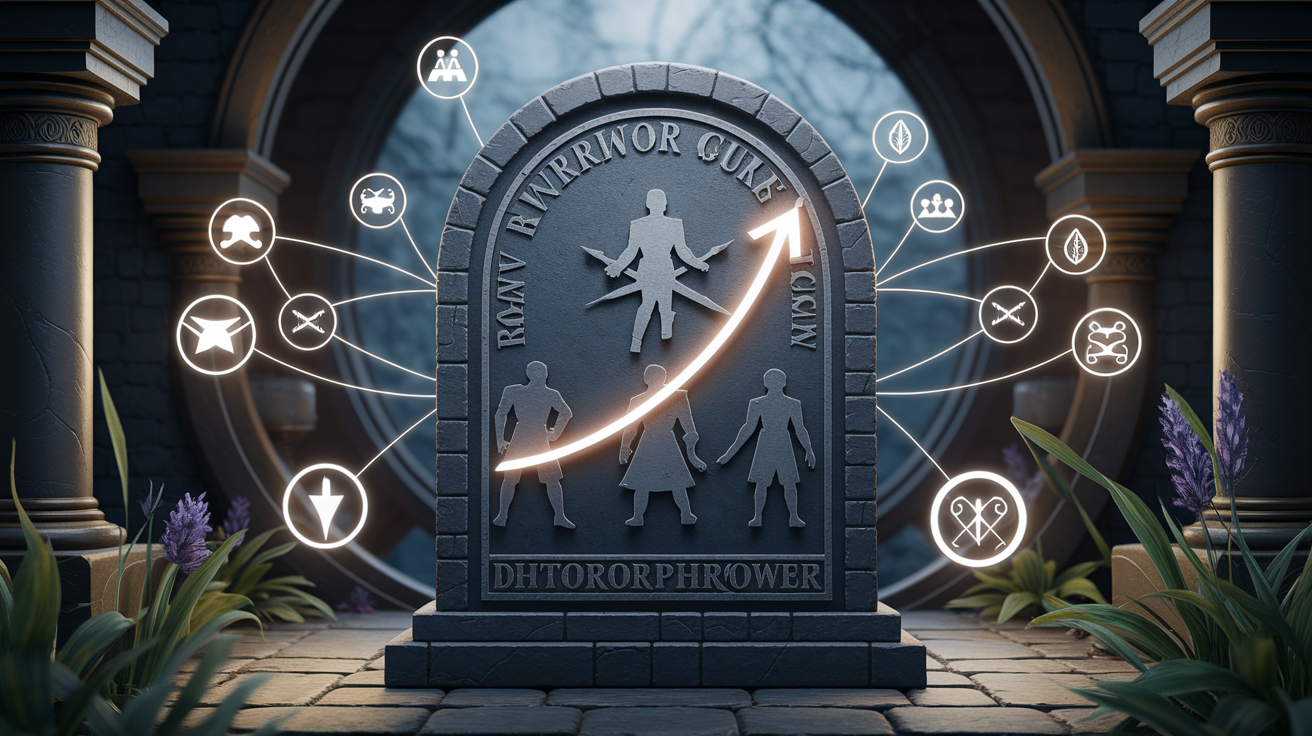
RPGs focus on character progression along a power curve. You earn experience, unlock perks, make choices that shape abilities and your role in the story. Quests and side content drive leveling, and lots of RPGs let you decide how to talk to NPCs or which faction to back. The mechanics trace back to tabletop games like Dungeons & Dragons (1974), which introduced stat sheets and narrative role‑playing to a wider crowd.
Core RPG play revolves around managing stats, gear, and ability trees. Combat might be turn‑based or real‑time, but either way you’re making tactical calls informed by numbers. Do you wear the armor with better defense or the one boosting magic resistance? Do you spend skill points on melee damage or crowd control spells? These decisions pile up over dozens of hours. The feeling of growth sits at the genre’s center. Story depth and world‑building often come along with the mechanical complexity, giving weight to your choices and consequences that echo through the narrative.
RPG subgenres split by culture and mechanics:
Action RPG – real‑time combat where player skill matters; Diablo (still supported online decades later) and modern hack‑and‑slash loot games fit here.
JRPG (Japanese RPG) – turn‑based battles, linear stories, anime art; Final Fantasy franchises show the style.
WRPG (Western RPG) – open choices, branching narratives, sandbox exploration; The Elder Scrolls (Skyrim) and The Witcher 3 are landmark examples.
Tactical RPG – grid or isometric combat with chess‑like positioning; Fire Emblem and Final Fantasy Tactics define it.
Sandbox / Open‑World RPG – big maps with side content and player‑directed pacing; Kingdom Come: Deliverance and The Witcher III let you roam and tackle goals in any order.
Shooter Genres (FPS and TPS)

First‑person shooters put the camera in your character’s skull. You see the weapon, the crosshair, the world from eye level. This view cranks up immersion and makes aiming feel direct. Your hand moves the mouse or stick, the crosshair follows right away. Classics like Half‑Life, Halo, and Call of Duty built pacing around quick target locks and twitch reactions. The genre rewards accuracy and map knowledge. Many FPS games layer in progression or class roles to add depth beyond raw aim.
Third‑person shooters pull the camera back over your shoulder. You see your avatar, which gives better spatial awareness and lets you use cover more tactically. Games like Fortnite and Splatoon use that view to emphasize movement and positioning. The trade‑off is slightly less direct aiming. Your crosshair floats in screen space instead of lining up with your eyes, but plenty of players prefer the wider field of view and the chance to peek corners without exposing themselves.
Both formats share core mechanics. Aim at targets, fire ranged weapons, manage ammo and cooldowns. But the camera angle shifts the feel. FPS games often lean into horror (limited visibility builds tension) or fast arena combat. TPS games work well for cover shooters and action‑adventure hybrids where seeing your character’s animations and gear matters. Want maximum immersion and precision? Try FPS. Value tactical positioning and seeing your character? Go TPS.
Strategy and Tactical Genres

Strategy games emphasize planning, resource use, and long‑term calls. You’re managing economies, building structures, coordinating units or actions across maps. The genre splits into real‑time and turn‑based branches, each offering different pace and challenge type.
Real‑time strategy games unfold without pausing. You gather resources, build, and command armies all at once. Your opponent’s doing the same. Success depends on multitasking, quick decisions, efficient execution. Titles like StarCraft (1998) and Age of Empires became competitive staples because they reward both planning and mechanical skill. You need a build order, a scouting plan, the ability to react when your opponent surprises you.
Turn‑based strategy gives you time to think. Each side takes turns issuing commands, so you can weigh options without a ticking clock. The Civilization series (explore, expand, exploit, exterminate, the “4X” model) lets you build an empire over thousands of in‑game years, balancing diplomacy, research, military conquest. Tactical turn‑based games narrow scope to individual battles on a grid. Fire Emblem and Final Fantasy Tactics ask you to position units like chess pieces and exploit terrain. The slower pace suits players who prefer careful choices over split‑second reactions.
| Subgenre | Core Mechanics | Example Title |
|---|---|---|
| Real‑Time Strategy (RTS) | Continuous resource gathering, base building, unit control | StarCraft |
| Turn‑Based Strategy (TBS) | Alternating turns, deliberate planning, no time pressure | Civilization series |
| Tactical RPG / Turn‑Based Tactics | Grid‑based positioning, character stats, combat focus | Fire Emblem |
Simulation and Management Genres

Simulation games recreate real or fictional systems with enough detail that you feel like you’re operating the actual thing. Vehicle sims model flight physics, space travel, racing dynamics. Elite Dangerous (2014) simulates cockpit controls and orbital mechanics for space flight. Gran Turismo and Forza focus on realistic car handling and tuning. The appeal is learning the system and mastering its complexity, not chasing a high score or finishing a linear story.
Management games shift focus to optimization and resource control. You’re running a city, a theme park, a factory, a household. Your job is balancing budgets, logistics, competing demands. SimCity and Cities: Skylines ask you to plan infrastructure and keep citizens happy. The Sims lets you control daily routines and relationships for individual characters. Management sims reward efficiency and long‑term thinking. You tweak systems, watch feedback loops, iterate until everything runs smoothly.
Both subgenres attract players who enjoy tinkering and experimenting. If you like understanding how systems work and finding optimal solutions, simulation and management games deliver that loop without needing fast reflexes. The learning curve can be steep. Cockpit controls in flight sims or zoning rules in city‑builders take time to internalize. But the payoff is a feeling of mastery that’s earned.
Puzzle and Casual Genres

Puzzle games challenge logic and pattern recognition. You solve spatial problems, match tiles, navigate mazes, unlock sequences. The core loop: observe the problem, form a hypothesis, test it, adjust. Portal (2007) wraps physics puzzles in first‑person perspective. Tetris asks you to fit falling blocks into rows. Candy Crush (2012) uses match‑three mechanics tuned for short mobile sessions. Puzzle games work on almost any platform because they don’t demand high‑end graphics or fast reflexes.
Common puzzle and casual subtypes:
Match‑three – align colored tiles to clear them (Candy Crush, Bejeweled)
Physics puzzles – manipulate objects under gravity or momentum (Portal, Angry Birds)
Logic puzzles – deduce solutions from clues (Sudoku, Brain Age)
Hidden object – find items in cluttered scenes (casual adventure hybrids)
Idle games – minimal input, progress through waiting or simple clicks
Party games – mini‑game collections for local or online groups (Mario Party)
Puzzle and casual genres appeal to a wide crowd because the barrier’s low. You don’t need to memorize combos or manage complex inventories. Sessions can be two minutes or stretch into hours of iterative problem solving. That flexibility makes these genres popular on mobile, where players expect quick, pick‑up‑and‑play experiences that still engage the brain.
Sports, Racing, and Fighting Genres

Sports games simulate athletic competition. Team sports titles like Madden NFL, FIFA, and NBA 2K replicate football, soccer, basketball with realistic rosters, physics, rule sets. You control players in real time, calling plays and executing moves that mirror the actual sport. Arcade‑style sports games, like NBA Jam, strip away realism for exaggerated mechanics and faster pacing. The split between simulation and arcade defines much of the sports genre. Some players want statistical depth and authentic strategies. Others want instant action and highlight reel moments.
Racing games focus on speed and vehicle handling. Simulation racers like Gran Turismo and Forza model tire grip, aerodynamics, tuning options. Winning requires learning braking points and racing lines. Arcade racers prioritize fun over realism. Tight controls, power‑ups, forgiving physics let you drift around corners at impossible speeds. Both styles reward practice and spatial awareness, but sims ask you to respect physics rules while arcade racers bend them.
Fighting games revolve around one‑on‑one combat with combo mechanics. Street Fighter II (1991) established the template. Special moves triggered by directional inputs plus buttons, frame‑perfect timing, mind games around blocking and counter‑attacking. Modern fighting games like Tekken and Mortal Kombat build on that foundation with deeper move lists and cinematic presentation. The genre has a steep learning curve because execution matters. A missed input drops your combo. High‑level play hinges on reaction speed and memorization. If you enjoy competitive duels and don’t mind practicing the same sequence until muscle memory takes over, fighting games deliver that challenge.
Hybrid and Emerging Genres

Hybrid genres mix mechanics from multiple categories to create new experiences. Action‑adventure blends combat and exploration. MOBAs (Multiplayer Online Battle Arenas) combine real‑time strategy, role‑playing progression, team‑based competition. League of Legends and Dota evolved from a Warcraft III mod (DotA, 2003) and now define their own genre, with matches lasting 30 to 60 minutes and prize pools in the millions (the 2018 League of Legends World Championship distributed $6.45 million across 24 teams). These hybrids succeed because they layer complementary systems. The tactical planning of strategy games plus the moment‑to‑moment skill of action games.
Emerging trends reshape how genres get defined. Roguelikes and roguelites use procedural generation and permadeath to create high‑replayability loops. Each run feels fresh because the map and loot change. Survival games like Rust, DayZ, and The Forest emphasize resource scarcity and hostile environments, blending crafting, exploration, combat into a single persistent challenge. Survival horror narrows that focus to atmospheric dread and limited resources. Resident Evil and Silent Hill defined the subgenre decades ago. It continues evolving with indie titles and AAA franchises.
Notable hybrid and emerging styles:
Roguelike / Roguelite – procedural dungeons, permadeath, run‑based progression inspired by Rogue (1980)
Survival – gather resources, manage health and hunger, defend against threats in open or semi‑open worlds
Survival Horror – horror themes, limited supplies, emphasis on atmosphere over action
Metroidvania – non‑linear maps with ability‑gated progression, named after Metroid and Castlevania; boss fights and upgrades are core
Battle Royale – large‑scale last‑player‑standing matches with shrinking play zones (Fortnite as a survival‑shooter hybrid)
These categories show how genre lines blur when developers borrow successful mechanics and recombine them in new ways.
Choosing the Right Game Genre for Your Interests

Your ideal genre depends on what you want from a session. Do you prefer fast decisions or careful planning? Do you care about story depth or are you chasing skill mastery? Playing solo or with friends? Matching genres to your preferences helps you skip frustration and find games that click right away.
Start by identifying what energizes you. If you like quick, reflex‑based challenges, action games, shooters, platformers deliver that loop. If you enjoy long‑term planning and optimization, strategy and simulation genres reward patience and system mastery. If narrative and character development matter most, RPGs and adventure games offer the deepest stories and choice‑driven outcomes. If you want social competition, fighting games, sports titles, MOBAs center multiplayer duels or team play.
Key things to consider when picking a genre:
Narrative depth – RPGs and adventure games prioritize story; action and puzzle games often keep it light
Reflex demands – shooters and fighting games need fast reactions; turn‑based strategy and puzzle games give you time to think
Learning curve – simulation and strategy genres can be complex; casual and puzzle games are easy to pick up
Multiplayer focus – MOBAs, fighting games, sports titles thrive on competition; many RPGs and adventure games are single‑player
Session length – puzzle and casual games work in short bursts; RPGs and strategy games reward longer, uninterrupted play
Progression systems – RPGs and roguelikes offer stat‑based growth; puzzle and arcade games focus on skill improvement without persistent upgrades
If you’re new to gaming or exploring beyond your usual picks, try genres next to what you already enjoy. Like shooters? Test a tactical FPS or a survival game with gunplay. Enjoy puzzle games? Try a narrative adventure with puzzle elements. The boundaries between genres are porous. Many of the best games borrow mechanics from multiple categories to keep things fresh.
Final Words
You now have a clear map of the main categories, from action and RPGs to puzzle, strategy, and simulation.
Each section showed core mechanics, typical player feel, and example titles so you can pick quickly. We also covered hybrids and how to match a genre to your mood and time.
Use this guide as a shortcut to explore game genres that fit your pace, challenge, and social style. Try one, switch if it doesn’t click, and enjoy the next break.
FAQ
Q: What are the main game genres?
A: The main game genres are role‑playing (RPG), first‑person shooter (FPS), strategy, puzzle, simulation, sports, action, adventure, fighting, and platformer — categories that describe core mechanics and player goals.
Q: What are 8 types of games?
A: Eight types of games are role‑playing, first‑person shooters, strategy, puzzle, simulation, sports, action‑adventure, and platformers — each focused on distinct mechanics like combat, exploration, puzzles, or management.
Q: What are the 20 most popular games?
A: The 20 most popular games shift often; common picks include Minecraft, Fortnite, GTA V, League of Legends, Roblox, Call of Duty, CS:GO, PUBG, Valorant, and Among Us, with rankings changing by platform and year.
Q: What are the 8 game aesthetics?
A: The eight game aesthetics are pixel art, retro, photorealistic, minimalist, cartoon/cel‑shaded, anime, low‑poly, and surreal — visual styles that shape mood, clarity, and player expectations.