
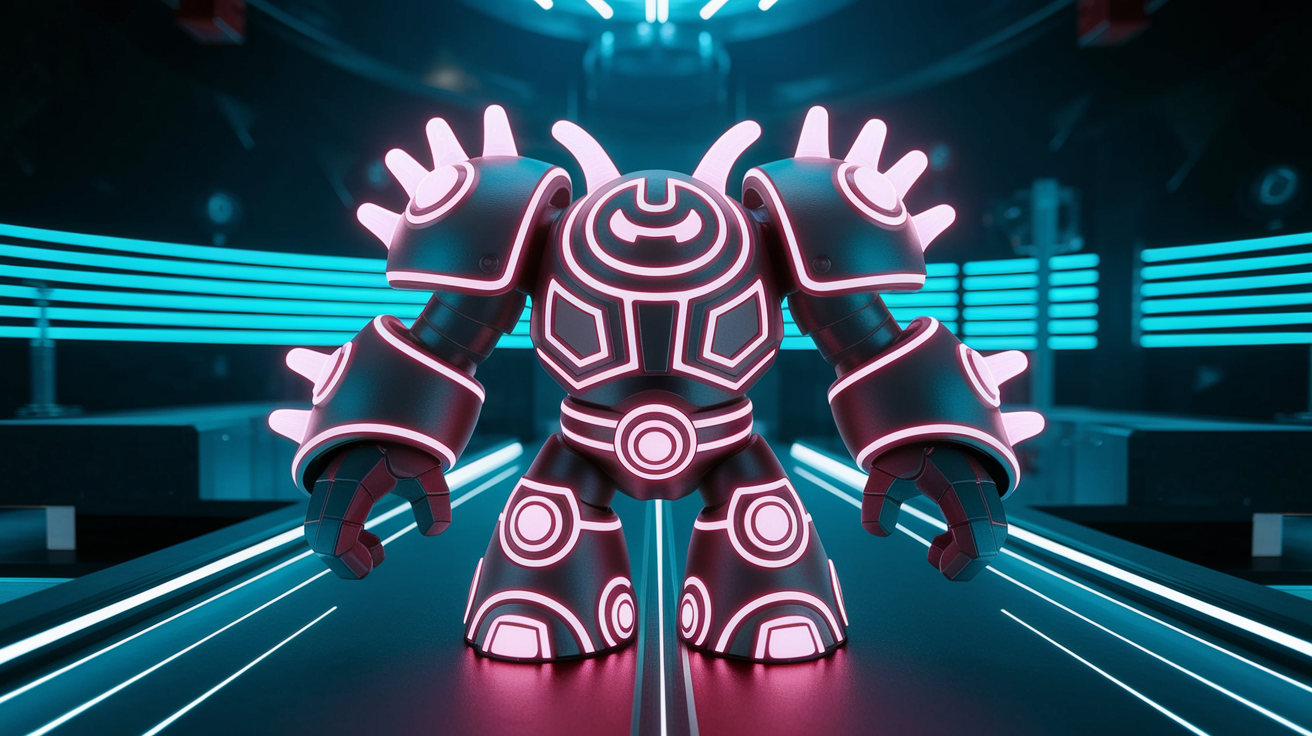
Think Thumper bosses are just chaotic noise?
They’re strict rhythm puzzles that punish the smallest timing errors.
This guide breaks down Thumper boss mechanics and timing for every level, signature attack patterns, vulnerability windows, and the exact input windows you need to nail.
You’ll get clear cues, simple practice tips, and the one-line timing rules that stop guesswork.
If you want to beat bosses by timing, not luck, this is the level-by-level map you need.
Quick Reference: Core Mechanics and Timing for Every Thumper Level Boss
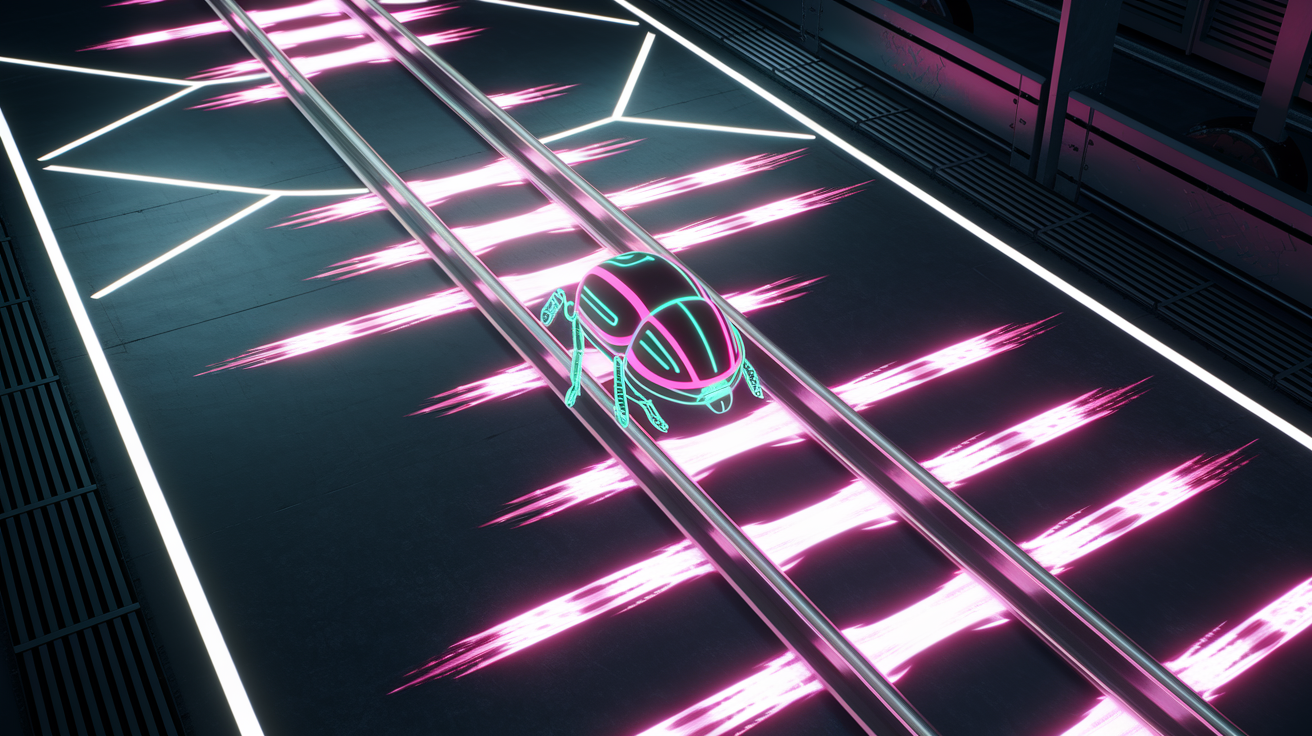
Every boss in Thumper locks you into a rhythm-driven pattern that’s all about precise timing and staying in your lane. Here’s the signature move and main timing cue for each fight, so you can drill the right muscle memory before you jump in.
• Level 1 Boss – Single-lane energy beams pulse in 4/4 rhythm. Hit turns on the beat and crack the shield with one timed thump.
• Level 2 Boss – Double turns come fast. Input the second turn right after the first clap sound.
• Level 3 Boss – Triple pulse chains need three rapid thumps before you shift lanes. Watch for the third pulse’s visual bloom, that’s your shift cue.
• Level 4 Boss – Staggered pulse blocks need off-beat thumps. Multi-hit shields want four clean inputs before the core opens.
• Level 5 Boss – Speed spikes mid-phase. Cluster pulses arrive off-beat and punish early inputs. Wait for the audio crack before thumping.
• Level 6 Boss – Extended no-break sequences throw everything at you. Treat each 8-bar phrase like one memorized chunk.
• Level 7 Boss – Lane spirals rotate your view while rapid repeats demand frame-perfect turns. Align inputs to the spiral’s visual center line.
• Level 8 Boss – Tempo breaks mid-phase to mess with your rhythm. Vulnerability windows shrink to 2 or 3 bars, so recalibrate on the first downbeat after each break.
• Level 9 Boss – Longest continuous assault with multistage shield cores. Perfect-input windows last about 1 beat, and any miss resets the phase loop.
Level 1 Boss: Pattern Recognition, Lane Alignments, and Basic Timing Windows

The Level 1 boss walks you through the core loop you’ll repeat in every fight. Watch for telegraphs, respond on-beat, and exploit those brief vulnerability windows. Energy beams pulse from the boss in a steady 4/4 rhythm, always telegraphed by a white glow that spreads outward one beat before the beam fires. Your beetle stays locked to a single lane, so all timing comes down to knowing when to thump, when to turn, and when to hold X through red barriers.
Shield mechanics are straightforward. One clean thump during the vulnerability window breaks the shield and opens the core for one attack. The boss cycles through four identical phases, and landing four successful attacks ends the fight.
- Watch for the white energy bloom spreading from the boss.
- Thump (tap X) exactly as the bloom reaches your lane to deflect the beam.
- When a turn appears, hold X and press the left analog stick in the turn direction as you hear the clap sound.
- After deflecting all beams in a phase, a glowing attack window opens. Thump once more to land your hit.
Most common mistake? Thumping too early, especially when the boss charges multiple beams back to back. Count the visual bloom as your metronome. “One, two, three, thump.” Don’t mash X. The boss telegraphs every input at least one full beat ahead, giving you time to get your finger ready. If you die, the restart window (about 4 bars) resets you to the beginning of the current phase, not the entire boss fight. Treat each phase like a short practice loop. Listen for the industrial bass drop that marks the start of each new phase. That’s your audio anchor for getting back in rhythm after a death.
Level 2 Boss: Multi‑Pulse Telegraphs, Double Turns, and Accelerated Rhythm Density

Level 2 cranks up the tempo and brings in double turns. Two sequential banking maneuvers that punish hesitation or mistimed releases. The boss still fires energy beams in a 4/4 pattern, but now you’ll see multi-pulse lines: two or three beams firing quick, each needing a precise thump on its own beat. Lane mechanics stay single-track, but the rhythm density doubles compared to Level 1, squeezing your reaction windows into half-beat intervals.
Multi-pulse timing works like this. The first beam pulses on beat one, the second on beat two, and if there’s a third, it lands on beat three. Each pulse gets its own bloom telegraph, so don’t rely on a single visual cue for the whole sequence. The key is keeping your internal metronome going. If you thump the first pulse perfectly, the second and third will land exactly one beat apart, letting you tap X in a steady rhythm instead of reacting visually each time. Miss even one pulse in a multi-beam sequence and you’ll usually take damage, since the remaining beams will hit before you recover.
Surviving Double Turns
Double turns are what Level 2 is really about. The first turn appears with the usual clap sound, but the second follows right away, roughly half a beat later, before you’ve released X from the first turn. To survive both, hold X and the first turn direction until you hear a second, higher-pitched clap, then flick the analog stick to the opposite direction without releasing X. The timing window’s tight. If you release X between turns, you’ll crash into the second barrier. Think of it as one continuous hold with a direction switch in the middle, not two separate inputs.
Failures happen when people treat double turns like two isolated actions. The game wants a smooth analog-stick pivot while X stays pressed, and releasing pressure even for a frame registers as a miss. Practice the motion slowly at first. Hold left, hear the second clap, snap right. Speed up once the muscle memory clicks. If you’re consistently dying on the second turn, you’re likely releasing X a fraction too early or hesitating on the direction change.
Panic inputs kill you in Level 2. When multi-pulses and double turns stack in the same phase, new players mash X or overcorrect on turns. Instead, anchor your timing to the bass line in the soundtrack. Each thump and turn aligns to a distinct audio cue, and the industrial percussion gives you a 1:1 rhythm map. If you find yourself guessing, slow down mentally and count beats aloud until the pattern becomes automatic.
Level 3 Boss: Rhythm Shifts, Triple Pulse Chains, and Reactive Lane Changes

Level 3 throws forced lane shifts right before turn sequences, splitting your attention between positioning and timing. The boss now fires triple-pulse chains (three rapid thumps in a row) and immediately follows with a lane-shift cue and a turn, jamming what used to be separate challenges into one continuous phrase. You’ll still occupy a single lane at the start of each phase, but the game’s teaching you to preemptively move before obstacles arrive.
Triple pulses step up multi-pulse timing from Level 2. Each of the three beams fires exactly one beat apart, and the visual telegraph is a cascading bloom that ripples outward in three waves. The rhythm is strict. Thump, thump, thump, no pauses. Missing the third pulse is especially costly because the lane-shift cue appears right after. If you’re still recovering from a missed input, you won’t have time to reposition before the turn hits. Treat the triple chain as a single three-beat phrase, not three isolated thumps. Your fingers should move in a consistent tap-tap-tap cadence that mirrors the 4/4 downbeat structure of the track.
Lane-shift patterns in Level 3 force you to move left or right while holding X through a red barrier. The telegraph is a glowing directional arrow that appears about 2 beats before the lane wall closes, giving you a narrow window to shift and prepare for the incoming turn. The mistake most players make is shifting too early or too late. Shift during the red-barrier hold, not before, because releasing X to reposition will make you crash into the barrier itself. The correct sequence is hold X (barrier), shift lane mid-hold (arrow cue), release X and immediately hold again for the turn (clap sound). It’s a three-part combo that plays out in under two seconds.
• Triple-pulse response: Tap X three times, one beat apart, matching the cascading bloom telegraph.
• Lane-shift timing: Shift left/right stick during the red-barrier hold, not before or after.
• Turn preparation: Right after shifting, listen for the clap and execute the turn while still holding X.
Rushing any one of these inputs will cascade into failure for the next. If you’re consistently dying on lane-shift turns, record your attempts (or watch your hands) to see whether you’re releasing X between the barrier and the turn. That’s the most common break point. The game expects you to hold X across the entire sequence, only adjusting stick direction for the shift and turn.
Level 4 Boss: Branching Phases, Staggered Pulse Blocks, and Multi‑Hit Shields

Level 4 brings thick staggered pulse blocks (clusters of beams that don’t fire in strict 4/4 time) and shields that need four clean hits before the boss core becomes vulnerable. The fight branches into alternating attack phases: one phase uses standard on-beat pulses, the next shifts to off-beat staggered clusters, forcing you to recalibrate your rhythm mid-encounter. Lane positioning gets more complex too, with shifts happening before, during, and after pulse sequences instead of in isolated moments.
Staggered pulses break the steady rhythm you’ve relied on in Levels 1 through 3. Instead of thumping every beat, you’ll see two beams fire close together (half-beat apart), then a pause, then two more. The visual telegraph is a stuttering bloom. Two quick flashes, gap, two more. It mimics the timing you need to tap X. The audio cue is a syncopated drum hit that lands slightly off the main downbeat, so if you’re tapping to the bass line, you’ll miss. The trick is to ignore the 4/4 metronome and instead tap to the stutter itself. Watch the bloom pattern, tap-tap, wait, tap-tap. Counting “one-and, two-and” helps, but only if you lock “and” to the visual flash rather than the underlying beat.
Shield-break timing is the other major shift. Instead of one thump opening the core, you now need four consecutive clean inputs during a single vulnerability window. The boss telegraphs this window with a pulsing green glow, and the window lasts exactly four beats. You must thump once per beat (beat 1, beat 2, beat 3, beat 4) with zero mistakes, or the shield resets and you repeat the phase. If you miss beat 2, you can’t “catch up” on beat 3. The sequence must be perfect from the first input. This four-hit requirement teaches you to stay composed under pressure, because one mistimed thump costs you the entire phase and resets the loop.
Phase Transition Cues
Level 4 is the first boss to use distinct visual and audio markers for phase shifts. When the shield breaks and the core opens, the screen flashes white and the bass line drops out for about 1 bar, replaced by a high-pitched sustain. That sustain is your cue to deliver the final attack thump. It lasts exactly two beats, and you need to thump during that window to register the hit. If you hesitate or thump too early (before the flash), the game doesn’t register the attack and you’ll loop back to another shield phase.
The transition from staggered pulses back to on-beat rhythm happens when the boss retracts its outer shell. Watch for the tentacles pulling inward. That animation lasts about 2 bars and is always followed by a return to 4/4 pulses. Use those two bars to mentally reset your rhythm. Count “one, two, three, four” aloud if needed, so you’re locked back into the main beat when the next phase starts. Players who stay synced to the staggered rhythm after the phase shift will crash on the first on-beat pulse, because their internal metronome is now half a beat off.
Level 5 Boss: High-Speed Rail Turns, Pulse Clusters, and Off-Beat Timing Cues

Level 5 cranks up the tempo and brings cluster pulses (rapid bursts of three to five beams fired in compressed timing windows that punish early inputs). The boss also shifts into high-speed rail turns, where your beetle accelerates mid-phase and turn timing shrinks from about 1 beat to half a beat. The result is a fight that feels faster than it actually is. The underlying 4/4 structure hasn’t changed, but the density of inputs per bar has nearly doubled, and the margin for error has dropped to a few frames.
Speed spikes happen at the start of alternating phases. You’ll hear a sharp metallic screech, the camera pulls back slightly, and your beetle begins moving faster along the track. Turn telegraphs still appear with the standard clap sound, but the gap between the clap and the turn collision shrinks dramatically. Where you used to have a full beat to prepare, you now have roughly half a beat. The trick is to pre-hold X as soon as you hear the screech, so your finger is already on the button when the clap arrives. Then it’s just a matter of flicking the stick left or right at the exact moment of the clap, with no delay. If you wait to press X until after you hear the clap, you’re already too late.
Off-beat cue recognition becomes critical in Level 5 because cluster pulses don’t align to the main downbeat. Instead, they fire on the “and” of each beat, halfway between the bass hits. The visual telegraph is a flickering bloom that pulses twice as fast as the standard telegraph, and the audio cue is a crackling static sound rather than the usual bass thump. To hit these clusters correctly, you need to tap X on the crackle, not on the bass. The easiest way to practice this is to count “one-and-two-and-three-and-four-and” and tap only on the “and” syllables. Your internal rhythm will fight you at first because your muscle memory is trained to the main beat, but after a few loops the off-beat timing will click.
- Pre-hold X when you hear the metallic screech (speed-spike warning).
- Flick the analog stick left or right on the clap sound, not after.
- For cluster pulses, tap X on the crackling static cue, ignoring the bass line.
- Count “and” syllables aloud to stay locked to off-beat timing.
- Reset your rhythm during the inter-phase gap (4 to 8 bars) so you’re not carrying off-beat timing into an on-beat phase.
Biggest mistake in Level 5? Trying to react visually to every input. At this speed, visual reaction time isn’t fast enough. You need to rely on audio cues and pre-execution. If you see a cluster telegraph and then try to respond, you’ve already missed the first pulse. Instead, listen for the crackling sound and tap X in rhythm with it, trusting that the visual will line up. Same goes for high-speed turns. Commit to the direction as soon as you hear the clap. Second-guessing mid-turn will cause a crash.
Level 6 Boss: Long-Form Sequences, Mixed Telegraphs, and Precision Timing

Level 6 removes all downtime and combines every mechanic from the previous five bosses into extended, no-break sequences that can run 16 bars or longer without a checkpoint. You’ll see on-beat pulses, off-beat clusters, lane shifts, double turns, multi-hit shields, and speed spikes all stacked into a single continuous phrase. The fight tests pattern memory and mental stamina more than raw reaction speed, because you need to hold perfect execution across 30 to 60 seconds of non-stop inputs with no margin for error.
Mixed telegraphs appear in rapid succession, and the game no longer gives you clean visual separation between mechanics. A cluster pulse might fire during a red-barrier hold, forcing you to tap X while continuing to hold the button (a timing trick that requires you to “double-tap” X mid-hold). Or a lane shift might arrive right before a double turn, compressing three distinct inputs into a two-second window. The key to surviving these mixed patterns is chunking. Mentally divide each 16-bar sequence into four 4-bar phrases, memorize the input pattern for each phrase, and execute them as pre-programmed combos rather than reacting in real time.
Extended assaults also mean you can’t afford to take damage early in a phase. Level 6 shields require four hits, but the vulnerability window now appears at the end of a 16-bar sequence, not the beginning. If you take damage on bar 3, you’ll lose your streak multiplier, and even if you survive to the vulnerability window, your scoring potential for that phase is gone. The game heavily rewards no-damage runs in Level 6, so practice each phrase individually. Use deaths as checkpoints to isolate and drill the specific 4-bar chunk that’s killing you, rather than grinding full attempts and hoping for a clean run.
Mental pacing becomes critical when sequences stretch past 20 bars. Your hands and eyes can execute the inputs, but your brain will start to fatigue, especially if you’re holding tension in your shoulders or jaw. The inter-phase gaps (4 to 8 bars) are your only chance to reset. Take a full breath, shake out your hands, and count “one, two, three, four” to re-anchor your rhythm before the next phase starts. Treat each phrase transition like a fresh attempt, not a continuation of the previous phrase, so mistakes don’t cascade into panic.
Level 7 Boss: Complex Lane Spirals, Rapid Repeats, and Error Punishment

Level 7 presents lane spirals, rotating sequences where your beetle corkscrews around the track while lanes shift dynamically beneath you. The visual alignment becomes disorienting because the camera rotates with your beetle, making it hard to distinguish left from right. On top of that, rapid repeats demand frame-perfect turn timing. The same turn pattern fires twice in a row with less than half a beat between inputs, and missing the first turn guarantees you’ll miss the second.
Visual alignment during spirals requires you to ignore the rotating background and focus entirely on the lane markers directly in front of your beetle. The game draws a faint white line down the center of your current lane. That’s your alignment reference. When a lane-shift cue appears, move your analog stick toward the line, not toward where you think “left” or “right” is relative to the screen. The spiral effect tricks your brain into thinking you’re moving in the wrong direction, but the lane-line system is absolute. Shift toward the line, and you’ll always move correctly. If you’re consistently missing lane shifts during spirals, it’s because you’re steering relative to the camera instead of relative to the lane markers.
Handling rapid repeats comes down to maintaining a steady internal tempo even when the game tries to rush you. The first turn will fire with a clap, and the second turn will fire with a higher-pitched clap exactly half a beat later. Most players hear the second clap and panic, mashing the stick in the wrong direction or releasing X too early. Instead, treat the double clap as a two-note rhythm: “clap-clap” maps to “turn-turn.” Execute the first turn cleanly, keep holding X, and flick the stick to the second direction as soon as you hear the second clap. There’s no time to visually confirm the second turn. You have to trust the audio cue and commit.
| Pattern Type | Correct Input Timing | Risk Factor |
|---|---|---|
| Lane Spiral (3+ shifts) | Shift during red-barrier hold, align to center lane line | High – disorientation leads to wrong-direction inputs |
| Rapid Repeat Turn | First turn on clap 1, second turn on clap 2 (half-beat later), hold X throughout | Extreme – missing first turn guarantees second-turn failure |
| Spiral + Cluster Pulse | Tap X on off-beat crackle while holding lane position | Extreme – requires split attention on audio cue and lane line simultaneously |
The combination of spirals and rapid repeats creates the highest error-punishment rate in the game so far. A single missed input in Level 7 often cascades into two or three additional failures because the next mechanic arrives before you’ve recovered. Best mitigation strategy? Practice each spiral sequence in isolation. Die intentionally at the end of a sequence to reset to the start, then loop that 8-bar phrase until you can execute it five times in a row without damage. Once the muscle memory is solid, string two sequences together, then three, until you can clear the full phase.
Level 8 Boss: High-Pressure Chains, Rhythm Breaks, and Multi-Phase Vulnerability Windows

Level 8 shifts tempo abruptly mid-phase, breaking the 4/4 rhythm you’ve relied on for seven levels. The boss will fire a standard on-beat sequence, then suddenly pause for one full bar, then resume at a faster tempo with off-beat clusters. This rhythm break is designed to destroy your internal metronome. If you keep tapping to the old tempo, you’ll miss every input in the new tempo section. Vulnerability windows also shrink to 2 or 3 bars, meaning you have roughly 8 to 12 beats to land four shield hits, and any mistake resets the entire phase loop.
Rhythm breaks are telegraphed by a visual stutter. The boss’s outer shell contracts sharply, the screen flashes red, and the bass line drops out completely for one bar. That one-bar silence is the break. During that bar, do nothing. Don’t tap X, don’t hold the stick, just wait. The new tempo will begin on the downbeat of the next bar, and the first input will be a cluster pulse on the “and” of beat one. The key to surviving rhythm breaks is recognizing the silence as part of the pattern, not as dead time. Count “one, two, three, four” during the silent bar to keep your internal clock running, so you’re ready to tap on the “and” when the new tempo starts.
Recalibration after a break takes 1 to 2 bars of practice. The new tempo is usually 10 to 15 BPM faster than the old tempo, but the game doesn’t give you a warm-up. You’re expected to lock into the new speed immediately. If you’re struggling to recalibrate, focus on the first input after the break and treat it as an isolated timing drill. Loop the phase, intentionally die after the break, and drill that first post-break input until you can hit it cleanly five times in a row. Once you’ve nailed the first input, the rest of the sequence will follow the same tempo, and your hands will adapt.
Multi-phase vulnerability windows mean you can’t afford to waste a single input. The shield phase now has two stages: a 4-bar on-beat section where you land two hits, then a rhythm break, then a 3-bar off-beat section where you land the final two hits. If you miss any hit in either section, the shield resets and you start over from the 4-bar section. The total window is only 7 bars, so there’s no time to recover from mistakes. Best approach? Treat the two sections as separate drills. Practice the 4-bar section until it’s automatic, then practice the 3-bar section in isolation, then combine them only after both are consistent.
Visual and audio cues for vulnerability windows are subtle in Level 8. The green glow that marks the attack window is dimmer and lasts half as long, and the high-pitched sustain cue is quieter and mixed lower in the soundtrack. If you’re relying purely on visual confirmation, you’ll miss the window. Instead, count bars. The vulnerability window always opens exactly 2 bars after the final rhythm break, and it lasts for 3 bars. Use that timing structure as your cue rather than waiting to see the green glow.
Level 9 Boss: Final Challenge Breakdown, Perfect-Input Windows, and Surviving Full-Length Assaults

The final boss uses the longest continuous sequences in the game (up to 32 bars without a break) and the tightest timing windows, with perfect-input requirements lasting roughly one beat. Multistage shield cores now have five segments instead of four, and each segment demands flawless execution across a unique pattern that combines every mechanic you’ve learned. The fight is a comprehensive test of rhythm precision, pattern memory, and mental endurance under sustained pressure.
Perfect-input windows shrink to about 1 beat, meaning you have four audio frames (at 4/4 time, one beat equals four 16th-note subdivisions) to execute each thump, turn, or lane shift. Miss that window by even a 16th note, and the game registers a fail. The visual telegraphs are nearly instantaneous. Blooms appear and fade within half a beat. You can’t rely on reaction time. Instead, you need to pre-execute based on audio cues and pattern memory. For example, when you hear the bass drop that signals a turn sequence, your finger should already be pressing X and your thumb should already be moving the stick, so the input lands exactly on the clap. If you wait to see the turn telegraph, you’re already a 16th note late.
Multistage shield cores add a new layer of complexity. Each of the five segments uses a different mechanic: segment 1 is on-beat pulses, segment 2 is off-beat clusters, segment 3 is lane spirals, segment 4 is rapid repeats, and segment 5 is a rhythm break followed by a final attack window. You must clear all five segments in sequence without taking damage, or the core resets and you start over from segment 1. The total sequence runs about 40 bars, which translates to roughly 60 to 90 seconds of sustained perfect play. Any mistake in segment 4 costs you the entire minute of progress, so the psychological pressure is extreme.
• Pre-execute all inputs based on audio cues, not visual telegraphs. Reaction time is too slow for 1-beat windows.
• Chunk the 32-bar sequence into eight 4-bar phrases and drill each phrase individually until it’s automatic.
• Use inter-segment gaps (the roughly 2 bars between shield segments) to reset your breathing and re-anchor your rhythm.
• Treat each segment as a fresh attempt, not a continuation. Don’t let a mistake in segment 2 bleed into panic in segment 3.
Managing adrenaline, pacing, and pattern clarity is the final skill the game tests. After 20 to 30 failed attempts, your hands will know the inputs, but your brain will start second-guessing. You’ll see a turn coming and think “Was that left or right?” even though your muscle memory knows the answer. The solution is to trust execution over thought. When the clap sounds, let your hands move without conscious decision-making. If you’re consciously thinking about each input, you’re already too slow. The goal is to reach a flow state where the pattern plays itself and your conscious mind is just monitoring for mistakes, not directing every move.
Pattern clarity comes from repetition and deliberate practice. Record your best attempts and watch them back to identify exactly which 4-bar phrase is killing you. Then isolate that phrase. Die intentionally at the end of it to reset to the start, and loop it 10 to 20 times until you can clear it without thinking. Once all eight phrases are automatic, string them together in pairs, then in groups of four, then run the full 32-bar sequence. The final boss is less about raw skill and more about systematic practice. Break it into small pieces, master each piece, then combine them into a flawless run.
Final Words
You now have a fast-reference rundown of Level 1–9 bosses, covering lane shifts, pulsing attack telegraphs, hammer hits, turn timing, and multi-hit shield phases.
Use the quick-reference list for rapid checks, then drill each level’s timing windows and shield phases in short practice runs. Small, focused reps beat long, unfocused sessions.
This thumper game boss mechanics and timing guide gives the exact cues and simple responses to use, so you stay calm and hit the windows when it counts. Try a run—you’ll improve quickly.
FAQ
Q: How to fly longer in thumper?
A: To fly longer in Thumper, time your boosts to downbeat pulses, keep steady boost intervals, avoid early slows, and release on shield phases so you conserve energy and stay airborne through long sequences.
Q: What is the hardest level in thumper?
A: The hardest level in Thumper is often Level 9, the final boss, because it uses the longest continuous sequences, the tightest timing windows, and multistage shield cores that demand near-perfect inputs.
Q: How long does it take to beat Thumper?
A: Beating Thumper typically takes 6–12 hours for most players; speedrunners finish under an hour, while casual players who retry bosses or hunt collectibles may need more time.
Q: How do you play the game Thumper?
A: You play Thumper by following rhythm cues: press lane inputs, time turns and hammer hits, break shields on core pulses, and react to clear visual and audio telegraphs for survival and score.