
Are video game heroes and villains more memorable than movie stars?
Some of them earn billions, sell toys, and shape culture.
Pac-Man pulled in over $11 billion.
From tiny pixel silhouettes to motion-captured actors, characters carry games.
We’ll trace their debut years, signature traits, and how design, story, and gameplay turned simple ideas into icons.
This post lists the most popular heroes and villains, explains what makes them stick, and shows why players still care.
Whether you’re picking a new game or studying design, this guide helps you spot what works.
Comprehensive Overview of Notable Video Game Characters

Video game characters come in nearly every shape and genre you can think of. You’ve got Pac-Man’s simple yellow circle. Then there’s Arthur Morgan with all that photorealistic detail. Early arcade games needed iconic silhouettes and basic animations because that’s all the hardware could handle. Modern franchises pile on narrative depth, voice acting, motion-capture performances. Some characters stay silent (Gordon Freeman). Others become mascots (Sonic). Some carry entire RPGs on their backs with full voice work (Cloud Strife).
Debut years matter. So do signature traits. Pac-Man showed up in 1980 and pulled in over $11 billion, making it the most successful arcade game ever. Mega Man launched in 1987 with that weapon-copy mechanic that became the whole franchise’s thing. Cloud Strife arrived in Final Fantasy VII carrying the Buster Sword and stuck in the middle of a love triangle with Tifa and Aerith. Master Chief hit in 2001 as Xbox’s flagship face. Pikachu turned into a merchandising juggernaut with 21.5 billion trading cards sold and over 800 TV episodes. These characters don’t just stay in one game. They pop up in sequels, cameos, movies, cementing their spot in pop culture.
Players browse character lists to find new franchises, compare designs, or just see how game heroes and villains evolved over time. Whether you’re sorting by era, franchise, or role, these overviews show who shaped the medium and why people still care.
Notable Video Game Characters:
- Pac-Man (1980) – Yellow maze-runner chased by four ghosts: Blinky, Pinky, Inky, Clyde.
- Mario (1985) – Platforming plumber who defined run-and-jump games and appears in over 200 titles.
- Link (1986) – Reincarnating hero across The Legend of Zelda series, always wielding the Master Sword.
- Ryu Hayabusa (1988) – Ninja Gaiden protagonist known for brutal difficulty and Dead or Alive crossovers.
- Sonic the Hedgehog (1991) – Blue speedster with white racing shoes, Sega’s 1990s flagship.
- Lara Croft (1996) – Tomb Raider explorer, Guinness World Record holder for Most Recognizable Female Character.
- Master Chief (2001) – Spartan John-117 in that iconic helmet armor, Xbox’s launch killer app.
- Kratos (2005) – Ghost of Sparta wielding the Leviathan Axe, God of War antihero.
- Geralt of Rivia (2007) – Witcher protagonist from Andrzej Sapkowski’s novels, star of one of the best-reviewed games ever.
- Arthur Morgan (1863 birth year in-universe) – Red Dead Redemption 2 outlaw with a genuinely deep character arc.
Character Design Principles in Modern Video Game Characters

A memorable character starts with a strong silhouette and clear visual identity. Mario’s red cap and overalls read instantly no matter what’s behind him. Sonic’s blue spines and white shoes scream speed. Pac-Man’s circle and four ghosts (Blinky, Pinky, Inky, Clyde) work at low resolution and high contrast. Color theory helps too. Pikachu’s yellow and red cheeks, Link’s green tunic, Scorpion’s yellow-and-black ninja outfit. Designers want shapes that hold up as thumbnails, on posters, during fast gameplay.
Modern pipelines layer concept art, 3D modeling, physically based rendering to build depth. Artists sketch first, exploring personality and silhouette. Then they move into high-poly sculpts. Texture maps and PBR materials add realism: skin pores on Kratos, fabric weave on Ellie’s backpack, metal scratches on Solid Snake’s SOCOM pistol. Pixel-art characters follow the same rules. Simple shapes, high contrast, readable features at small sizes. Stylized or realistic doesn’t matter. The goal is instant recognition and emotional connection.
| Character | Distinctive Visual Element |
|---|---|
| Mario | Red cap with “M” logo, mustache, overalls |
| Sonic | Blue spines, white gloves, red shoes |
| Pac-Man | Yellow circle with wedge-shaped mouth |
| Scorpion | Yellow-and-black ninja mask, Kunai weapon |
Storytelling and Character Development in Video Game Characters
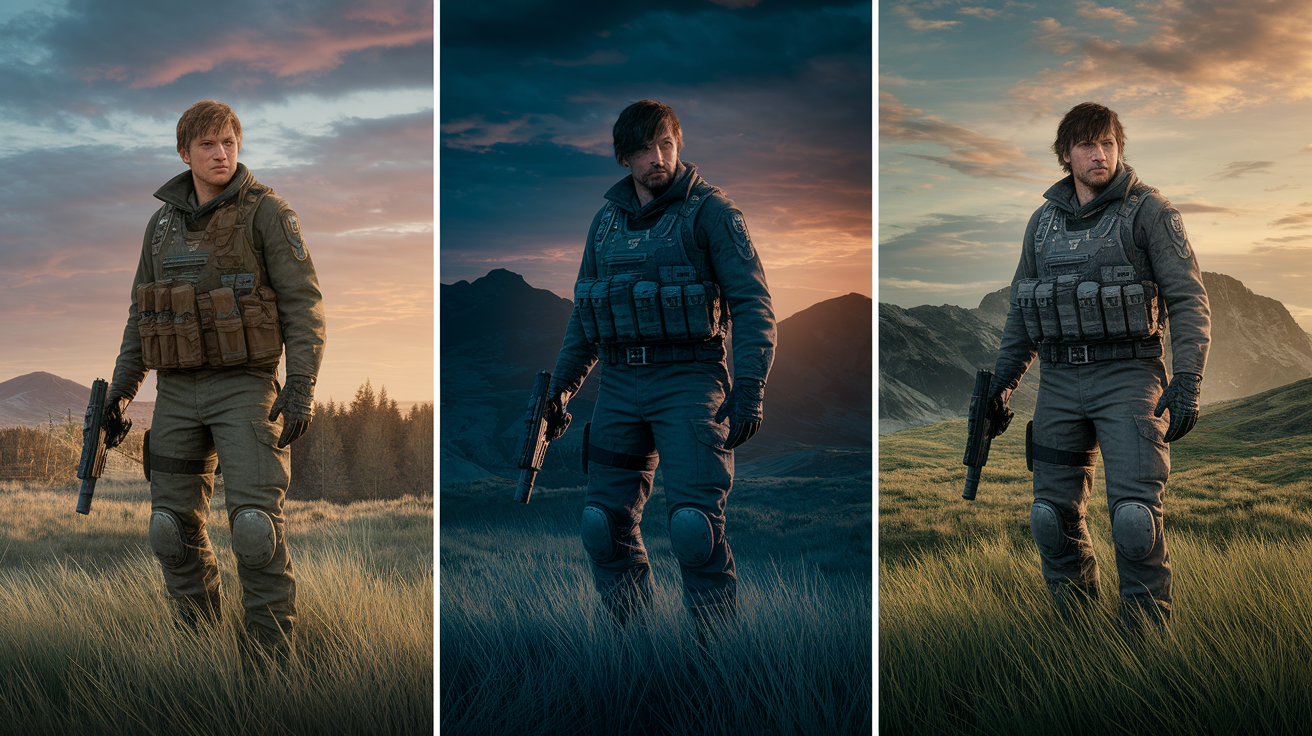
Strong characters carry emotional arcs, real motivations, growth across hours of gameplay. Ellie in The Last of Us goes from scared teenager to Joel’s surrogate daughter, driving the whole narrative. Cloud Strife wrestles with false memories and identity in Final Fantasy VII. Arthur Morgan’s slow moral reckoning in Red Dead Redemption 2 gives weight to every single mission. These arcs turn avatars into people players actually care about.
Lore and backstory add depth even when they’re not front-and-center. Arthur Morgan’s in-universe birth year of 1863 anchors his gang’s decline in a specific historical moment. Ezio Auditore’s fictional birth in 1459 ties his revenge story to Renaissance Italy. Geralt of Rivia showed up in games in 2007 but originated in 1980s novels, carrying decades of fiction into The Witcher 3. Solid Snake’s ties to Big Boss and Liquid Snake build a multi-generational stealth saga. Players who dig into codex entries, audio logs, side conversations discover layers that make characters feel lived-in.
Branching dialogue and moral-choice systems let players shape personality. Commander Shepard in Mass Effect can be ruthless or diplomatic, with choices rippling across three games. Dialogue trees in RPGs give players real agency, turning a blank-slate protagonist into a version that feels personal. Even in linear stories, small choices (like deciding whether Ellie opens up or stays guarded) create investment. When story and systems align, characters stop feeling scripted and start feeling real.
Types and Roles of Playable Video Game Characters
Playable characters differ wildly depending on genre and mechanics. In shooters like Halo, Master Chief is a first-person vessel with minimal dialogue, letting players project themselves into the armor. In RPGs like Final Fantasy VII, Cloud Strife has a fixed personality, voice, backstory. The player controls only combat and exploration. In open-world games like Red Dead Redemption 2, Arthur Morgan sits between those extremes. Strongly authored but player-shaped through dialogue choices and behavior.
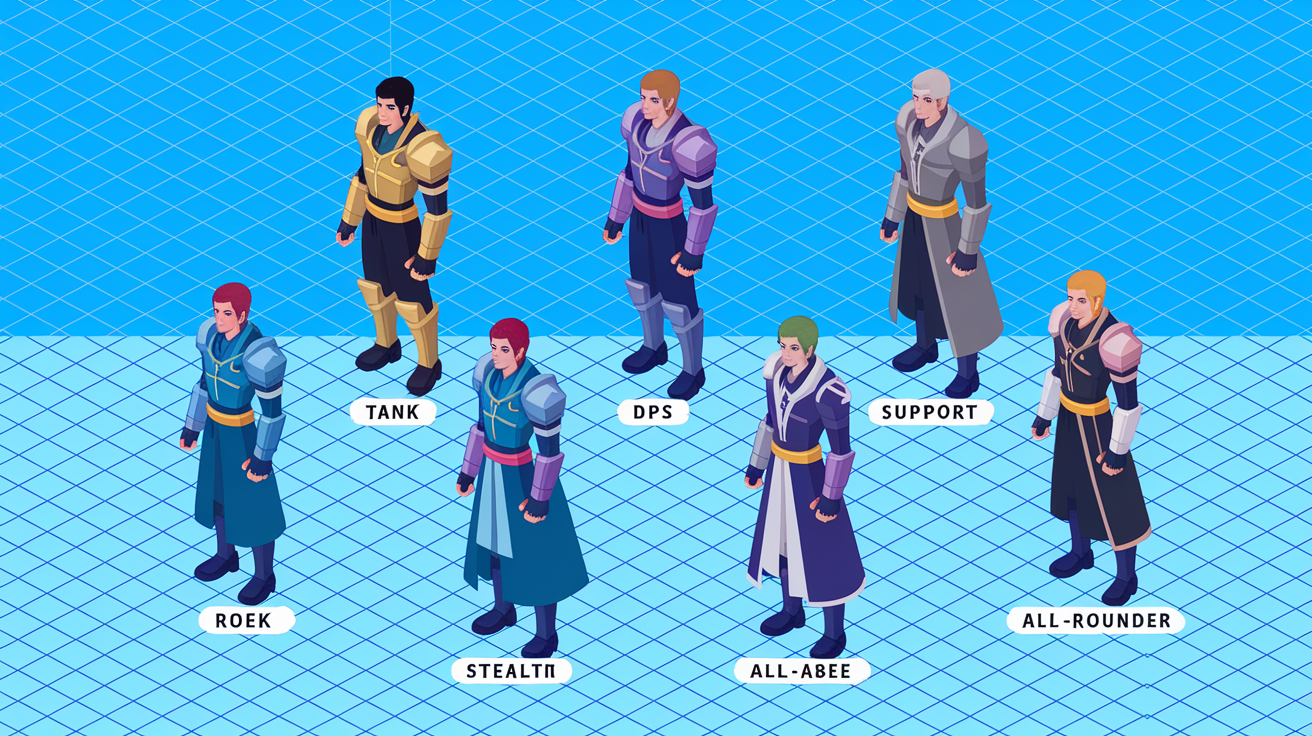
Class archetypes define many character structures. Tanks absorb damage, supports heal or buff teammates, DPS characters deal high damage but stay fragile. Skill trees and leveling let players specialize. Geralt can focus on swordplay, signs, or alchemy in The Witcher 3. Pikachu evolves into Raichu through leveling in Pokémon, unlocking stronger attacks. Unique abilities anchor identity: Solid Snake’s stealth, Doomguy’s relentless aggression, Samus Aran’s Power Suit transformations. Attack patterns, cooldowns, resource management turn characters into tactical puzzles.
Common Playable Roles:
- Tank – high health, draws enemy attention, absorbs damage.
- DPS (damage per second) – fragile but delivers high offense.
- Support – heals, buffs teammates, debuffs enemies.
- Stealth – avoids detection, uses environment and timing.
- Mage/Caster – ranged magic or elemental attacks, limited physical defense.
- All-rounder – balanced stats, flexible playstyle.
Character Progression Systems
Leveling mechanics tie progress to rewards. In many RPGs, characters gain experience points from combat or quests, unlocking new abilities, higher stats, better gear. Cloud Strife learns Limit Breaks as he levels. Master Chief upgrades shields and weapons through campaign pickups. Kratos unlocks new combos and rune attacks in God of War. Skill trees let players specialize, choosing between offensive, defensive, or utility branches. Stat systems govern strength, agility, intelligence, other attributes, shaping how a character performs. Progression keeps players invested, turning a starting hero into a powerhouse by the final boss.
Understanding Non-Player Characters (NPCs) in Video Game Worlds

Non-player characters populate game worlds. They provide quests, dialogue, shops, obstacles. NPCs range from one-line merchants to deep companion characters like Garrus Vakarian in Mass Effect, who joins Shepard across three games and develops his own arc. Some characters like Luigi or Tails shift between playable and NPC roles depending on the game or mode, showing how flexible character design can be.
Quest givers send players on missions, advancing story or unlocking rewards. Merchants sell gear, consumables, cosmetics. Companion characters follow the player, offering combat support, dialogue, moral counterpoints. Enemy AI behavior governs how hostiles patrol, attack, react, creating challenge and atmosphere. Well-designed NPCs feel alive. They react to player choices, time of day, story events. Poorly designed ones repeat the same line every time you walk past, breaking immersion.
Common NPC Types:
- Quest giver – provides missions, objectives, story hooks.
- Merchant – sells items, gear, upgrades.
- Companion – travels with player, provides combat or story support.
- Enemy – hostile AI with attack patterns and behaviors.
- Background character – populates world, adds atmosphere, minimal interaction.
Boss Characters and Enemy Design Across Video Games

Boss characters sit at the top of enemy design. Multi-phase fights, telegraphed attacks, memorable mechanics. Bowser has appeared as a recurring Mario franchise antagonist for decades, always recognizable by his spiked shell and fire breath. Akuma debuted as a secret final boss in Super Street Fighter II Turbo, using the Satsui no Hado to deliver devastating attacks. Ganon anchors The Legend of Zelda as Link’s eternal nemesis, with boss forms ranging from beast to sorcerer.
Signature mechanics make bosses memorable. Telegraphing attacks (visual or audio cues before a big move) gives players a chance to react. Multi-phase engagements force strategy shifts. A boss might lose armor, change attack patterns, summon adds midway through. Attack patterns become puzzles. Learn the rhythm, exploit openings, survive the pressure. Good boss design balances spectacle and fairness, creating moments players replay or share.
| Boss | Franchise | Signature Mechanic |
|---|---|---|
| Bowser | Super Mario | Fire breath, bridge collapse finales |
| Akuma | Street Fighter | Satsui no Hado, secret boss unlocks |
| Ganon | The Legend of Zelda | Multi-phase transformations, Master Sword vulnerability |
| Alcina Dimitrescu | Resident Evil Village | Regenerative abilities, towering presence |
Customization, Cosmetics, and Player Avatars in Video Game Characters

Character customization ranges from light cosmetic changes to deep build-crafting. Player avatars in RPGs like Commander Shepard let you choose gender, appearance, class, backstory. Equipment and gear systems let you swap armor, weapons, accessories, changing both stats and visuals. Cosmetic skins offer pure aesthetic changes. Overwatch characters like D.Va or Tracer get seasonal outfits, emotes, victory poses that don’t affect gameplay.
Microtransactions and skins fuel modern free-to-play economies. League of Legends offers hundreds of skins for 152 million monthly players, many priced as premium cosmetics. Some players spend more on skins than the base game cost. Gear systems in action RPGs like God of War tie visual changes to stats, so Kratos’s appearance evolves as you upgrade. Customization gives players ownership. Your Shepard, your Geralt, your avatar feels distinct.
The cosmetic economy works because players value self-expression. A rare skin signals status, taste, dedication. Event-exclusive skins create urgency. Avatar personalization in social games or MMOs turns characters into digital identity. Whether you’re min-maxing stats or chasing the perfect look, customization keeps players engaged long after the main story ends.
Customization Elements:
- Cosmetic skins – change appearance without affecting gameplay.
- Armor sets – visual and stat changes tied to equipment.
- Hairstyle, face, body sliders – avatar creation depth.
- Emotes and victory poses – social expression tools.
- Weapon skins – visual changes to guns, swords, tools.
- Dye systems – color customization for gear or outfits.
Crossovers, Seasonal Characters, and DLC in Video Games
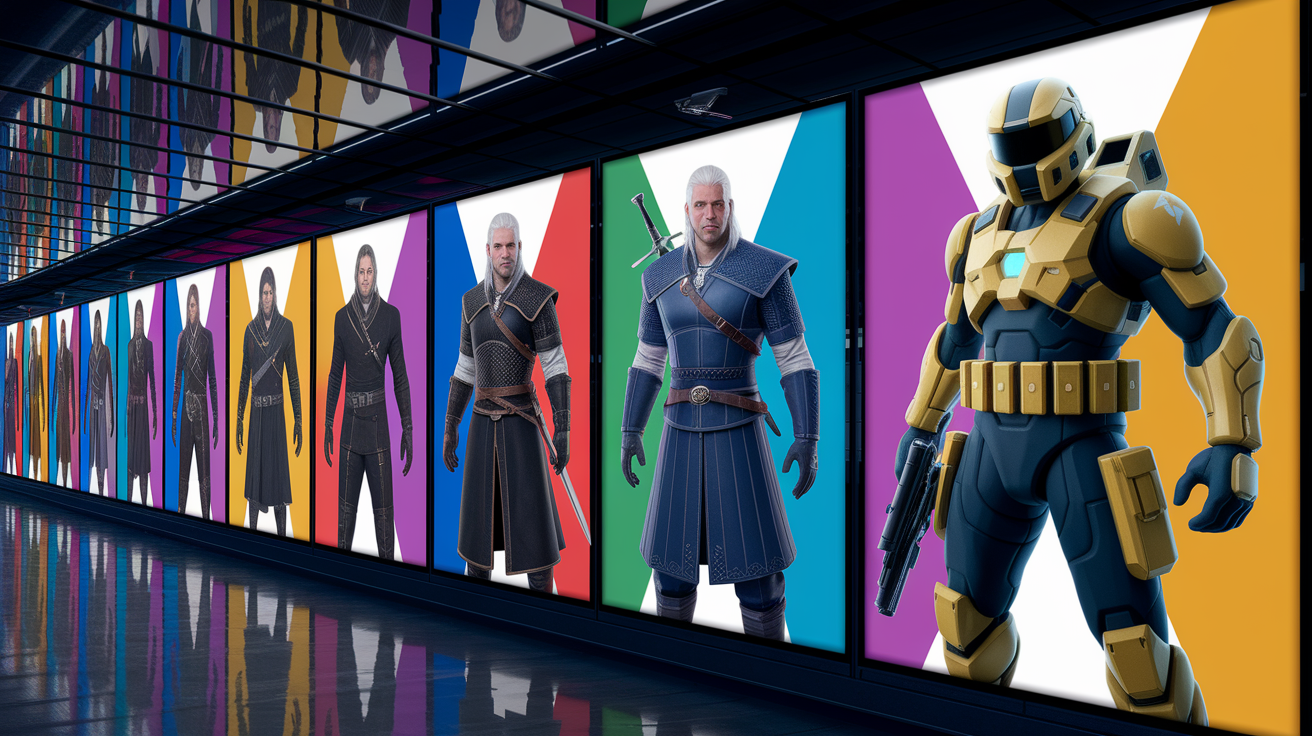
DLC characters extend a game’s life and roster. Fighting games add guest fighters. Akuma appeared as DLC in Tekken 7, crossing franchises. Seasonal characters rotate into live-service games during events, offering limited-time unlocks or cosmetics. Event-exclusive characters create urgency. Miss the window, miss the character. Guest crossover characters pull from other media. Think Geralt appearing in Soul Calibur VI or Master Chief cosmetics in Fortnite.
Monetization models vary. Some DLC characters cost a few dollars each, bundled into season passes. Others unlock through in-game challenges or battle-pass progression. Free-to-play games often gate new characters behind grind-or-pay systems. Players debate fairness. Does a new character give competitive advantage, or is it cosmetic? Transparency and balance matter. Done well, DLC keeps a game fresh. Done poorly, it fragments the player base or feels exploitative.
DLC and Seasonal Character Examples:
- Season-pass fighters in Super Smash Bros. Ultimate.
- Limited-time event characters in mobile gacha games.
- Crossover skins in Fortnite (e.g., Master Chief, Kratos).
- Expansion-pack protagonists in RPGs (e.g., new playable heroes in Borderlands DLC).
Technology Behind Modern Video Game Characters
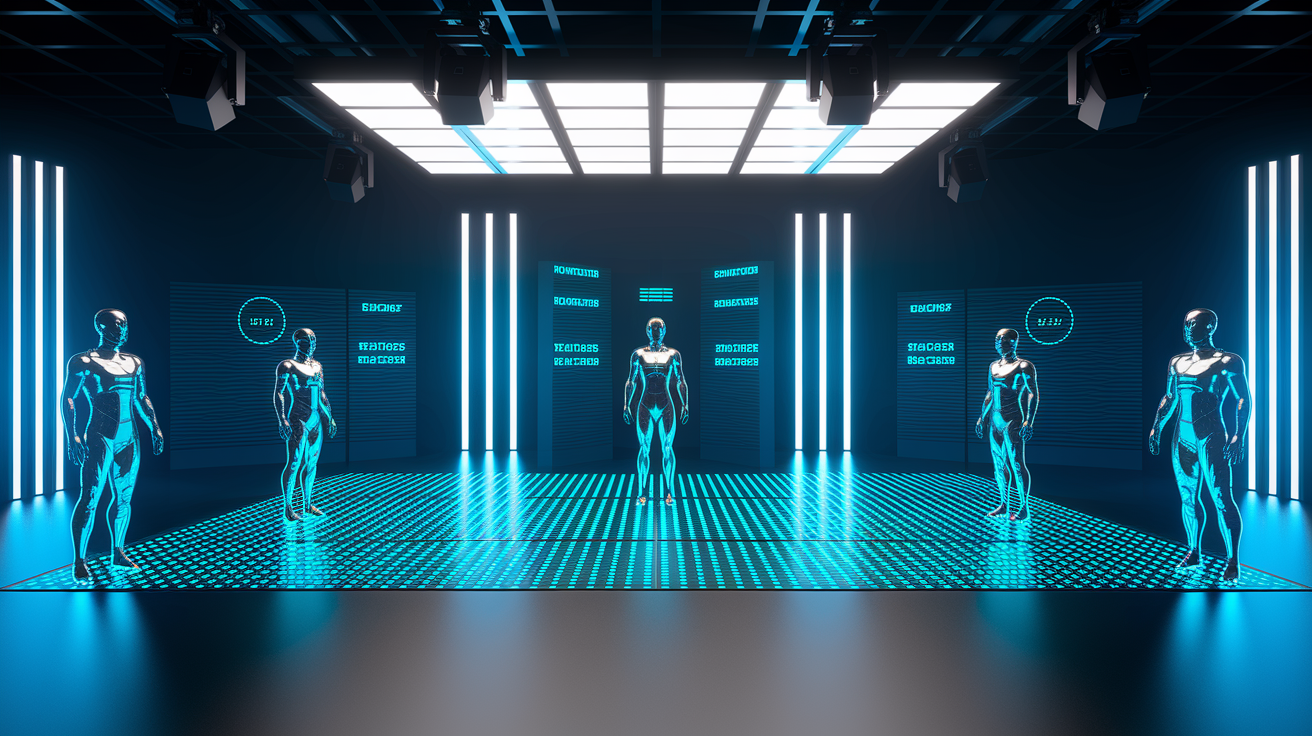
Motion capture records real actor performances, translating movement into 3D animation. Arthur Morgan’s subtle gestures, Ellie’s panicked run, Geralt’s sword swings all started with performers in motion-capture suits. Facial animation uses cameras to track micro-expressions, letting characters convey doubt, relief, rage without a word. Performance capture combines both, capturing body and face simultaneously for seamless emotional delivery.
Animation cycles loop movements like idle stances, walks, attacks. Rigging and skinning attach a 3D mesh to a digital skeleton, so when a joint rotates, the skin deforms naturally. Inverse kinematics lets feet plant on uneven ground or hands grip objects at runtime, avoiding the “floating leg” problem. These systems work invisibly. When they fail, characters feel stiff or uncanny.
The result is characters that feel human. Cloud Strife’s slumped posture when exhausted, Master Chief’s economical movements in armor, Lara Croft’s reactive scrambles on crumbling ledges. All rely on layers of tech. As hardware improves, so does expressiveness. Characters once limited to text boxes now deliver Oscar-worthy performances.
| Technology | Character Example | Use Case |
|---|---|---|
| Motion Capture | Arthur Morgan (Red Dead Redemption 2) | Realistic body language and gestures |
| Facial Animation | Ellie (The Last of Us) | Emotional micro-expressions during dialogue |
| Inverse Kinematics | Lara Croft (Tomb Raider reboot) | Feet adapt to uneven terrain, hands grip ledges dynamically |
Representation, Diversity, and Cultural Impact of Video Game Characters

Representation in games has grown from token characters to genuine diversity. Lara Croft broke ground in 1996 as the first major female gaming superstar, though early portrayals leaned on stereotypes. The 2013 Tomb Raider reboot shifted to more practical character design and deeper storytelling. Pikachu became a global icon with 260 million game copies sold and 21.5 billion trading cards, crossing cultures without relying on language. Characters like Ellie and Commander Shepard offer players agency in shaping identity, including gender, romance, moral stance.
Gender representation has improved, but gaps remain. Many classic franchises still center male heroes. Female characters often serve as side characters or love interests. LGBTQ+ inclusion appears more frequently now. Games like The Last of Us Part II and Mass Effect include queer relationships and identities as core story elements. Racial and cultural portrayal varies widely. Some games consult cultural advisors. Others lean on shallow stereotypes. Age and body diversity lag behind, though games like Overwatch include older heroes and varied body types.
Cultural impact extends beyond play. Mario and Sonic appear in films, TV shows, theme parks. Pokémon’s 800-plus episodes and 17 feature films make Pikachu as recognizable as Mickey Mouse in many countries. Merchandise (from action figures to clothing) turns characters into lifestyle brands. When done thoughtfully, diverse characters invite more players into the medium and show that games can reflect the full range of human experience.
Community Influence: Fan Art, Cosplay, and Modded Video Game Characters
Fan communities extend character life far beyond official releases. Fan art reimagines characters in new styles, crossovers, original stories. Cosplay brings characters into the real world. Conventions overflow with Pikachus, Master Chiefs, Lara Crofts. Modded characters let players insert custom skins, new movesets, entirely original heroes into existing games. User-generated avatars in platforms like Roblox or VRChat turn every player into a character designer.
Community feedback shapes official decisions. Comment threads on character lists often highlight omissions (Undertale, Ratchet & Clank, Cookie Run Kingdom), pushing developers and curators to expand rosters. Ranking disputes (like complaints about Cloud at #1 or Mario ranked lower) show how passionate players are about their favorites. When studios listen, fan-favorite characters get DLC spots, cameos, full sequels. When they ignore the community, backlash follows.
Community-Driven Character Visibility:
- Fan art galleries on DeviantArt, Twitter, Instagram.
- Cosplay competitions at PAX, Comic-Con, local conventions.
- Modded character skins in PC games (Skyrim, Minecraft, GTA V).
- User-generated avatars in social platforms.
- Character merchandising driven by fan demand (e.g., rare amiibo restocks).
Final Words
We ran through a clear tour of notable video game characters: arcade icons, modern narrative leads, design ideas, lore, playable roles, NPCs, bosses, customization, crossovers, tech, and community impact.
You saw facts like debut years, signature traits, and how creators use silhouette, motion capture, and story to make characters stick. Lists and tables make it easy to compare and pick what to explore next.
Use this as a quick lookup when you want to dive into video game characters. Have fun discovering new favorites.
FAQ
Q: Who are the most popular video game characters? / Who are some video game characters?
A: The most popular video game characters are iconic mascots and narrative heroes like Mario, Link, Pikachu, Master Chief, Lara Croft, Cloud Strife, Pac-Man, Kratos, Sonic, and Geralt.
Q: Who is a cool fictional character?
A: A cool fictional character is someone with a distinct look, clear goals, and memorable actions; from games, Solid Snake, Samus Aran, Aloy, and Vaas often fit that description.
Q: What are the 8 types of characters?
A: The eight common character types are protagonist, antagonist, sidekick/companion, mentor, foil, NPC or quest giver, boss or enemy, and mascot or iconic franchise figure.